Best Stand Mixers Under $300: Is KitchenAid Worth the Hype?
A stand mixer is one of those purchases where the price range is dizzying: you can spend $70 or you can spend $700, and the marketing makes it sound like they’re worlds apart. After digging through the specs, prices, and thousands of verified owner reviews across this category, I can tell you that the sweet spot for most home bakers sits comfortably under $300. Disclosure: this post contains affiliate links, and I may earn a small commission if you buy through them, at no extra cost to you. I only recommend gear that holds up under real buyer scrutiny, not just a spec sheet.
The hard part isn’t finding a stand mixer under $300 — it’s knowing which compromises you’re actually making at each price. Below are the five I’d genuinely buy, from a $300 KitchenAid down to a sub-$100 workhorse, with the honest trade-offs for each. If you only care about whether the famous KitchenAid name is worth it, I dig into that specifically in my Is KitchenAid Worth It breakdown — this post is the head-to-head across brands.
The quick verdict
If you want the best all-around mixer and don’t mind spending right up to the $300 line, the KitchenAid Classic 4.5-Quart Tilt-Head is the one to get — it’s the most repairable, longest-lived machine here. If you want nearly the same capability for meaningfully less money, the Cuisinart SM-50 is the strongest KitchenAid alternative on this list. Baking big or kneading heavy dough? The KitchenAid 5.5-Quart Bowl-Lift has the power and bowl room. And if your budget is the priority, the Hamilton Beach 4-Quart and the Amazon Basics 5.3-Quart both punch well above their price.
Is the KitchenAid hype actually real?
Short version: mostly, but not for the reasons people think. A KitchenAid doesn’t cream butter or whip egg whites better than a good Cuisinart — across verified-purchase reviews, buyers describe the results as close to indistinguishable. What you’re really paying for is the all-metal gearbox, the enormous attachment ecosystem (everything from pasta rollers to meat grinders bolts onto the front hub), and a repairability that means these machines routinely last 15 or 20 years. The cheaper mixers do the everyday work just as well; they just won’t take the same lifetime of abuse or that hub-driven accessory collection. That’s the real trade-off, and it’s why my picks span the whole price range rather than crowning one winner. For where a mixer fits among your other gear, see my guide to the best small kitchen appliances.
How I evaluated these stand mixers
These picks aren’t based on a spec sheet alone. For each mixer, I worked through hundreds of verified-purchase reviews looking for recurring patterns rather than one-off complaints: creaming butter and sugar for cookies, whipping cream and egg whites to stiff peaks, and — the real test — kneading stiff bread dough without the head bouncing or the motor bogging down. I weighed the things that actually separate these machines in daily use according to the owners who buy them: how stable the base stays under a heavy load, how cleanly the beater scrapes the bowl, how loud each one runs, and how easy it is to lift the bowl in and out and stash the mixer away. The picks below reflect that pattern of real-world feedback, not just the marketing copy.
The 5 best stand mixers under $300
1. KitchenAid Classic 4.5-Quart Tilt-Head (K45SS) — Best Overall
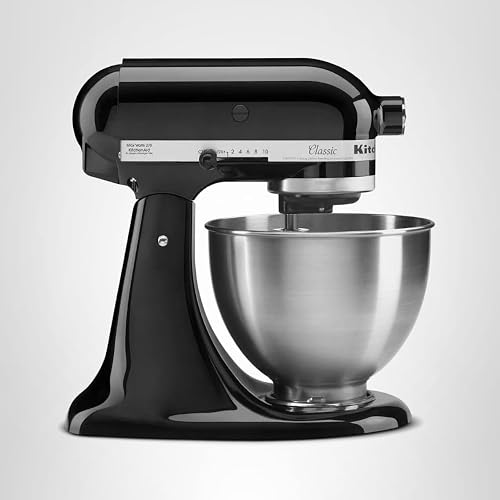
This is the entry point into the KitchenAid world, and it sneaks in right under $300. The 4.5-quart tilt-head design is the format I recommend to most people: you tip the head back to drop the bowl in and out, which is faster and more intuitive than the bowl-lift style. It comes with the three core attachments — flat beater, dough hook, wire whip — and it accepts the entire front-hub accessory line, which is the genuine reason to buy KitchenAid over anyone else. Owners consistently report creaming batch after batch of cookie dough and whipping meringue in this size without the motor straining.
The genuine con: 4.5 quarts is the smallest bowl in this roundup, and the Classic’s motor is the least powerful KitchenAid makes. If you regularly double cookie recipes or knead stiff bread dough, you’ll feel it lugging and you’ll be working in batches. For everyday baking it’s plenty; for high-volume or heavy dough, size up.
2. Cuisinart SM-50 5.5-Quart — Best KitchenAid Alternative

If you want most of what a KitchenAid offers for less money, this is the mixer I point people toward. The Cuisinart SM-50 gives you a larger 5.5-quart bowl than the KitchenAid Classic, a more powerful 500-watt motor, and 12 speeds, plus the same three attachments and a splash guard with a pour spout that KitchenAid charges extra for. Reviewers report it kneading a double batch of pizza dough without the head bouncing, and whipping cream just as fast as a KitchenAid. For the money, the capability-per-dollar is the best on this list.
The genuine con: the attachment ecosystem is the catch. Cuisinart’s accessory range is a fraction of KitchenAid’s, so if you dream of pasta rollers or a grain mill someday, you’re boxing yourself in. It also runs a touch louder than the KitchenAid at high speed. Stock on this model also tends to come and go, so grab it when you see it available.
3. KitchenAid 5.5-Quart Bowl-Lift (KSM55) — Best for Heavy Dough

This is the one to buy if bread is your thing. Bowl-lift mixers crank the bowl up to the beater on a sturdy arm instead of tilting the head back, and that design is simply more rigid under load — there’s no head to flex when you’re working a stiff dough. You also get a full 5.5-quart bowl and 11 speeds. For high-hydration sourdough or a triple batch of dinner rolls, this is the KitchenAid bakers reach for — reviewers consistently note it doesn’t walk across the counter the way a tilt-head can under a heavy load.
The genuine con: bowl-lift machines are taller and may not fit under standard upper cabinets with the head up — measure your clearance before you buy. They’re also a little slower to load and unload than a tilt-head, since you crank the bowl down each time rather than just flipping the head back. It’s a workhorse, not the most convenient option for quick little jobs.
4. Hamilton Beach 4-Quart Electric Stand Mixer — Best Budget

For roughly a quarter of the price of a KitchenAid, the Hamilton Beach delivers a genuinely usable stand mixer. You get a 4-quart bowl, seven speeds, a tilt-head, and the three standard attachments plus a splash shield. A detail that stands out in owner reviews is the handle built into the top of the head, which reviewers say makes this the easiest mixer here to lift and stash in a cabinet between bakes. For someone who makes cookies and the occasional cake — not bread every weekend — it covers the job without the sticker shock.
The genuine con: the gears are plastic where the pricier machines use metal, so this is not the mixer for heavy or repeated bread dough — push it there and you’ll shorten its life. It’s also not built to be repaired; when it eventually wears out, you replace it rather than fix it. Treat it as a capable light-duty mixer and it’s excellent value.
5. Amazon Basics 5.3-Quart Tilt-Head — Cheapest Pick

This is the least expensive mixer in the roundup and, oddly, it has the biggest bowl — a full 5.3 quarts — along with 12 speeds and a 350-watt motor. For someone who bakes a few times a month and just wants to stop holding a hand mixer over a bowl, it’s a remarkably low-risk way to get into stand mixers. It’s a surprisingly capable value pick — reviewers report it creaming butter and sugar cleanly and whipping meringue without complaint. As a first mixer or a gift for a new baker, it’s hard to argue with the price-to-capacity ratio.
The genuine con: the build quality is exactly what the price suggests — more plastic, a lighter base that can shimmy on the counter with a heavy load, and no meaningful attachment ecosystem or repair path. It’s the definition of “good enough for occasional baking,” not a buy-it-for-life machine. If you bake constantly, you’ll outgrow it.
Tilt-head vs. bowl-lift: which design should you pick?
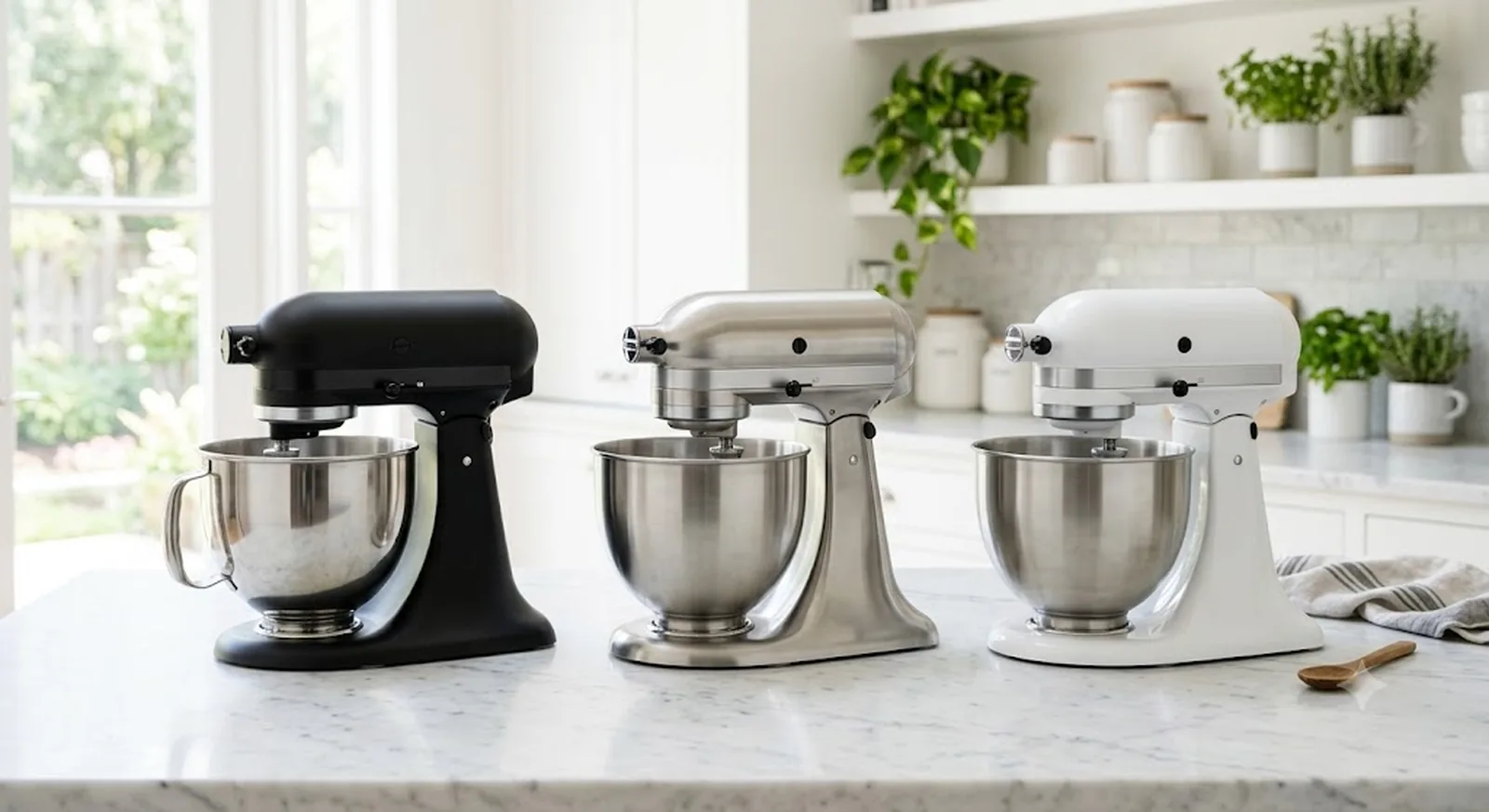
This is the first fork most buyers hit. A tilt-head mixer (four of my five picks) lets you tip the motor housing back so you can lift the bowl straight out — it’s faster for everyday use, takes up less height, and is the friendlier choice for cookies, cakes, and frostings. A bowl-lift mixer raises the bowl to a fixed head on a heavy arm, which is more stable under serious load and better for frequent bread baking. The downside is height: bowl-lift machines are tall and often won’t clear an upper cabinet. If most of your baking is sweet rather than yeasted, get a tilt-head; if you knead dough often, the extra rigidity of a bowl-lift earns its keep.
What to look for in a stand mixer under $300
Once you’ve sorted the design, these are the specs I actually weigh — and the ones I ignore:
- Bowl size. 4 to 4.5 quarts suits one or two people; 5 to 5.5 quarts is the sweet spot for families and bread. Bigger isn’t always better — a near-empty large bowl can struggle to grab small amounts of butter.
- Gearbox material. Metal gears outlast plastic gears, full stop. This is the single biggest reason the pricier mixers survive years of heavy dough while budget ones eventually strip.
- Planetary action. Every mixer here uses it — the beater spins one way while orbiting the bowl the other way — so the whole bowl gets scraped. Good. You don’t need to overthink wattage beyond that; more watts help with heavy dough but won’t make a cake better.
- Attachment hub. Only KitchenAid’s front hub opens up the big accessory ecosystem. If you’ll never buy a pasta roller or grinder, this doesn’t matter and you can save money.
How to choose the right one for you
Match the mixer to how you actually bake. If you want a machine that will outlive your current kitchen and you might collect attachments, stretch to the KitchenAid Classic or, for heavy dough, the bowl-lift. If you want 90% of that capability and would rather keep the cash, the Cuisinart SM-50 is the smart-money pick. If you bake occasionally and the budget is firm, the Hamilton Beach and Amazon Basics will both serve you well for light-duty work. If you’re outfitting a kitchen from scratch, my first-apartment kitchen essentials guide puts a mixer in context with everything else you’ll want, and my kitchen upgrade guide covers when it’s worth trading up from a budget tool to a pro one.
Mistakes to avoid when buying a stand mixer
The most common one I see is buying on wattage alone. A higher number looks impressive on the box, but motor design and gear quality matter far more than raw watts — a well-built 300-watt mixer will out-knead a poorly built 800-watt one. The second mistake is over-buying on bowl size: a six-quart bowl sounds generous until you try to whip a single egg white in it and the whisk can’t reach the small pool at the bottom. Match the bowl to your typical batch. Third, people forget to measure their counter and cabinet clearance before buying a tall bowl-lift model, then can’t tilt or lift the head where they wanted it to live. And finally, don’t pay the KitchenAid premium for the attachment hub if you’re honest with yourself that you’ll never buy an attachment — that money is better spent on a roomier bowl or pocketed entirely.
Frequently asked questions
Is a stand mixer under $300 worth it, or should I save for a more expensive one?
For the vast majority of home bakers, under $300 is the right ceiling. The most expensive mixers add bigger bowls and commercial-grade motors that only matter if you bake in serious volume. A sub-$300 machine handles weekly cookies, cakes, and bread without complaint.
Can a budget stand mixer knead bread dough?
Occasionally, yes; constantly, no. Budget mixers with plastic gears can handle the odd loaf, but repeated heavy kneading wears them out fast. If bread is a weekly ritual, choose a mixer with a metal gearbox like the KitchenAid bowl-lift or the Cuisinart. If you’d rather let a machine do the whole job hands-free, my guide to the best bread makers under $150 covers automatic loaf machines that knead, proof, and bake for you.
What size stand mixer do I need?
A 4 to 4.5-quart bowl is fine for one or two people and standard recipes. Step up to 5 to 5.5 quarts if you bake for a family, double recipes regularly, or make bread. Going bigger than that is rarely necessary for home use.
Are KitchenAid attachments worth it?
They’re the main reason to pay the KitchenAid premium. The front hub accepts pasta rollers, meat grinders, spiralizers, and more, turning the mixer into a food-prep hub. If you’ll only ever beat, whip, and knead, you don’t need that ecosystem and can save with a Cuisinart or budget model. If you do plan to use the hub, my guide to the best stand mixer attachments you’ll actually use breaks down which ones earn their place.
How long should a stand mixer last?
A well-built mixer with a metal gearbox, like the KitchenAid models here, routinely lasts 15 to 20 years and can often be repaired rather than replaced. Budget mixers with plastic gears tend to last a few years of light use before wearing out, and they’re built to be replaced rather than fixed. That longevity gap is a big part of what you’re paying for at the higher end.
The bottom line
You don’t need to spend more than $300 to get a stand mixer that will serve you for years. For the best blend of durability, convenience, and that unbeatable attachment ecosystem, the KitchenAid Classic 4.5-Quart is my overall pick. If you’d rather keep some cash and still get more bowl and power, the Cuisinart SM-50 is the value champion; reach for the KitchenAid bowl-lift if you knead bread often, and don’t overlook the Hamilton Beach or Amazon Basics if you bake occasionally and want to spend the least. Whichever you choose, buy for the way you actually bake — not for the badge on the front. For the wider picture, my best small kitchen appliances guide shows where a mixer fits among the rest of your countertop gear.
Love using your stand mixer for dessert? With the right attachment it can churn ice cream too — see my picks for the best ice cream makers under 0.