Kitchen Essentials for Your First Apartment: $100, $200, and $500 Setup Guides
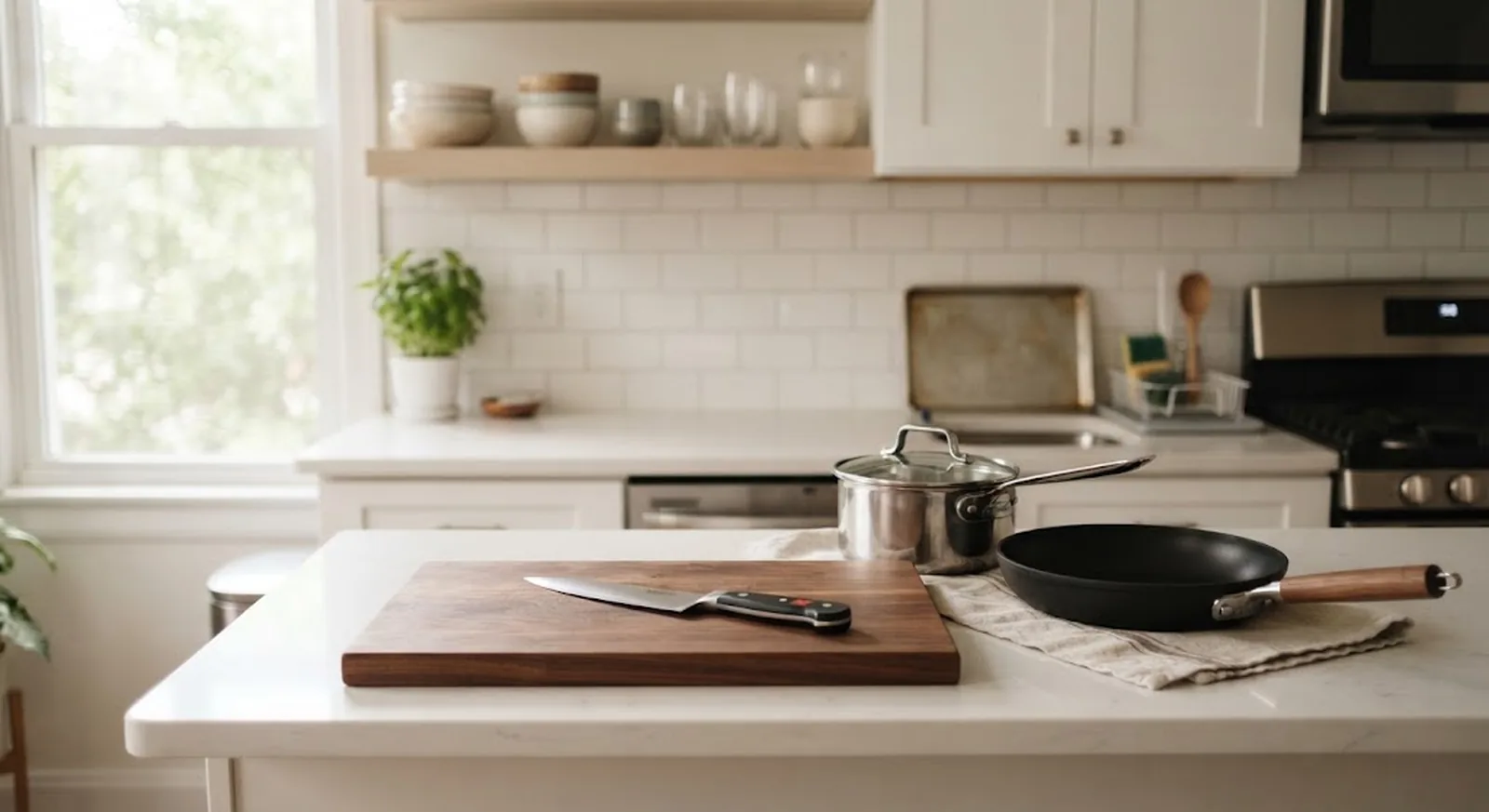
In brief: Setting up a first apartment kitchen well doesn’t take a thousand-dollar spree. Three honest tiers cover almost everyone: a bare-bones starter (one good chef’s knife, a 10-inch nonstick skillet, a 3-quart saucepan with lid, a sheet pan, and core utensils), a step-up tier that adds a Dutch oven, a coffee maker, and real storage, and an invest-once setup with a multi-cooker, a cast-iron skillet, and an immersion blender. The kitchen essentials for your first apartment aren’t about quantity — they’re about the few items you’ll actually use four nights a week.
Disclosure: Kitchaneers is reader-supported. Some links in this guide are affiliate links, which means we may earn a small commission at no extra cost to you. Our recommendations are based on analysis of verified-purchase buyer reviews, spec comparisons, and price comparisons — not personal testing. Last updated: May 2026.
Moving into a first apartment usually comes with a shopping spreadsheet and a vague sense that you need “everything.” You don’t. Based on patterns across verified-purchase buyer reviews — what reviewers say they’re still reaching for six months in versus what ended up in the back of a drawer — we put together this guide to kitchen essentials for your first apartment as three honest tiers. No 58-item list. No filler. Just the gear that earns its space, sorted by what you’re ready to spend right now, plus the items we’d skip until much later.
How we built these kitchen essentials lists
Before you buy a single thing, here’s the framework we used to pick what goes on each tier. A great kitchen tool isn’t the one with the most features — it’s the one that meets three tests.
Frequency of use. The chef’s knife you reach for every night earns its space faster than a clever single-purpose gadget you’ll touch twice a year. Anything below “weekly use” gets demoted to the optional pile, no matter how good it looks.
Counter and drawer footprint. First apartments are small. A single sheet pan that doubles for roasting vegetables, baking cookies, and reheating leftovers beats three single-purpose pieces. We score tools higher when they do more than one job.
Buy-once vs buy-now. This is the test most checklists ignore. Some kitchen essentials are lifetime tools — a real chef’s knife, a cast-iron skillet, a heavy mixing bowl. Others are deliberate replaceables: silicone spatulas, plastic storage containers, dish towels. Putting real money into a knife that lasts twenty years is smart. Putting the same money into a nonstick pan that’ll fade in eighteen months is throwing money at the problem. We label every item below as buy-once or replaceable so you know what’s worth the upgrade.
That framework is why the kitchen essentials for your first apartment tilt toward versatile, durable items at the long-tenure jobs and cheap pragmatic picks where the tool won’t outlast the apartment lease anyway.
The starter tier: bare essentials shopping list
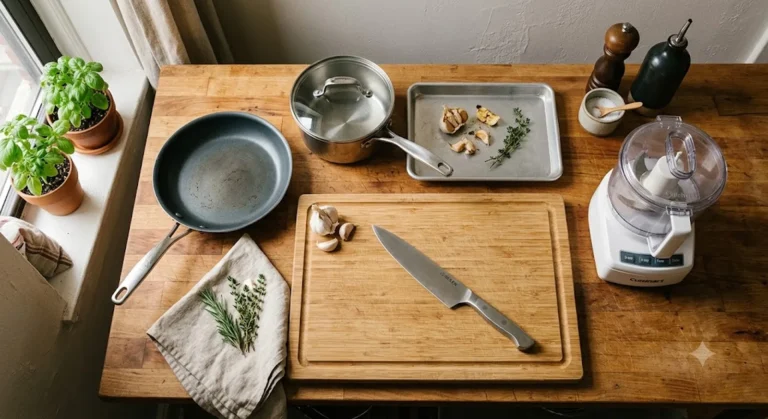
If you want a kitchen starter pack on a budget — the absolute minimum to actually cook real meals, not just reheat — here’s exactly what to buy first. We’ve analyzed buyer reviews for the cheap version of every category below, and these are the line below which quality starts to hurt the cooking. Heading to a dorm specifically? My back-to-college kitchen starter pack tailors this into a compact $150 dorm build.
Chef’s knife: Victorinox Fibrox Pro 8-Inch

Buy-once. This is the single most upgrade-worthy purchase on the starter list. The Victorinox Fibrox Pro is the chef’s knife Cook’s Illustrated has rated highly for two decades, and verified-purchase reviews consistently hold it up as a knife people would buy again without hesitation. Stainless steel blade, dishwasher-safe handle, comfortable Fibrox grip even with wet hands. If you only spend on one thing at this tier, spend it here.
Nonstick skillet: Tramontina Professional 10-Inch
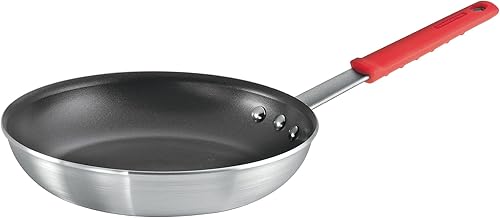
Replaceable (1–2 years of heavy use). The Tramontina Professional line is the one most line cooks reach for in restaurant kitchens — heavy-gauge aluminum, a comfortable stay-cool handle, and a nonstick coating thick enough to survive real cooking. At this tier you’re learning what you actually cook before committing to nicer cookware, so a workhorse nonstick is the right call. Replace when the coating starts to flake; the body itself lasts much longer than the surface.
3-quart saucepan: Tramontina Tri-Ply Clad with Lid
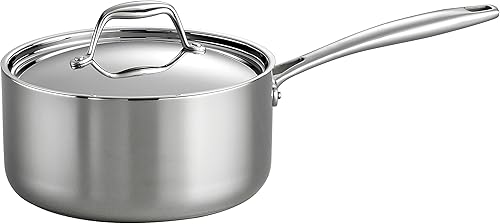
Buy-once. Tri-ply clad construction means aluminum sandwiched between two layers of stainless steel — even heat with no hot spots. Induction-ready, dishwasher-safe, oven-safe to 500°F, and NSF-certified for commercial use. Verified-purchase reviews consistently describe years of reliable use — pasta water, reductions, oatmeal, rice — with few complaints about warping or hot spots. It’s the lifetime piece in the starter tier.
Sheet pan + cooling rack: OXO Good Grips Non-Stick Pro Half Sheet & Rack Set

Buy-once. A half-sheet pan roasts vegetables, bakes cookies, reheats fries on the rack so they stay crisp, and acts as a quasi-oven liner for almost anything you bake. The OXO version uses heavy-gauge aluminized steel that won’t warp at high heat — a problem that destroys cheaper sheet pans within months. The included rack lets you crisp leftovers without sogging the bottom.
Glass storage: Pyrex Simply Store 10-Piece Set

Buy-once for the glass, replaceable for the lids. The Pyrex bottoms last a decade; the BPA-free plastic lids get replaced every couple of years. That’s the right trade. Microwave-safe, dishwasher-safe, freezer-safe — and unlike plastic containers, glass doesn’t stain from tomato sauce or absorb garlic smell.
Hand tools, utensils, and dishware (mix and match)
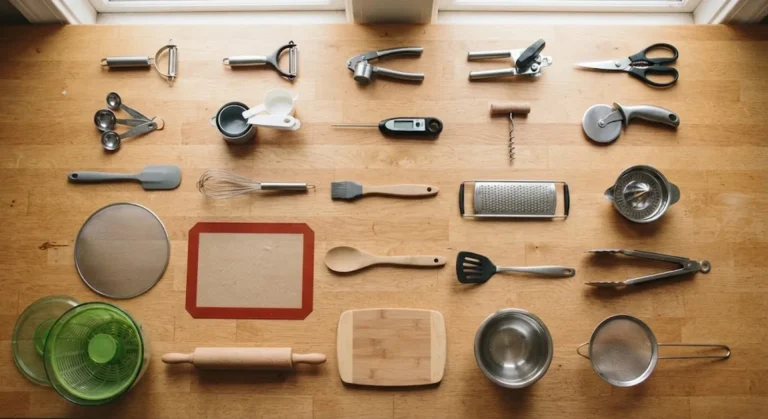
At the starter tier, the remaining items are best bought à la carte from whatever store is closest. Pick up one silicone spatula, one wooden spoon, a pair of stainless tongs with a locking ring, and a plastic cutting board (or two — one for raw protein, one for produce). For plates, bowls, glasses, and flatware, hit a thrift store or check parents’ basements first. Four of each is enough. Save the matching-set instinct for tier two.
What this tier doesn’t include and why: no toaster yet (the oven and a sheet pan handle toast fine for a few weeks), no coffee maker if you’re not a daily coffee drinker, no measuring cups (a 1-cup glass measure costs five dollars and waits for tier two), no stand mixer, no blender. The point is to cook real meals, not check every box on someone else’s 58-item list.
The step-up tier: where to spend the next dollars
If you have a bit more to start with — or you’ve lived with the starter kit for a few months and want to upgrade — here’s where the next dollars do the most. This is the first apartment kitchen checklist for someone who’ll actually be cooking five or more nights a week.
Dutch oven: Lodge 5-Quart Pre-Seasoned Cast Iron

Buy-once for life. The single most versatile pot in any kitchen. It braises, makes soup, fries chicken, bakes bread, holds a stew at a low simmer for hours, and goes into the oven at 500°F without complaining. The Lodge pre-seasoned cast iron Dutch oven at this size is the right answer for almost everyone — the enameled and designer versions cost five times more and don’t cook better. Plain cast iron lasts forever and gets better with use.
Coffee maker: Cuisinart DCC-3000 Coffee on Demand

Replaceable (3–5 years). The Cuisinart “Coffee on Demand” design holds twelve cups in a double-walled reservoir and dispenses one mug at a time with a button press — which is the right design for a small household where two people don’t both pour at exactly 7 a.m. Programmable for the night before, self-clean cycle, 1–4-cup setting for weekends. The thing to watch on any drip coffee maker is the heat plate — they all eventually fail there, which is why we treat coffee makers as a replaceable category rather than a lifetime tool.
Better dishware, glasses, and the rest of the kit
At this tier, justify buying actual matching plates and a real flatware set, because you’ve figured out whether you actually have people over. Add a 4-cup glass measuring cup (Pyrex makes the one we use), a metal whisk, a fine-mesh strainer, and a 1.5-quart stainless saucepan to double your simultaneous burner capacity. Cumulatively these are small purchases but they fill the gaps the starter kit deliberately left open.
What we’re still not adding at this tier: stand mixer, food processor, espresso machine, air fryer. None of those have earned their counter space yet. They’re great gear, but they’re tier-three items.
The invest-once tier: when you buy for the next decade
The top tier is where the math shifts. Now you’re committing to lifetime tools — gear you’ll still own when you’re in your third apartment or first house. This is where what to buy for first kitchen starts to look a lot like what to buy for your tenth. When you’re ready to move past the basics, our kitchen upgrade guide maps out what to upgrade first, and in what order.
Multi-cooker: Instant Pot Duo Plus 6-Quart 9-in-1

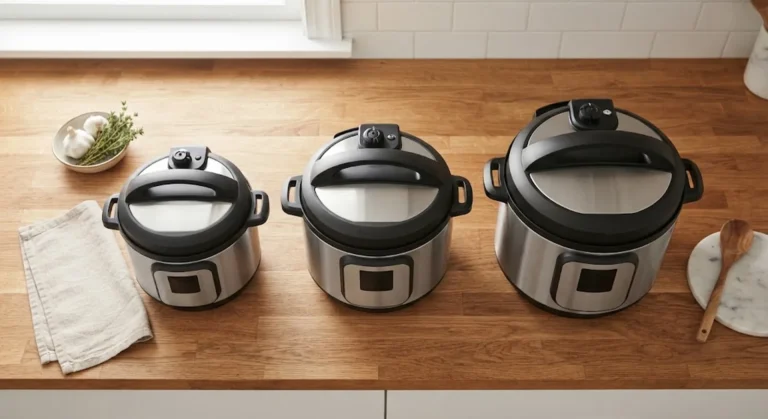
Buy-once for 5–8 years. Replaces a slow cooker, rice cooker, and steamer — and cuts braise times to a fraction of stovetop. We covered this machine in depth in our small kitchen appliances guide; at the invest-once tier it’s no longer a “want,” it’s the appliance that earns its counter spot fastest. The Duo Plus version adds a sterilizer mode and a ceramic non-stick interior coating that’s PFOA and PTFE-free.
Cast iron skillet: Lodge Seasoned 12-Inch Cast Iron Skillet
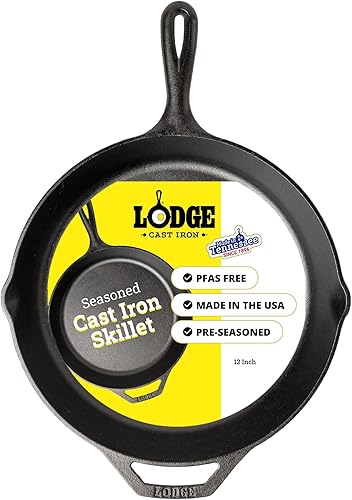
Buy-once for life. A Lodge 12-inch will outlast almost everything else in your kitchen. Buyer reviews regularly mention skillets still going strong after 15+ years of use. Use it for searing, frying, cornbread, baking, finishing steaks under the broiler. One care note worth getting right: the “never use soap” rule is a myth. The seasoning is polymerized oil, not soap-soluble fat — mild dish soap is fine. Dry it immediately after washing and rub a thin film of neutral oil on the surface to keep the patina. Not sure whether cast iron or carbon steel is the right choice? Our cast iron vs carbon steel skillet comparison has the full breakdown.
Immersion blender: Cuisinart Smart Stick Two-Speed

Buy-once. Blends soup right in the pot, makes mayonnaise in a glass jar, purées baby food in seconds, tucks in a drawer. We’d take a Cuisinart immersion blender over a countertop blender for home cooks at this tier — same use case for a soup-and-smoothie household, one-tenth the storage footprint. (If you make smoothies daily, the calculus shifts; see our small appliances breakdown.) 300-watt motor handles cooked vegetables and frozen fruit, two speeds cover the entire job.
What to skip in your first apartment kitchen (and what to buy instead)
The other half of a great first apartment kitchen is the gear you specifically don’t buy. Every item below is one we’ve watched newcomers buy, regret, and shove to the back of the cabinet within months. For each, we name the better alternative.
Skip: a knife block set. Instead: one Victorinox Fibrox Pro chef’s knife plus a single paring knife. Block sets always come with three knives nobody uses — the boning knife, the carving knife, the bizarre tomato knife. You’ll only use the chef’s knife. Buy that one well; ignore the rest.
Skip: a stand mixer. Instead: a basic hand mixer. Unless you bake every weekend, the stand mixer is dead weight on a small counter. A hand mixer creams butter, whips cream, and mixes cookie dough fine for the few times you’ll actually use it in year one.
Skip: nesting bowls in five sizes. Instead: a three-piece stainless set. You’ll use the medium and the large. The 1-cup nesting bowl is the kitchen equivalent of the boning knife.
Skip: a single-serve coffee pod machine. Instead: the Cuisinart drip maker above or a French press. Pod machines lock you into expensive consumables and produce a wall of trash. A drip maker pays for itself against pods within weeks.
Skip: an electric can opener. Instead: a manual safety can opener. The electric ones break, take counter space, and don’t open cans any faster.
Skip: matching kitchen utensil sets in coordinated colors. Instead: buy each tool individually based on quality. Coordinated sets force you to accept the worst tool in the set to get the one good one.
Skip: a panini press, quesadilla maker, or any single-purpose grill. Instead: the cast iron skillet above with a heavy pan on top makes a perfect panini. Single-purpose machines eat permanent counter space for a job your existing pan already does.
None of these picks are scams — they just don’t earn space in a first kitchen. Buy them later if you find you actually want them. Most first-apartment-dwellers don’t.
Buy new vs buy used: where each makes sense
This section almost never appears in first apartment kitchen guides, and it should. Not every kitchen essential should be bought new. Here’s the honest breakdown.
Buy new, no exceptions: chef’s knife and paring knife (used knives are blunt or have hidden edge damage), nonstick cookware (the coating degrades and microscopic wear releases flakes), cutting boards (used wooden boards harbor bacteria in cracks), and anything porous-plastic that contacts food.
Buy used and save real money: stainless saucepans and stockpots (they last forever, and a thrift-store stainless pan is identical in performance to a new one), cast iron skillets (the seasoning improves with age — hunt thrift stores and estate sales; a 60-year-old Griswold or Wagner outperforms anything new in the same price range), mixing bowls and baking dishes (as long as there are no cracks), dishware and flatware (no functional difference between thrift-store plates and new ones), and small appliances if you can plug them in to test before paying.
Buy used with caution: bakeware (heavily warped or scratched nonstick is a hard pass; aluminum and steel sheet pans are great used), and wooden utensils (inspect for splits where bacteria hide).
Going used on the categories above can shave a real chunk off any of the three tiers without compromising anything that touches your food directly.
Small kitchen, small footprint: what changes if your apartment is tight
If your first apartment kitchen has under six feet of counter and limited drawer space — which is most of them — the calculus changes. The kitchen essentials for your first apartment that take counter space need to earn it harder.
Three swaps we’d make for a tight apartment. First: skip the toaster oven and keep a regular 2-slice toaster — a third the footprint, recover real working surface. Second: take the immersion blender over the countertop blender every time. Immersion blenders live in a drawer; countertop blenders are six pieces, dirty constantly, and take a permanent spot. Third: get a wall-mount magnetic knife strip and skip the knife block entirely. Frees the drawer the block would have taken, keeps blades safer than rattling around loose. For more on making every inch count, see our kitchen organization ideas that actually work and my renter-friendly small kitchen storage ideas that don’t require a renovation.
A layout rule worth following in a small kitchen: keep the appliances you use daily within arm’s reach of the outlet you actually use. The machine buried two cabinets away stops getting used — the friction is enough to kill the habit. Buy fewer machines and keep them reachable; you’ll cook more, not less.
FAQ
What’s the bare minimum I need to set up a first apartment kitchen?
Five items will let you cook almost any real meal: a chef’s knife, a cutting board, a 10-inch skillet, a 3-quart saucepan with lid, and a half-sheet pan. With those plus basic utensils and a few plates, you can make 90% of weeknight dinners. Everything else is upgrades from there.
Is it worth buying a knife set or just one good chef’s knife?
One good chef’s knife wins almost every time. Knife block sets pad out the price with knives most people never use. A great chef’s knife plus a paring knife covers 95% of home cooking. Spend the saved money on one good cutting board and a sheet pan instead.
What kitchen tools should I buy new vs used?
Always buy new: knives, nonstick cookware, cutting boards, and porous plastic items that touch food. Save money buying used on stainless pots, cast iron skillets, mixing bowls, baking dishes, and dishware. Used small appliances are okay if you can test them before paying.
Do I need a stand mixer in my first apartment?
Almost never. Stand mixers earn their cost only if you bake at least twice a month. For occasional baking, a basic hand mixer covers cookies, whipped cream, and cake batter without dominating your counter. Revisit the stand mixer question in apartment two — or read our full breakdown of whether the KitchenAid stand mixer is worth it to know when the upgrade makes sense.
How long do these kitchen essentials actually last?
Lifetime tools (chef’s knife, cast iron, Dutch oven, tri-ply stainless) routinely run 15–20+ years. Replaceables (nonstick coatings, coffee maker heat plates, plastic storage lids) typically run 1–5 years. Match the build quality to how often you’ll use the item.
Key takeaways
- The best kitchen essentials for your first apartment fall into three honest tiers: a bare-bones starter, a step-up tier with a Dutch oven and coffee maker, and an invest-once setup built around a multi-cooker, cast iron, and an immersion blender.
- At every tier, spend on lifetime tools (chef’s knife, sheet pan, Dutch oven, cast iron) and stay cheap on replaceables (silicone spatulas, plastic storage, basic nonstick). When you’re ready to graduate from individual pans to a full set, our guide to the best cookware sets of 2026 breaks down tri-ply, ceramic, and budget options by material and longevity.
- Skip the gear that looks essential but isn’t: knife block sets, stand mixers, single-serve coffee pods, panini presses, electric can openers, and matching utensil sets.
- Buy used to save real money on stainless pots, cast iron, mixing bowls, and dishware. Buy new on anything porous, sharp, or non-stick-coated.
- In a small kitchen, prefer the immersion blender over the countertop blender, the regular toaster over the toaster oven, and the wall knife strip over the knife block.
- The point of any first apartment kitchen checklist is the few items you’ll actually use four nights a week — not the longest list. Once your basics are in place, see our guide to the best kitchen gadgets that are actually worth buying for the small tools that earn their drawer space. If you’re shopping for someone else, our list of best kitchen gifts under $50 is the shortcut.