Cast Iron vs. Carbon Steel Skillet: Which Should You Actually Buy? (2026 Verdict)
Heads up: This post contains Amazon affiliate links. If you buy through them, we may earn a small commission at no extra cost to you — it’s how we keep the lights on and the skillets seasoned.
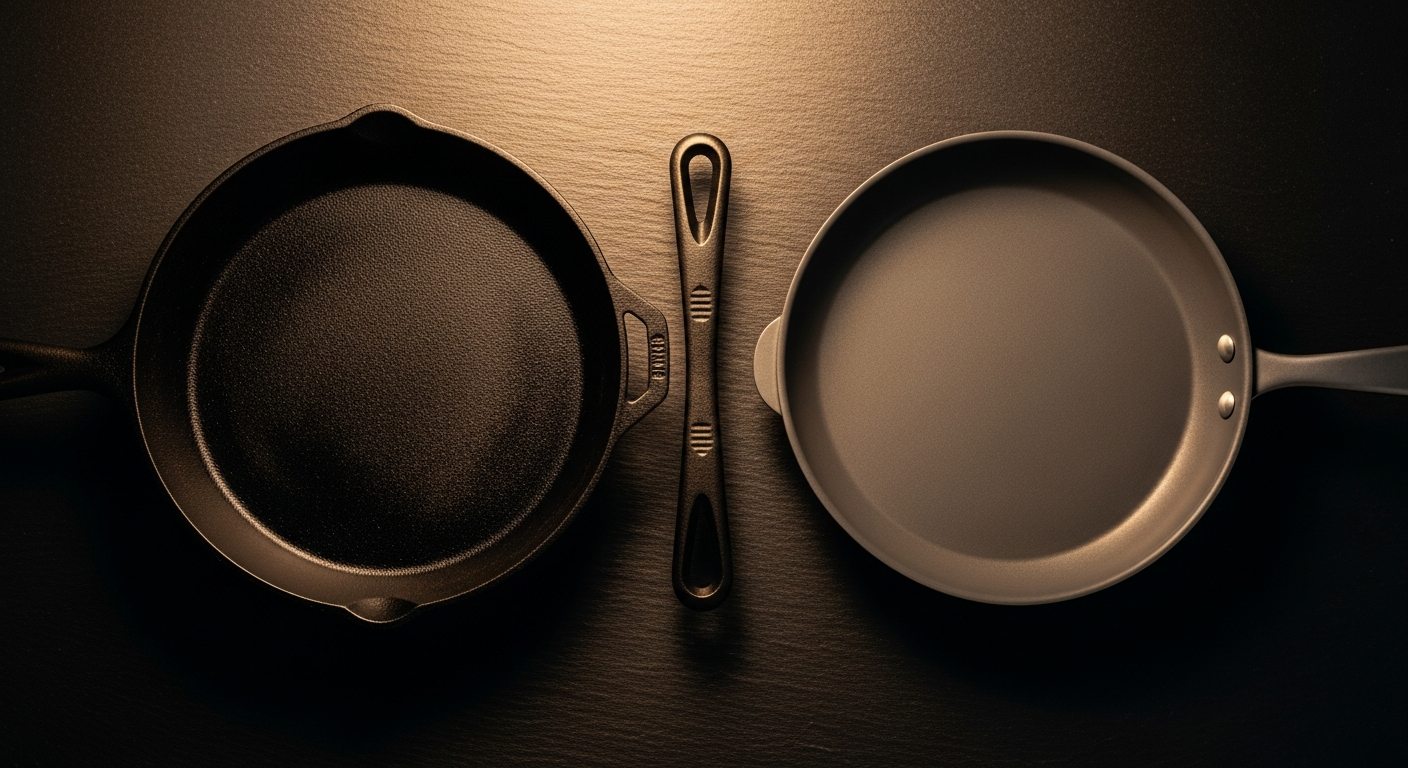
The cast iron vs carbon steel skillet debate trips up more home cooks than almost any other kitchen decision. Both look similar, both require seasoning, and both can last a lifetime — yet they cook very differently. Drawing on patterns across hundreds of verified buyer reviews, spec sheets, and price comparisons, the honest answer is that one of them is right for most people and one is a specialist tool. Here’s what we found.
Cast Iron vs. Carbon Steel Skillet: The Quick Answer
Cast iron wins for heat retention, even cooking on a home range, and low-maintenance seasoning. If you cook mostly indoors, do a lot of stovetop-to-oven work, or want a pan that bounces back from neglect, get cast iron.
Carbon steel wins for high-heat restaurant-style searing, delicate foods like eggs and fish, and cooks who don’t mind a steeper seasoning learning curve in exchange for a noticeably lighter pan.
If you’re building your first kitchen setup, cast iron is the easier starting point. If you’re upgrading after years of cooking and want something closer to what professional kitchens use, carbon steel is worth the investment. We have a full breakdown of both types in our guide to the best cookware sets of 2026.
Key Differences at a Glance
| Feature | Cast Iron | Carbon Steel |
|---|---|---|
| Weight (10–12″) | 5–8 lbs | 2.5–4.5 lbs |
| Heat-up speed | Slow (3–5 min) | Fast (90 sec–2 min) |
| Heat retention | Excellent | Good (loses heat faster) |
| Heat distribution | Even once hot | Slightly hot-spotted until seasoned |
| Seasoning effort | Forgiving — bounces back | Demanding — strips easily early on |
| Best for | Steak, cornbread, roasts, braising | Eggs, fish, crêpes, quick sears |
| Oven-safe temp | Up to 500°F+ (no limit with bare) | Up to 600°F+ (typically higher) |
| Price range | $25–$200+ | $35–$220+ |
| Dishwasher safe | No | No |
Heat Retention and Cooking Performance
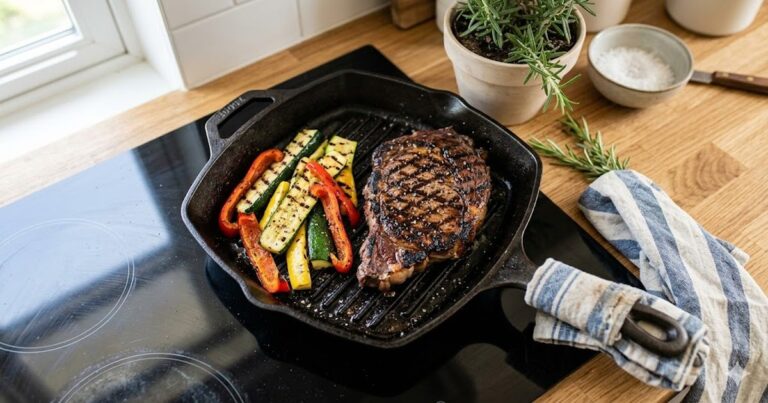
This is where cast iron earns its reputation. Its mass — a 12-inch Lodge tips the scale at around 8 pounds — acts as a thermal battery. Once hot, it holds that heat even when you drop in a cold steak, which is exactly what you need for a hard sear with a proper crust. That same thermal mass is why a cast iron grill pan makes the best sear marks for indoor grilling.
Cast iron’s greater mass means it holds its temperature better when a cold steak hits the surface and recovers to searing heat faster, while carbon steel’s thinner gauge means a bigger temperature drop on contact that takes longer to recover from. That gap shrinks with experience — professional cooks use hotter burners and smaller portions — but for home stoves, cast iron’s thermal mass is a genuine advantage for thick cuts.
Carbon steel heats up significantly faster, which matters when you’re making eggs at 7am and don’t want to wait. It also responds to temperature changes more quickly — turn the heat down on cast iron and the pan keeps cooking; do the same on carbon steel and it adjusts almost immediately. For delicate proteins like fish or crêpes, that control is crucial.
The Hot Spot Problem
Both materials can develop hot spots on electric coil or uneven gas burners. Cast iron’s thickness helps even these out over time as heat conducts through the metal mass. A thin carbon steel pan on a small burner will show a noticeable temperature gradient edge-to-center until fully preheated on medium-low for 3–4 minutes. Both materials become more uniform on induction, which heats the entire base simultaneously.
Seasoning: Which Is Easier to Maintain?
Seasoning is where most people underestimate the difference between cast iron vs carbon steel skillet care. Both build a patina of polymerized oil over time, but they’re not equally forgiving.
Cast iron seasoning is resilient. Deglaze with wine, accidentally steam vegetables in it, even cook a tomato sauce for a few minutes — the seasoning takes a hit but recovers with normal use. A Lodge arrives pre-seasoned from the factory with three coats of vegetable oil, and within a month of regular cooking it builds up solid non-stick performance. If it strips down to bare metal, re-seasoning takes one oven cycle at 450°F. Here’s my step-by-step guide on how to season a cast iron skillet.
Carbon steel seasoning strips faster, especially in the first 10–15 uses. Acid (tomatoes, citrus, wine reductions), high-moisture cooking, and stored food all attack the thin patina. Once the seasoning matures — usually after 3–4 weeks of daily cooking — it becomes nearly as resilient as cast iron. But that initial window is genuinely frustrating for beginners. Buyer reviews of the Matfer Bourgeat and similar carbon steel pans frequently mention needing to re-strip and re-season two or three times in the first couple of weeks before the seasoning fully locks in. Worth it? Yes. Easy? No.
One practical difference: cast iron requires less precise oil choices. Carbon steel responds better to flaxseed or grapeseed oil for building initial layers; the wrong oil produces a sticky, uneven result that takes days to correct.
Weight and Maneuverability
The weight gap is real and it matters. A 12-inch Lodge cast iron skillet weighs 7.75 lbs. A 10-inch Matfer Bourgeat carbon steel weighs about 2.7 lbs. If you have wrist or shoulder issues, flipping a heavy cast iron pan full of food is genuinely difficult. Carbon steel moves like a standard stainless pan.
This weight advantage makes carbon steel the material of choice in professional kitchens, where line cooks flip pans hundreds of times per shift. At home, it matters most if you cook frequently on the stovetop, toss ingredients, or do a lot of sauté work. For tasks that sit still — braising, baking cornbread, finishing a steak in the oven — cast iron’s weight is irrelevant.
What Each Pan Does Best: Use-Case Breakdown
Cast Iron Wins
- Pan searing thick steaks: The thermal mass holds heat when cold protein hits the surface. Buyer reviews and cooking comparisons consistently point to a better crust on thick steaks like a 1.5-inch ribeye in cast iron, thanks to that heat retention.
- Cornbread and skillet baking: Evenly distributed heat and oven-to-table presentation. Cast iron is non-negotiable here.
- Braising and slow cooking: Hold heat, retain moisture, go from stovetop to oven. Ideal for chicken thighs, short ribs, and stews.
- Cooking for beginners: Forgiving seasoning, lower price, works on all heat sources. Less stressful to learn on.
Carbon Steel Wins
- Eggs and delicate foods: A well-seasoned carbon steel is the best non-toxic non-stick surface available. Eggs slide out with zero oil.
- Fish fillets: The lighter weight makes maneuvering easier. The responsive heat prevents overcooking delicate fish skin.
- Crêpes and pancakes: The wide, sloped sides and lighter pan make flipping natural.
- High-heat restaurant searing: Carbon steel handles 600°F+ more gracefully than cast iron for quick, aggressive sears on thin cuts.
- Wok-style cooking: Carbon steel woks are standard in Chinese cooking for this reason — fast heat response and easy tossing.
Our Picks: Best Cast Iron and Best Carbon Steel Skillet on Amazon
Best Cast Iron Skillet: Lodge 10.25-Inch Cast Iron Skillet
The Lodge is the default answer for a reason. It’s pre-seasoned, made in the USA, and costs about $40. Verified buyer reviews frequently mention using theirs for years without issues. It’s not the smoothest cast iron you can buy — Smithey and Field Company produce a more polished cooking surface — but at this price it outperforms everything else in its class.
Lodge 10.25-Inch Cast Iron Skillet
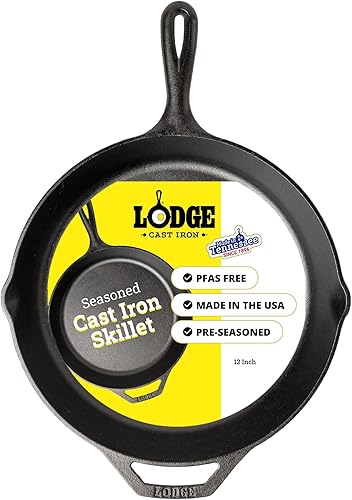
The one con worth knowing: Lodge’s rough sand-cast texture means eggs will stick until you’ve built 3–4 months of seasoning. For eggs from day one, carbon steel is better.
Best Budget Carbon Steel: Lodge 10-Inch Carbon Steel Skillet
Lodge’s carbon steel skillet is the best entry point if you want to try the material without committing to an expensive European pan. At around $45, it arrives pre-seasoned, which cuts down initial frustration. The 10-inch size is practical for 1–2 person households. It’s slightly thicker than French carbon steel pans — slower heat response but easier initial seasoning.
Lodge 10-Inch Carbon Steel Skillet

The con: The handle gets hot faster than the French alternatives. Always use a towel or silicone grip.
Best Professional Carbon Steel: Matfer Bourgeat Black Carbon Steel Pan
The Matfer Bourgeat is what you find in professional French kitchens. At about $75–$85 for the 11 5/8-inch version, it heats faster and builds a more glassy, non-stick patina once broken in. The beeswax coating it ships with must be removed before first use (run it in a hot oven until it smokes off, then wipe clean). Buyer reviews that compare it directly to the Lodge carbon steel consistently describe the Matfer’s surface as smoother once seasoned, requiring less oil for eggs.
Matfer Bourgeat Black Carbon Steel Frying Pan 11 5/8″
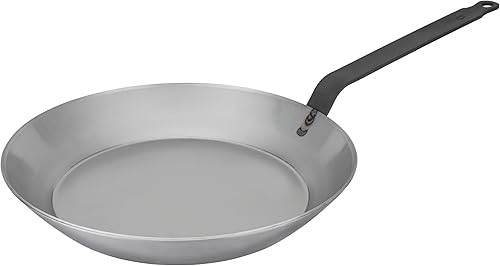
The con: The welded handle (no rivets) is harder to replace if it ever cracks — though cracked handles are rarely mentioned in buyer reviews even after years of heavy professional kitchen use.
Best Mid-Range Carbon Steel: de Buyer Mineral B Carbon Steel Fry Pan
de Buyer’s Mineral B is French-made, slightly thicker than Matfer, and builds seasoning more evenly for beginners. The riveted handle adds durability. At around $70–$90, it sits in the same price bracket as the Matfer but is a bit more forgiving during the break-in period. Both the Matfer and de Buyer are widely recommended by Serious Eats as the top carbon steel pans for home cooks.
de Buyer MINERAL B Carbon Steel Fry Pan

The con: The beeswax coating creates confusion for new users. Follow the manufacturer’s seasoning guide precisely — it’s counterintuitive but important.
Price: What You Actually Pay
Cast iron is cheaper at entry level. A Lodge 10.25-inch runs about $35–$40, and that’s the same pan professional caterers use for decades. You can spend more — Smithey Ironware starts around $175 for a smoother machined surface — but the gains are subtle for most home cooks.
Carbon steel starts slightly higher for quality pans. The Lodge carbon steel at $45 is an exception, but the French pans most cooks aspire to (Matfer, de Buyer) run $70–$90. You’re paying for thinner gauge steel, better forging, and a cooking surface that — once seasoned — genuinely rivals non-stick coatings without any chemical coating to degrade.
Over a 10-year window, both materials are cheaper than replacing non-stick pans every 2–3 years. If you’re setting up a first apartment kitchen, our kitchen essentials guide has a full breakdown of which pans belong in each budget tier.
Which Should You Skip Entirely?
Skip cast iron if:
- You have a smooth glass-top or ceramic stovetop — cast iron’s weight can crack the surface if you slide it rather than lift
- You have wrist, shoulder, or grip strength issues — a 10-lb pan full of food is genuinely heavy
- You cook mostly quick weeknight stir-fries where fast temperature response matters more than retention
Skip carbon steel if:
- You’re a beginner who won’t commit to the seasoning process in the first 4–6 weeks — a stripped carbon steel pan is an unpleasant cooking experience
- You frequently cook acidic dishes (pasta sauces, braised tomatoes) — carbon steel’s thinner seasoning is more vulnerable early on
- You want one pan that does everything without much thought — cast iron’s forgiving nature makes it the better “set it and forget it” option
Skip both if you want non-stick with zero maintenance — neither material competes with a fresh PTFE or ceramic coating for pure ease. The trade-off is that non-stick coatings degrade; cast iron and carbon steel improve with every use.
For a full breakdown of how to clean, season, and store both materials long-term, see our complete kitchen tool care guide.\n\nKey Takeaways
- The cast iron vs carbon steel skillet decision comes down to priorities: retention vs. responsiveness, heavy vs. light, forgiving vs. precise.
- Cast iron is the better starter pan — lower price, easier seasoning, more heat mass for home-range cooking.
- Carbon steel is the better long-term pan once you’ve learned to maintain it — lighter, faster, and capable of natural non-stick performance without coatings.
- The Lodge cast iron (~$40) and Lodge carbon steel skillet (~$45) are the best entry-level options in each category.
- For professional-grade carbon steel, the Matfer Bourgeat ($75–$85) is the benchmark most serious home cooks should aim for.
- Both materials are lifetime investments — buy once, maintain well, cook better than any non-stick pan you’ve ever owned.