Baking Sheets vs. Pizza Stones: When to Use Which
Kitchaneers is reader-supported. When you buy through links on this page, I may earn a small affiliate commission — at no extra cost to you.
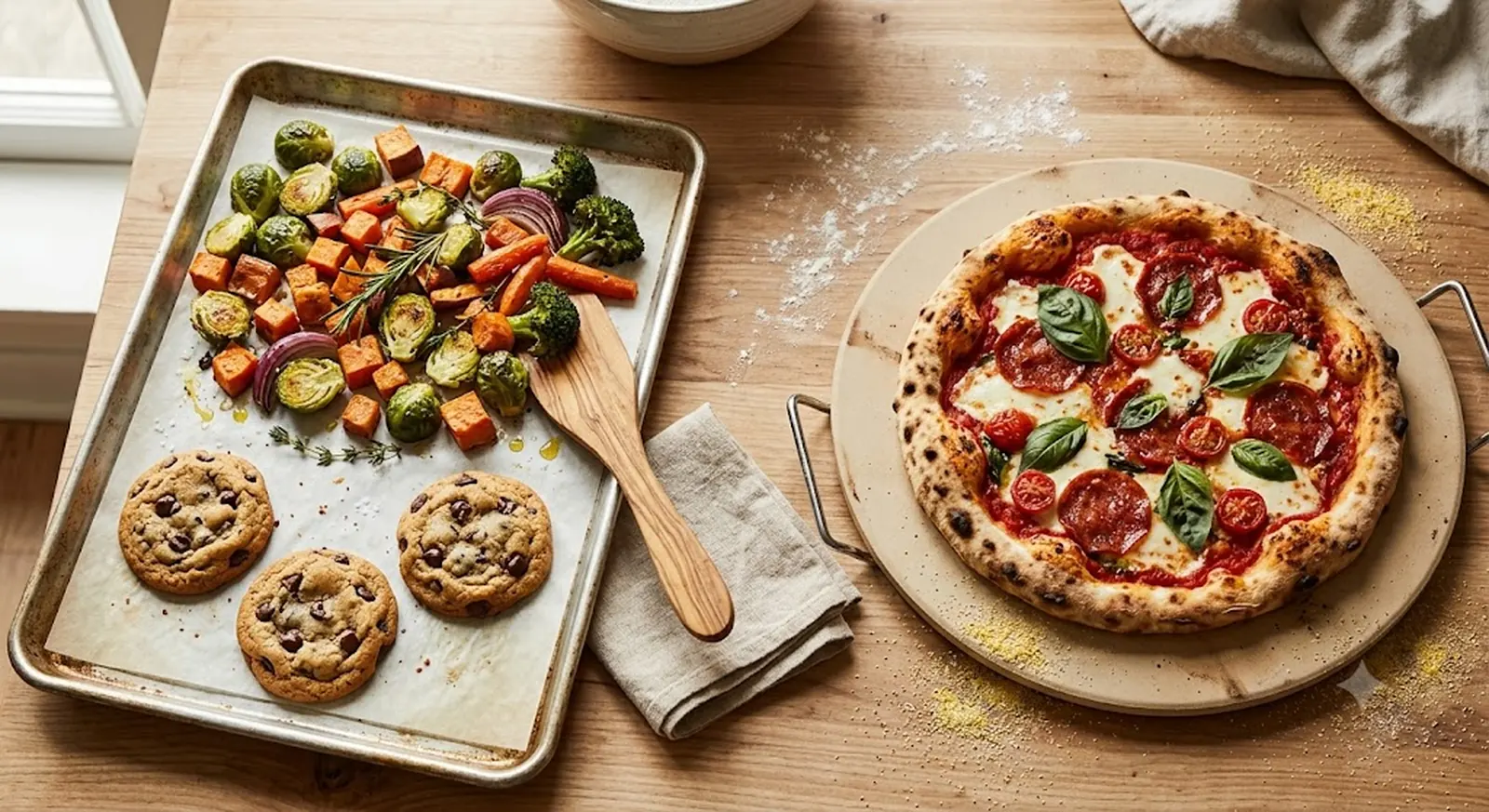
It’s an easy pair to mix up: slide a homemade pizza onto a cold sheet pan and the bottom stays pale, or try to roast a tray of vegetables on a stone and end up with a cleanup nightmare. Once you dig into how each one actually heats — and into what hundreds of verified buyers keep saying went right or wrong with each — the rule becomes clear: these tools are not competitors. They solve different problems. Here’s exactly when to reach for each — and the honest tradeoffs nobody mentions.
The short answer
Use a baking sheet for cookies, sheet-pan dinners, roasting vegetables, toasting nuts, reheating leftovers, and frozen foods — basically everything except crispy artisan crust. Use a pizza stone when you specifically want a browned, crackly bottom on homemade pizza or rustic bread and you’re willing to preheat it for 45 minutes to an hour. If you can only buy one right now, buy the baking sheet: it’s cheaper, more versatile, and you’ll use it four times a week. Add the stone later, once you’re chasing pizzeria-style crust.
How they actually work
The difference comes down to physics, and it’s simpler than most articles make it sound. A baking sheet is thin aluminum or aluminized steel. It heats up fast and it conducts heat quickly, but it holds almost no heat in reserve. That responsiveness is perfect when you’re baking something delicate that you don’t want to scorch.
A pizza stone is thick ceramic or cordierite with a lot of what engineers call thermal mass. It takes forever to heat up, but once it’s saturated with heat it dumps that energy into whatever you put on it — fast and steady, even when you open the oven door. That blast of stored heat is what sets a pizza crust in the first two minutes and gives bread its oven spring.
A thin metal pan simply can’t deliver that surge, and a stone can’t cool down fast enough to be forgiving with cookies. Each one is great at exactly what the other is bad at. For a deeper look at how metal thickness changes baking results, my guide to the best sheet pans breaks down gauge and warping.
When a baking sheet wins
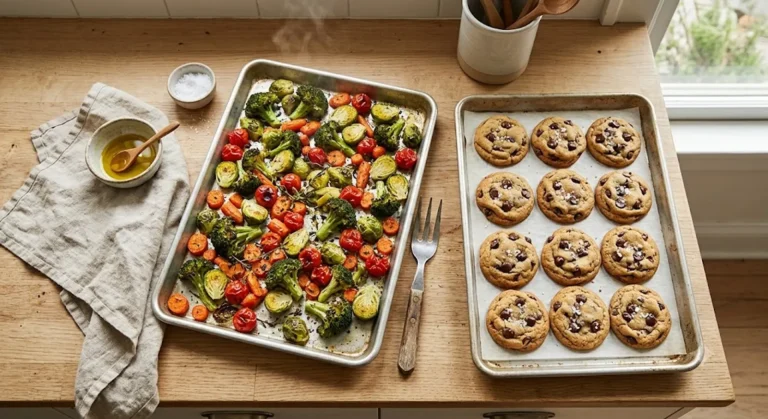
The baking sheet is the workhorse, and it wins most weeknights. Reach for it when you’re baking cookies, where even, gentle heat keeps the bottoms from burning before the centers set. It’s the only sane choice for sheet-pan dinners and roasted vegetables, because you need a rim to catch juices and room to spread food in a single layer. It’s also what I use for toasting nuts, reheating pizza slices, warming garlic bread, and baking anything that arrives frozen with “bake on a sheet” printed on the box.
Here’s the surprise: a baking sheet even handles frozen store-bought pizza better than a stone. Frozen pizza is engineered to bake from a cold start, and the stone’s slow warm-up actually works against it. Flip the sheet upside down so the food sits on the flat surface with no rim in the way, and you get a respectable crust with zero fuss.
When a pizza stone wins
The stone earns its cabinet space in exactly one situation, but it’s a big one: from-scratch pizza and rustic bread where the bottom crust matters. With homemade dough, a properly preheated stone gives a crisp, blistered, structurally sound base that a metal pan can’t match — it’s the single most consistent praise in stone reviews, and the top complaint from anyone who tries to skip one. The stone also stabilizes oven temperature, so opening the door to slide in a loaf doesn’t tank the heat the way it does on a bare rack.
Artisan boules, baguettes, focaccia, and Neapolitan-style pizza all benefit from that stored heat. If you’re serious enough about pizza that you’re eyeing a dedicated setup, at some point you graduate to an outdoor pizza oven — but a stone in your home oven is the cheapest way to get 80% of the way there.
What about a baking steel?
There’s a third option worth knowing about: a baking steel, which is a slab of solid steel that does the stone’s job but conducts heat even faster and won’t ever crack. It makes genuinely better pizza than ceramic. The catch is that a good one costs several times what a stone does and weighs a ton, so I only recommend it to people who make pizza most weeks. For everyone else, a stone hits the sweet spot of price and performance.
Living with each: the parts nobody warns you about
Preheat time. A baking sheet is ready when your oven is. A stone needs 45 minutes to an hour of preheating at full heat, or it does nothing. Budget for it.
Thermal shock. This is the stone’s Achilles’ heel. Put a cold stone into a hot oven, or drop cold dough onto a screaming-hot stone, and it can crack. Always heat the stone with the oven from cold, and never run cold water over a hot one.
Cleaning. Sheets wipe down or go in the dishwasher (check the finish first). Stones are the opposite — no soap, ever, because the porous surface drinks it up. You scrape off residue and let the darkening happen; those stains are seasoning, not dirt. My kitchen tool care guide covers stone and pan upkeep in detail.
Storage. Sheets stack flat in a slim cabinet. A stone is heavy, bulky, and fragile at the edges — most people end up leaving it in the oven full-time rather than finding it a cabinet, which means remembering it’s there before preheating for something else.
My picks
Here are the four worth your money — two baking sheets and two pizza stones — picked by comparing specs and combing through verified buyer feedback for recurring praise and complaints. Prices shift constantly, so I’ve linked each to its live Amazon page rather than quote a number that’ll be stale by next week.
Nordic Ware Naturals Half Sheet, 2-Pack — best all-around baking sheet

This is the pan I grab for everything. Heavy-gauge aluminum, an encapsulated steel rim so it doesn’t warp and clang when it hits a hot oven, and a size that fits a half sheet of cookies or a full dinner’s worth of roasted vegetables. Two in a pack means I can run a double batch without stopping. The genuine con: bare aluminum discolors over time and isn’t nonstick, so acidic foods can leave marks and you’ll want parchment for sticky bakes.
USA Pan Bakeware Nonstick Half Sheet — best if you hate scrubbing

Aluminized steel with a corrugated surface and a textured nonstick coating, made in the USA. The ridges lift food slightly for airflow and cleanup is genuinely easy — sticky glazes and cheese release without a fight. It’s my choice when I know I’ll be baking something messy. The genuine con: the nonstick coating means it’s hand-wash only if you want it to last, and I wouldn’t run it under a broiler for extended periods the way I can with bare aluminum.
Old Stone Round Pizza Stone, 16-Inch — best pizza stone overall

A thick, 16-inch round stone that holds heat beautifully and gives me the crisp, blistered crust I want from homemade pizza. The generous diameter fits a full pie with room to launch it off a peel, and it doubles for rustic bread. This is the one I’d hand a friend who’s ready to level up their pizza night. The genuine con: it’s heavy and, like every ceramic stone, vulnerable to thermal shock — heat it slowly from cold and keep it away from cold water, or you’ll risk a crack.
Unicook Cordierite Pizza Stone, 15 x 12-Inch — best value
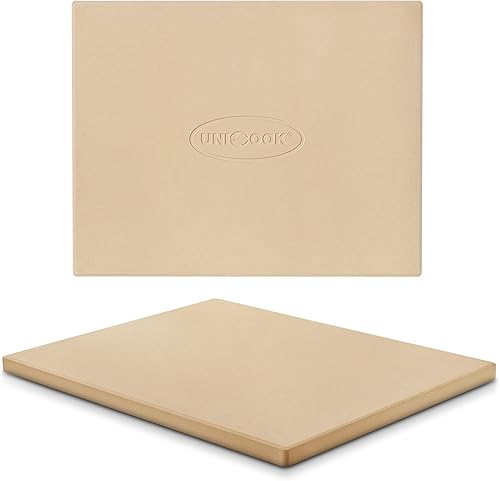
Cordierite handles high heat and resists thermal shock better than basic ceramic, and this rectangular slab is the shape I actually prefer — it fits more oven racks, bakes two smaller flatbreads at once, and slides in where a big round won’t. It comes with a scraper, which is a nice touch. For the price, it punches well above its weight. The genuine con: at 15 x 12 inches it’s a little tight for a large round pizza, so if pies are your main goal, size up to a bigger stone.
The bottom line
Don’t think of this as a versus. A baking sheet and a pizza stone belong to the same kitchen, doing different jobs. If your baking is mostly cookies, dinners, and the occasional frozen pizza, a good sheet pan is all you need — and it pairs perfectly with the rest of a well-built cookware set. The day you start making pizza dough from scratch is the day the stone earns its place in your oven. Buy the sheet first, add the stone when your ambitions catch up, and you’ll never grab the wrong one again.
Frequently asked questions
Can I use a baking sheet as a pizza stone?
You can, and for frozen pizza it’s actually the better tool. For homemade dough you won’t get the same crisp bottom, because a thin sheet can’t store and release heat the way a stone does. A workaround: preheat the sheet upside down in the oven first so the food hits a hot surface right away.
Do pizza stones really make a difference?
For scratch-made pizza and rustic bread, yes — clearly. The stored heat sets the crust in the first couple of minutes and keeps the oven temperature steady. For everything else, the difference is negligible and often works against you.
Do I have to preheat a pizza stone?
Yes, always, and for longer than you’d think — 45 minutes to an hour at your oven’s highest setting. A stone that isn’t fully saturated with heat does nothing that a plain oven rack wouldn’t, and rushing it is the number one reason people feel disappointed by their stone.
Why did my pizza stone crack?
Almost always thermal shock — a sudden temperature swing. Sliding a cold stone into a hot oven, placing frozen dough on a blazing stone, or rinsing a hot stone under cold water all invite cracks. Heat it gradually with the oven, let it cool in the oven, and it’ll last for years.