Best Outdoor Pizza Ovens Under $500: 5 Compared
In brief: The best outdoor pizza oven under $500 for most backyards is the Ooni Koda 12 — gas-powered, hits 950°F, and cooks a 12-inch pizza in about 60 seconds with almost no learning curve. Want live-fire flavor for less money? The Ooni Karu 12 burns wood or gas. Easiest to live with: the Solo Stove Pi Prime. No propane hookup? The electric Ninja Artisan. Tightest budget? The BIG HORN 12″. All five come in under $500.
Disclosure: Kitchaneers is reader-supported. Some links below are affiliate links, and I may earn a small commission at no extra cost to you. I only recommend gear backed by strong, verified owner feedback — not just a good spec sheet. Last updated: July 2026.
A dedicated outdoor pizza oven is one of the rare upgrades that actually lives up to the hype: a standard home oven tops out around 550°F and takes eight minutes per pizza with a soft, pale crust, while every oven on this list beats that, most by a wide margin. To find the best five under $500, I dug through the verified-purchase reviews for each contender — gas, wood, and electric — looking for the complaints and praise that repeat often enough to be signal rather than noise: crust quality, heat-up speed, how forgiving each is for beginners, and where owners say the corners got cut. The question isn’t whether a backyard oven is worth it — it is. The question is which fuel and which price point fit how you actually cook. That’s what the review patterns sorted out, and where each of these ovens genuinely falls short.
The best outdoor pizza ovens under $500 at a glance
| Oven | Fuel | Max temp | Best for |
|---|---|---|---|
| Ooni Koda 12 | Propane gas | ~950°F | Best overall |
| Ooni Karu 12 | Wood / charcoal / gas | ~950°F | Best for wood-fired flavor & value |
| Solo Stove Pi Prime | Propane gas | ~900°F | Easiest to use |
| Ninja Artisan (MO201) | Electric | ~700°F | Best for patios & no-propane setups |
| BIG HORN 12″ | Wood pellet (multi-fuel) | ~1110°F | Best budget |
What to look for in an outdoor pizza oven under $500
Before the picks, here’s the framework used to judge them. Under $500 you’re not choosing between “good” and “bad” ovens — nearly all of these make far better pizza than a home oven. You’re choosing between trade-offs, and four factors decide which trade-offs you’ll be happy with.
Fuel type. This is the biggest fork in the road. Gas (propane) is push-button and consistent — you set it and cook. Wood and charcoal give you that smoky, blistered live-fire flavor but demand tending and a real learning curve. Electric plugs into an outlet, which is the whole game if you live somewhere propane tanks are a hassle. I break down which fuel suits which cook in its own section below, because it matters more than any single spec.
Max temperature. True Neapolitan pizza needs 850–950°F to cook in 60–90 seconds and get that leopard-spotted char. Gas and wood ovens hit that easily. Electric ovens generally top out lower — around 700°F — which still bakes a great pizza in a few minutes but with a milder char. If Neapolitan-style is your goal, temperature is non-negotiable.
Stone size and pizza capacity. Most ovens here cook a 12-inch pizza. That’s plenty for one person feeding a crowd in shifts, but it means you’re making pizzas one at a time. If you regularly cook for a big group, factor in that a pizza night is a relay, not a single bake.
Heat-up time and portability. Most of these reach cooking temperature in 15–20 minutes. The portable ones fold their legs and weigh 20–30 pounds, so they travel to a campsite or a friend’s patio. If you’ll cook in one fixed spot, portability matters less than a stable, roomy work surface next to the oven.
One thing that shows up again and again across owner reviews: budget for the pizza peel and an infrared thermometer from day one. They’re covered at the end, but they’re not optional — launching and reading stone temperature are half the battle. If you’re kitting out a whole outdoor cooking setup this summer, my 4th of July cookout checklist covers the rest of the gear.
The 5 best outdoor pizza ovens under $500
Ooni Koda 12 Gas Pizza Oven — Best Overall

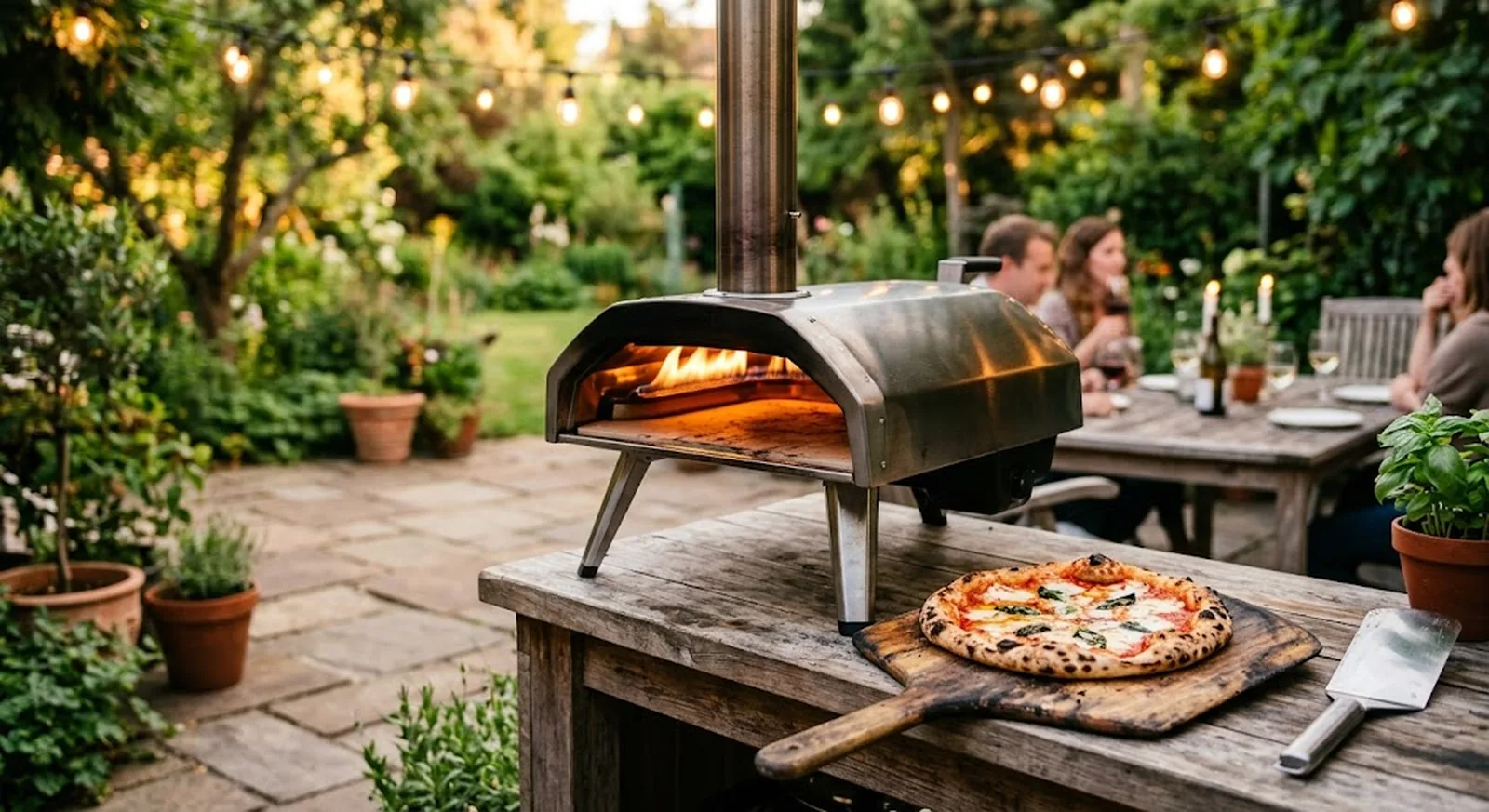
The Koda 12 is the oven most reviewers say to hand to almost anyone starting out. It runs on propane, lights with a push-button igniter, and reaches ~950°F in about 15 minutes. There’s no fire to build, no pellets to feed — you turn a dial and cook. Owner reviews consistently describe a properly puffed, leopard-spotted cornicione in about 60–70 seconds, a result no standard home oven gets close to in eight minutes at 550°F. It’s the oven owners say they reach for most on ordinary weeknights, because it demands nothing but rotating the pizza.
It’s also genuinely portable: the legs fold, there’s no chimney, and it weighs about 20 pounds, so reviewers describe moving it easily between a patio and a picnic table, or taking it camping. The flame runs across the back, so you do have to rotate the pizza a quarter-turn every 20 seconds — miss that and one edge chars while the front stays pale.
The honest con: gas means convenience, not live-fire flavor. If you’re chasing the smoky, wood-fired taste of a pizzeria oven, the Koda won’t give it to you — it makes a fantastic, consistent pizza that tastes clean rather than smoky. There’s also no built-in thermometer, so you’ll want an infrared gun to read the stone.
Ooni Karu 12 Multi-Fuel Pizza Oven — Best for Wood-Fired Flavor & Value

The Karu 12 is the favorite among owners who actually want to cook with fire, and it happens to be the least expensive one on this list. It burns wood and charcoal out of the box, and it also reaches ~950°F, but the real draw is flavor: the wood fire gives the crust a smoky, blistered edge that the gas ovens simply can’t replicate. It’s the oven owners most often credit with their best pizzeria-style bakes — a charred, airy Neapolitan crust that gas alone doesn’t produce. It’s a multi-fuel oven, so you can add Ooni’s gas burner later if you want push-button nights too.
For the money, this is the most oven you can buy under $500. If you could only keep one of these five, and didn’t mind the extra effort, this would be it.
The honest con: live fire is work. You’re feeding wood, managing the burn, and riding a temperature that swings more than a gas dial ever will. New owners consistently report uneven early bakes while they’re learning to keep the fire hot, and cleanup involves ash. Also note the gas burner is sold separately, so “multi-fuel” costs extra to unlock. This is the oven for someone who wants to tend a fire, not avoid one.
Solo Stove Pi Prime Pizza Oven — Easiest to Use

Solo Stove’s Pi Prime is the most forgiving oven here, and the one I’d point a nervous first-timer toward. The demi-dome shape and wide-mouthed opening make launching and turning a pizza noticeably easier — reviewers consistently note there’s more room to maneuver the peel, so fewer pizzas fold in half on the way in. It’s gas-powered and heats evenly, and the stainless build feels a cut above. Where the Koda’s back-mounted flame demands frequent rotation, the Pi Prime’s dome shape radiates heat more evenly, so owners report their pies need less babysitting.
If your goal is to invite friends over and hand the peel to people who’ve never cooked pizza before, this is the oven that makes them look competent.
The honest con: it’s gas-only out of the box, so like the Koda it won’t give you wood-fired flavor — and at around $400 it’s the priciest of the propane picks here. You’re paying for the wider opening and even bake, which are real, but it doesn’t hit quite the scorching top-end temperature of the Ooni pair. Great pizza, just not the absolute fastest bake.
Ninja Artisan Electric Outdoor Pizza Oven (MO201) — Best for Patios & No-Propane Setups

If wrangling propane tanks is a non-starter — small patio, apartment balcony where gas is banned, or you just don’t want another tank to refill — the Ninja Artisan solves it by plugging into a standard outlet. It reaches ~700°F, cooks a 12-inch pizza in about three minutes, and it’s genuinely a 5-in-1: pizza, bake, broil, proof, and warm. Owners use it for cookies and roasted vegetables on nights they’re not making pizza, a versatility none of the fuel-burning ovens on this list can match as easily. For the electric convenience, it punches well above its price.
Weather-wise it’s also the least fussy: no flame to shield from wind, no ash, no tank. Push a button and it’s heating.
The honest con: 700°F is the ceiling, and that’s meaningfully lower than the ~950°F of the gas and wood ovens. Your crust cooks in three minutes rather than 60 seconds, and the char is gentler — you get a very good pizza, not a blistered Neapolitan one. You also need an outdoor outlet within reach, which not every backyard has. It’s a trade of peak flavor for peak convenience.
BIG HORN 12″ Multi-Fuel Pizza Oven — Best Budget

At well under half the price of the Ooni ovens, the BIG HORN is how you get into outdoor pizza without spending $300+. It runs on wood pellets out of the box, cooks a 12-inch pizza, and the manufacturer rates it up to a scorching 1110°F. Owner reviews back that up: it does get blazing hot and turns out a respectably charred pizza once the pellet feed is dialed in. For someone who wants to try live-fire pizza and isn’t sure they’ll stick with the hobby, it’s a low-risk way in.
It’s also multi-fuel compatible, so in theory you can add gas or electric burners down the line.
The honest con: those extra burners are sold separately, so the cheap sticker price is really a pellet-only oven until you spend more. And reviewers note the price difference in the build — the steel is thinner and heat retention isn’t as steady as the Ooni or Solo Stove ovens, so temperature drifts more and the fire needs more active tending. It makes good pizza; it just asks for more attention and won’t feel as solid.
Gas vs. wood vs. electric: which fuel is right for you?
This is the decision that actually matters, so here’s how the pattern across owner reviews for all three fuel types should steer you.
Choose gas (Koda 12 or Pi Prime) if you want the best pizza with the least fuss. Push-button ignition, steady temperature, no ash — you can make excellent pizza on a Tuesday night without planning around it. This is the right call for most people, and it’s why the gas Koda 12 is the overall pick here. The trade is that clean, consistent taste rather than smoky flavor.
Choose wood/multi-fuel (Karu 12 or BIG HORN) if flavor is the whole point and you enjoy the ritual of fire. You’ll get smoky, blistered crust the gas ovens can’t touch — but you’ll also feed the fire, ride a bouncier temperature, and clean up ash. Pick this if tending a fire sounds like part of the fun rather than a chore. If you already love live-fire cooking, this will feel familiar; it’s the same mindset as running a pellet smoker.
Choose electric (Ninja Artisan) if propane is impractical — a small balcony, an HOA that bans open flame, or you simply don’t want another tank. You give up the top-end temperature and the deepest char, but you gain plug-in simplicity and an oven that also bakes and roasts. For a lot of apartment and small-patio cooks, that’s the difference between owning a pizza oven and not.
Accessories you’ll actually need
None of these ovens is truly plug-and-play on its own. Two accessories are essential, and one is nice to have.
A pizza peel is non-negotiable — you can’t launch or turn a pizza at 900°F with a spatula. A perforated metal peel that lets excess flour fall away is what reviewers most often recommend after a stuck launch or two. An infrared thermometer is the other must-have, because none of these ovens (except the electric Ninja) tells you the stone temperature, and launching a pizza onto an under-heated stone is the number one cause of a sad, pale crust. A weatherproof cover is the nice-to-have that extends the oven’s life if you store it outdoors — steel and rain aren’t friends.
Once you’ve got the oven and the peel, the rest of a proper outdoor cook comes down to prep and serving gear — a good BBQ tool set covers most of it.
What to skip
A few things to steer clear of. Ovens over 16 inches at this price — the bigger the stone, the harder it is to heat evenly on a budget burner, and a 12-inch oven already makes a generous pizza. “Kits” that bundle a cheap oven with a stack of flimsy accessories to pad the value — you’ll replace the accessories anyway. And skip the temptation to cook your first pizza for guests; every one of these ovens has a learning curve, so burn through a few practice pies solo before pizza night. If you’re weighing a pizza oven against firing up the grill instead, my cast iron grill pan guide covers the lower-cost route to a similar char.
FAQ
Can you really get a good pizza oven under $500?
Yes — and it’s not close. Every oven on this list makes dramatically better pizza than a home oven, cooking in one to three minutes at 700–950°F versus eight-plus minutes at 550°F. The premium sub-$500 ovens rival results from models costing far more.
Gas or wood for a beginner?
Gas. A push-button gas oven like the Koda 12 or Pi Prime lets you focus on the dough and the launch instead of managing a fire. You can always graduate to wood later — the Karu 12 even lets you run both.
How hot does a pizza oven need to get?
For true Neapolitan pizza, 850–950°F cooks a pie in 60–90 seconds with proper char. Around 700°F (typical for electric) still makes an excellent pizza in about three minutes, just with a milder crust.
Are electric pizza ovens worth it?
If you can’t use propane, absolutely. You trade the top-end temperature and deepest char for plug-in convenience and the ability to bake and roast, too. For balconies and small patios, an electric oven is often the only practical option.
How long do these ovens take to heat up?
Most reach cooking temperature in about 15–20 minutes. The electric Ninja is similar. Always give the stone the full preheat — rushing it is the most common reason a first pizza disappoints.
The bottom line
Weighing the review evidence across all five, the Ooni Koda 12 is the one to buy for most people — it makes outstanding pizza with the least effort, and gas is the right default. If flavor is everything and you enjoy live fire, the Ooni Karu 12 is the best value here and the one owners most often credit with their best pizzeria-style pies. The Solo Stove Pi Prime is the friendliest for nervous beginners, the Ninja Artisan is the answer when propane isn’t an option, and the BIG HORN 12″ gets you cooking for the least money. Whichever you pick, buy the peel and the infrared thermometer with it, preheat fully, and practice before the crowd shows up. For the rest of your outdoor kitchen, my roundup of the best small kitchen appliances covers what earns its space indoors, too.