Best Sheet Pans for Roasting and Baking (Compared and Ranked)
The best sheet pans are the ones that brown food evenly, shrug off years of high-heat roasting, and don’t buckle the second they hit a hot oven. We compared five widely-sold sheet pans by digging through hundreds of verified-purchase reviews — looking for recurring complaints about warping, uneven browning, and coatings that give up early — and cross-checking those patterns against gauge, rim construction, and price. The differences between them are bigger than the price tags suggest. Here are the ones that earned a spot on our list.
Disclosure: I’m an Amazon Associate and earn from qualifying purchases made through the links below, at no extra cost to you.
How we evaluated these sheet pans
Rather than run our own bake-off, we went straight to the people who’ve lived with these pans for months or years: verified Amazon buyers. For each pan, we read through the review history looking for recurring patterns — complaints about warping under high heat, uneven browning, coatings that scratch or fail early, and how the pan holds up to repeated washing over time. We weighted those patterns against the spec sheet (gauge, rim construction, coating type) and where the pan sits on price. What we cared about most: even heat, warp resistance at high temperatures, and whether the surface holds up over time, based on what real owners report.
The 5 best sheet pans of 2026
Best overall: Nordic Ware Naturals Half Sheet (2-Pack)

This is the pan we’d point most people to by default, and it’s easy to see why it’s a fixture in professional kitchens. The pure aluminum body heats fast and browns cookies edge-to-edge, and it’s one of the few sheet pans where warping complaints are genuinely rare in the reviews — the encapsulated steel rim gets called out again and again as the reason it stays flat under high heat. Getting two in a pack means you can roast a main and a side at once, which is a big part of why it’s a favorite for weeknight cooking. It’s also genuinely affordable for the quality — a rare combination.
The genuine con: bare aluminum is not nonstick and it will develop dark discoloration over time — a recurring theme in reviews. Cookies release fine with parchment, but sticky, sugary bakes need a liner or they’ll grab. If you want a wipe-clean surface, this isn’t it.
Best nonstick: USA Pan Bakeware Nonstick Half Sheet

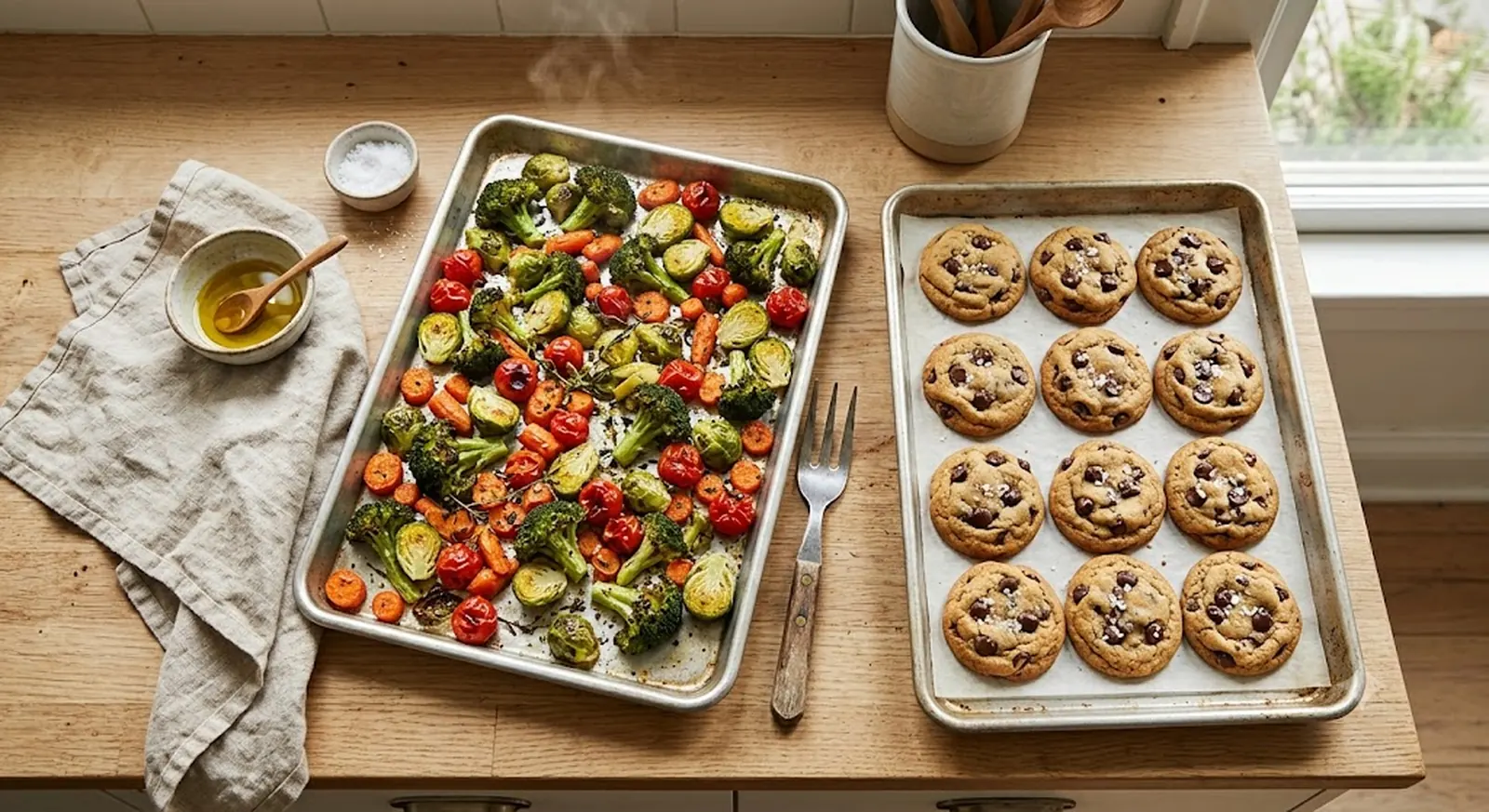
If you want food to slide off without a fight — roasted salmon, glazed carrots, anything that caramelizes into a sticky mess — this is the pan reviewers reach for most. It’s made of aluminized steel with a corrugated surface that both stiffens the pan and lets air circulate underneath, and buyers consistently report even browning as a result. The nonstick coating shows up in reviews as one of the more durable ones on the market, with owners reporting it shedding sticky glazes with a quick wipe and holding up well against silicone tools over months of use. Cleanup complaints are notably rare compared to the other pans on this list.
The genuine con: the coating means you have to baby it a little — no metal utensils, and hand-washing keeps it healthy far longer than the dishwasher, per multiple reviewers who noted faster wear after dishwasher use. If you’re rough on your gear, the bare-aluminum picks will outlast it.
Best for high-heat roasting: Fat Daddio’s Natural Aluminum Half Sheet

If roasting is your main event, this is the pan we’d point you to. It’s thick, heavy-gauge anodized aluminum, and reviewers consistently report it staying dead flat even after years of high-heat use — the anodized surface also resists the pitting and staining that eventually catches up with bare aluminum. Buyers roasting potatoes and Brussels sprouts describe the deep, blistered edges you want from a roasting pan, not the steamed-looking results a thinner sheet gives you. It’s built to outlast a lot of kitchens.
The genuine con: it’s a single pan at a price where you could buy the Nordic Ware two-pack, so it’s a worse deal if you need multiples. And like all bare-metal pans, it’s not nonstick — parchment is still your friend.
Best budget: Wilton Gold Non-Stick Warp-Resistant Cookie Sheet

Not everyone needs a commercial-grade pan, and for a first apartment or an occasional baker this Wilton punches well above its budget-friendly price. The nonstick coating gets consistent praise for releasing cookies cleanly, and the “warp-resistant” claim mostly holds up in reviews — some buyers note slight flexing under thermal shock, but report it springing back flat rather than staying bent. For weekend cookies and the odd tray of nuggets, it does the job without complaint.
The genuine con: it’s a lighter-gauge pan, and a share of reviewers report less even browning than the aluminum picks along with concerns about long-term durability under years of daily 450°F roasting. It’s a starter pan, and an honest one — just don’t expect heirloom durability.
Best for small kitchens: Nordic Ware Naturals Quarter Sheet
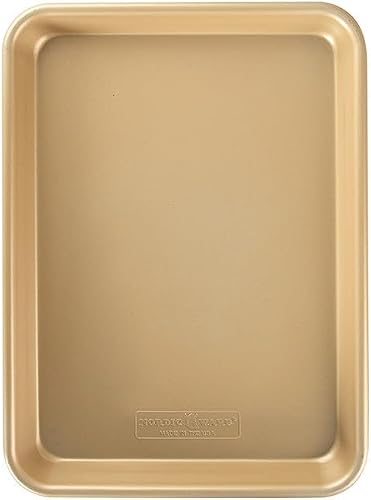
An easy pick for anyone in a small kitchen. This quarter sheet fits inside a toaster oven and is perfect for the small jobs — toasting nuts, reheating a couple of slices, roasting a single portion of veg — without heating a full pan or a full oven. It’s the same even-heating aluminum as the full-size Nordic Ware, just scaled down, and reviewers who cook for one or two consistently call it the pan they reach for most.
The genuine con: it’s obviously too small for batch cooking, so it’s a complement to a half sheet, not a replacement. The nonstick coating here is also lighter-duty than the USA Pan’s.
Aluminum vs. nonstick vs. anodized: which should you buy?
Based on this comparison, our rule of thumb is simple. Choose bare aluminum if roasting at high heat is your priority — it conducts heat beautifully and it’s the most durable, as long as you’re comfortable using parchment for sticky jobs. Choose nonstick if easy cleanup matters more than maximum longevity, especially for glazes and anything sugary. Choose anodized aluminum if you want the heat performance of bare aluminum with better stain and corrosion resistance, and you don’t mind paying a bit more.
Honestly, most kitchens are best served by owning two: a bare-aluminum workhorse and one nonstick for the sticky stuff. If you’re building out cookware from scratch, my guide to the best cookware sets covers the pots and pans that pair with these.
How to keep a sheet pan from warping
Warping is the number-one complaint about cheap sheet pans, and it comes down to two things: thickness and thermal shock. A thin, lightweight pan expands unevenly when it heats, and the metal has nowhere to go but up — hence the mid-bake pop. Look for a heavier-gauge pan (at least around 18-gauge, or a rolled/encapsulated rim) if you roast above 400°F. Then avoid shocking it: don’t run a hot pan under cold water, and don’t add frozen food to a preheated pan if you can help it.
The pans with the fewest warping complaints in verified reviews all shared one trait — a reinforced steel rim. It’s the single spec we’d prioritize. For more on why cutting corners costs more over time, I broke down the real cost of cheap cookware.
How to clean and care for your sheet pans
For bare and anodized aluminum, skip the dishwasher — the detergent oxidizes the surface and leaves it dull and chalky. Hand-wash with warm soapy water instead. For baked-on grease, a paste of baking soda and a little water, left to sit for 15 minutes, lifts most of it without scrubbing off the finish. Nonstick pans are simpler — warm water and a soft sponge, no abrasive pads — but the coating is a consumable, so expect to replace them eventually.
If you’re wondering how long that really is, I dug into how long non-stick coating lasts and the signs yours is done. A little discoloration on any pan is cosmetic, by the way; it doesn’t affect performance one bit.
Frequently asked questions
What’s the best material for roasting vegetables?
Bare or anodized aluminum. It conducts heat quickly and evenly, which is exactly what you want for deep browning and crisp edges. A thin nonstick pan tends to steam vegetables before they caramelize.
Why do my sheet pans warp in the oven?
Almost always because the pan is too thin or was thermally shocked. Heavier-gauge pans with a reinforced steel rim resist warping. Avoid running a hot pan under cold water, and preheat gently rather than blasting a cold thin pan to 500°F.
Half sheet or quarter sheet — which size do I need?
A half sheet (roughly 18×13 inches) is the everyday standard and fits most home ovens. Add a quarter sheet if you cook for one or two, or if you want a pan that fits your toaster oven for small jobs.
Are dark sheet pans better than light ones?
Dark pans absorb more heat and brown faster, which is great for roasting but can over-brown the bottoms of delicate cookies. Light aluminum gives you more even, forgiving results for baking. It’s a trade-off, not a clear winner.
Is it safe to use nonstick sheet pans at high heat?
Most modern nonstick pans are rated to around 450°F, which covers nearly all roasting. Check the manufacturer’s stated limit and stay under it. If you routinely cook hotter than that, a bare-aluminum pan is the safer long-term choice.
The bottom line
If you buy one pan, make it the Nordic Ware Naturals Half Sheet — it does the most for the least and it’ll outlast almost anything in your kitchen. Add the USA Pan nonstick for sticky bakes and a quarter sheet if you cook small, and you’re set for years. On a tight budget, the Wilton will get you cooking today without regret. Whichever you choose, prioritize a heavy body and a reinforced rim, and you’ll never think about your sheet pan again — which is exactly how good kitchen gear should feel. For more budget-first picks, see my best budget cookware sets under $100.
Not sure whether a sheet pan or a stone is the right tool for a given bake? I break it down in my guide to baking sheets vs. pizza stones.