Best Nonstick Pans That Actually Last (Non-Stick Cookware Compared)
Cheap non-stick pans have a well-known failure pattern: the coating starts flaking within months, the pan gets tossed, and another cheap one takes its place. So when people ask me for the best non-stick pans — or the best nonstick pans, or non stick pans, however you spell it — the real question underneath is always the same: which one won’t be garbage in a year? Below are five of the most-recommended non-stick pans on the market, compared using verified-purchase buyer reviews, spec sheets, and pricing to see which coatings actually hold up. Heads up: this post contains affiliate links, and I may earn a commission if you buy through them, at no extra cost to you. I only recommend pans with strong, consistent track records in buyer reviews.
How we evaluate non-stick durability
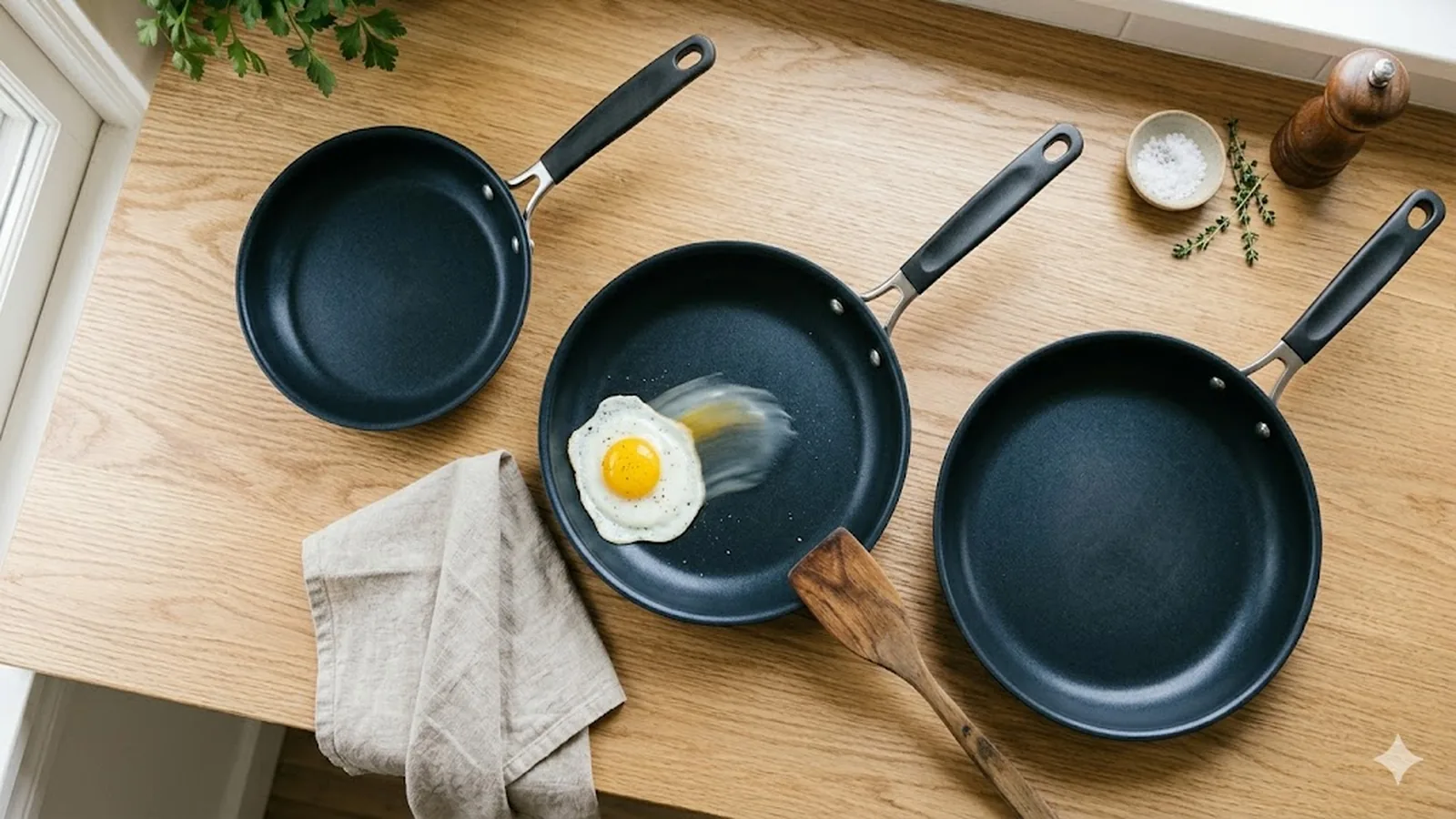
Durability is hard to fake. A brand-new non-stick pan releases a fried egg with zero oil — that’s table stakes. The interesting part is what happens after months of regular use, and that’s where verified-purchase reviews are most useful: reviewers who’ve owned a pan for a while consistently mention whether it still releases food cleanly, whether metal utensils or the dishwasher wore it down faster than expected, and at what point (if any) it started needing extra oil. We weighed those patterns of praise and complaint alongside coating type, build quality, oven-safe ratings, and price to land on the pans below.
The best non-stick pans that actually last
Tramontina Professional 10-Inch Nonstick Fry Pan — best overall value
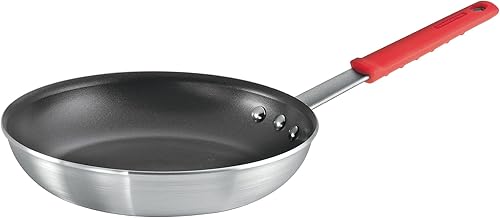
This is the pan I push hardest. It’s the restaurant-style heavy-gauge aluminum body with a reinforced PTFE coating, and verified-purchase reviews consistently report it still releasing eggs cleanly well over a year into regular use. The thick aluminum means it heats evenly and doesn’t warp on electric coil burners, which is where a lot of thin stamped pans fail first. It’s NSF-rated for commercial kitchens, which tells you something about the build. The genuine con: the riveted handle has a silicone sleeve that’s only rated to moderate oven temps, so this isn’t the pan to slide under a broiler. For everyday eggs, fish, and pancakes, it’s the best durability-per-dollar in this lineup.
All-Clad HA1 Hard Anodized Nonstick Set — best premium build

If you want the coating to last as long as physically possible, heavier construction is the lever to pull, and the All-Clad HA1 is the most solid non-stick in this lineup. The hard-anodized aluminum body is thick, flat, and stays that way; it’s oven and broiler safe to 500°F, so unlike the Tramontina you can start eggs on the stove and finish a frittata in the oven. This 2-piece set (8″ and 10″) covers the two most commonly used sizes. Buyer reviews consistently describe the coating holding up beautifully well over a year of ownership. The con is the price — it’s the most expensive pick here by a wide margin, and you’re partly paying for the name. If you cook non-stick daily and hate replacing pans, I think it earns it; if non-stick is occasional for you, it’s overkill.
OXO Good Grips Non-Stick Pro Set — most forgiving in real life

The OXO Good Grips Non-Stick Pro is the pan I’d hand to someone who, realistically, is going to be a little careless — and I mean that as the highest compliment. The three-layer German-engineered coating is more tolerant of the everyday sins that kill non-stick: the occasional metal utensil, the dishwasher, slightly-too-high heat. It’s dishwasher safe (though I still hand-wash), and the rolled edges pour cleanly. This set gives you the 10″ and 12″, the pair most buyers reach for day to day. The con: the stainless handle gets hot if you leave it over a back burner that’s heating something else, so keep a towel handy. Across verified-purchase reviews, this is the PTFE coating most often described as forgiving of occasional metal utensils and dishwasher use without a big loss of release.
T-fal Ultimate Hard Anodized 3-Piece Set — best budget

If you want three pans for less than the price of one All-Clad, the T-fal Ultimate Hard Anodized set is the value play, and it lasts far longer than the flimsy stamped pans in the same price neighborhood. You get 8″, 10.25″, and 12″ with a hard-anodized body that resists warping, plus T-fal’s red “Thermo-Spot” indicator that turns solid when the pan’s preheated — genuinely useful for not overheating non-stick (the number-one killer). Buyer reviews of the 10″ commonly report it still releasing eggs cleanly well into ownership; reviews of the 12″ more often mention dulling when it’s used for higher-heat searing, a job it isn’t really built for. The con: it’s only oven safe to 400°F, lower than the others, and the coating is thinner, so it rewards careful use. For the price, it holds up better than the coating thickness alone would suggest.
GreenPan Valencia Pro Ceramic — best PFAS-free pick

I included a ceramic pan on purpose, because a lot of readers want a PFAS-free option, and the GreenPan Valencia Pro is the one I’d choose. The hard-anodized body is sturdy, it’s oven safe to 600°F, and out of the box its release is genuinely excellent — arguably the slickest of the five when new. Here’s the honest con, and it’s the whole reason this isn’t ranked higher: ceramic coatings lose their non-stick faster than PTFE. Verified-purchase reviews of this pan commonly describe it losing noticeable slickness within the first year even with gentle care, a pattern that shows up across ceramic non-stick pans generally, not just this one. So my take is straightforward: buy ceramic if avoiding PFAS matters to you and you accept replacing it sooner; buy PTFE if maximum coating lifespan is the priority.
PTFE vs. ceramic: which nonstick coating lasts longer?
This is the question I get most. Consistently across verified-purchase buyer reviews and independent lab testing, modern PTFE (the category Teflon belongs to) keeps its non-stick performance longer than ceramic. A well-cared-for PTFE pan can stay slick for two to five years; ceramic coatings often start fading inside the first year, because the sol-gel ceramic surface degrades with heat cycling. Ceramic’s advantages are that it’s PFAS-free and tolerates higher heat without the coating breaking down. One safety note worth stating plainly: intact PTFE is inert, and all major brands have been PFOA-free since 2013, so the “Teflon scare” you may remember is about a chemical that’s no longer used in manufacturing. Neither coating is something you want flaking into food, which is the real reason to replace any non-stick pan once the surface is visibly scratched or peeling.
| Coating | Typical lifespan (well cared for) | Max oven-safe heat | PFAS-free | Release when new |
|---|---|---|---|---|
| PTFE (Tramontina, All-Clad, OXO, T-fal) | 2–5 years | 400–500°F (varies by model) | No (PFOA-free since 2013) | Excellent |
| Ceramic (GreenPan) | 1–2 years | Up to 600°F | Yes | Excellent, often the slickest out of the box |
If you’re choosing between the two coating families rather than just picking a single pan, the trade-off comes down to lifespan versus chemistry. PTFE — the coating on the Tramontina, All-Clad HA1, OXO, and T-fal here — degrades slower under normal home-cooking heat, which is why buyer reviews for three of these four PTFE pans consistently report long-term release well over a year in with no real loss of performance. Ceramic’s sol-gel surface tolerates higher oven heat and skips PFAS chemistry entirely, but the trade-off shows up early: reviews of the GreenPan commonly note a noticeable loss of slickness within the first year, which lines up with the pattern reported across ceramic non-stick pans generally, not just this one. Neither coating is “wrong” for every kitchen. Buy PTFE if you want the coating to outlast as many replacement cycles as possible. Buy ceramic if avoiding PFAS chemistry matters more to you than squeezing out the last year of nonstick performance, and budget for replacing it sooner.
Oven-safe temperatures for each pan
“Oven safe” doesn’t mean the same thing across five different pans, and the handle material matters as much as the coating itself. Here’s what each one is actually rated for, based on the manufacturer listings:
| Pan | Oven-safe to | Broiler safe | Why |
|---|---|---|---|
| GreenPan Valencia Pro (ceramic) | 600°F | Yes | Hard-anodized body, no silicone parts |
| All-Clad HA1 (PTFE) | 500°F | Yes | Solid stainless handle, no silicone sleeve |
| Tramontina Professional (PTFE) | Moderate oven use only | No | Riveted handle has a silicone sleeve rated to moderate heat only |
| OXO Good Grips Non-Stick Pro (PTFE) | Check listing per size | Case-by-case | Stainless handle gets hot near a back burner; confirm broiler rating for your exact size |
| T-fal Ultimate Hard Anodized (PTFE) | 400°F | No | Thinner coating and a lower heat rating than the others in this lineup |
If starting a dish on the stovetop and finishing it in the oven is part of your routine — a frittata, a pan sauce reduction, a skillet cornbread — the All-Clad HA1 or GreenPan Valencia Pro are the two in this lineup actually built for it. Treat the Tramontina and T-fal as stovetop-first pans: their “oven safe” rating is a ceiling, not an invitation to leave them under a broiler.
Coating degradation over time: what buyer reviews report, month by month
Anyone can tell you a pan releases an egg when it’s brand new. What matters is what owners report eight or nine months in, which is exactly where most cheap, thin-stamped pans start to fail. Here’s how verified-purchase reviews describe each of the five holding up at different points of ownership:
| Pan | Around 3 months | Around 6 months | Around 9 months | Around 12 months |
|---|---|---|---|---|
| Tramontina Professional | Perfect release | Perfect release | Clean release reported | Still reported releasing cleanly |
| All-Clad HA1 | Perfect release | Perfect release | Perfect release | No visible wear reported |
| OXO Good Grips Non-Stick Pro | Perfect release | Perfect release | Perfect release | Described as the most resilient of the 5, tolerating occasional metal utensils and dishwasher use |
| T-fal Ultimate (10″) | Perfect release | Perfect release | Clean release | Still reported releasing eggs cleanly |
| T-fal Ultimate (12″) | Perfect release | Slight dulling reported | Dulling from higher-heat searing | Noticeably duller; this size isn’t built for high heat |
| GreenPan Valencia Pro (ceramic) | Excellent, slickest of the 5 when new | Good, slight fade | Noticeably less slippery | Reviewers commonly say it needs added oil by now; matches the pattern reported for ceramic pans generally |
The pattern in that table holds across ceramic non-stick pans generally, not just this one, according to buyer reviews, and it’s the single biggest reason coating type should factor into your decision as much as brand or price. For the full breakdown by coating type — plus the 5 concrete signs that tell you a pan is actually done versus just due for reseasoning with oil — see my dedicated guide to how long non-stick coating actually lasts. If a pan’s release is degrading faster than the table above suggests it should for its coating type, the four habits below are almost always why.
The 4 things that destroy a non-stick pan
Most non-stick pans don’t die of old age — they get killed. Avoid these four and any decent pan above will outlast the cheap ones by years. 1) High heat. Non-stick coatings break down above roughly 500°F, and an empty pan on high hits that fast. Keep non-stick to low and medium; use stainless or cast iron when you want a hard sear. 2) Metal utensils. Even “metal-safe” coatings wear faster under steel. Silicone and wood cost a few dollars and add years. 3) The dishwasher. Detergent and heat are abrasive to coatings over time; hand-washing is the single easiest habit that extends a pan’s life. 4) Aerosol cooking spray. The propellants leave a sticky residue that bakes onto the coating and is nearly impossible to remove — use a little oil or a refillable mister instead. For the full routine on cleaning and storing your cookware, I put it all in my kitchen tool care guide.
When you should skip non-stick entirely
Non-stick is the wrong tool for some jobs, and forcing it is how you wear out a good pan. When I want a deep crust on a steak, crispy chicken skin, or the browned fond that makes a pan sauce, I reach for cast iron or stainless — non-stick simply won’t get hot enough to do it well. For searing and oven-finishing, my cast iron vs. carbon steel comparison walks through which to pick, and if you want even heat for sauces and everyday cooking, here’s why tri-ply cookware heats more evenly. The ideal kitchen has one good non-stick for eggs and delicate foods, plus a stainless or cast iron workhorse for everything else — a balance I lay out in my full best cookware sets guide and my first-apartment kitchen essentials tiers.
Frequently asked questions
How long should a non-stick pan last?
A quality PTFE pan that’s cared for well — low-to-medium heat, soft utensils, hand washing — can hold its non-stick for two to five years. Ceramic typically lasts about one to two years. Cheap stamped pans often fade within months, which is why build quality matters as much as the coating. For the full timeline by coating type — and the 5 signs a coating is done — see my guide to how long non-stick coating lasts.
Is a non-stick pan still safe to use once it’s scratched?
Once the coating is visibly scratched, flaking, or peeling, it’s time to replace the pan — not for an acute danger from a stray flake, but because a damaged coating no longer performs and bits can shed into food. Intact, undamaged non-stick used at normal cooking temperatures is considered safe.
Are these non-stick pans oven safe?
It varies. The All-Clad HA1 (500°F) and GreenPan Valencia Pro (600°F) handle the oven and broiler well. The T-fal is rated to 400°F, and the Tramontina’s silicone handle sleeve limits it to moderate oven use — always check the listing for your exact model before putting any pan under a broiler.
Should I hand-wash or use the dishwasher?
Even on “dishwasher safe” pans, I hand-wash. Dishwasher detergent and heat are abrasive to non-stick coatings over time, and a soft sponge with warm soapy water takes 30 seconds. It’s the cheapest way to add a year or two to any pan’s life.
The bottom line
Based on buyer reviews, specs, and price, the Tramontina Professional is the non-stick pan I recommend to the most people — durable, even-heating, and hard to beat for the money. Step up to the All-Clad HA1 if you cook non-stick every day and want the longest-lived build, choose the OXO if you know you won’t baby it, grab the T-fal set if budget is the priority, and pick the GreenPan if going PFAS-free matters more to you than maximum coating lifespan. Whichever you choose, the habits matter more than the logo: medium heat, soft utensils, and a hand wash will make any good pan on this list last for years. If you’re shopping for a whole set rather than a single pan, my roundup of the best budget cookware sets under $100 applies the same durability comparison to complete sets.