The Only Kitchen Tools You Need (Everything Else Is Optional)
Kitchen drawers fill up fast — a garlic press used twice, an egg slicer used never. Cross-referencing verified-purchase reviews and long-term-owner follow-up comments across kitchen tool listings turns up a consistent pattern: a small core of tools gets reached for constantly, while a much longer list quietly ends up pushed to the back of a drawer. Eight tools show up again and again in the “still using this years later” data. Everything else — no matter how good the product photos look — tends to get replaced or abandoned. As an Amazon Associate-focused site, this post contains affiliate links; if you buy through them, Kitchaneers may earn a commission at no extra cost to you.
This isn’t a “buy everything” gift guide. It’s the opposite: the short list of kitchen tools that hold up under real, long-term use according to the people who own them, the specific products worth buying, and — just as important — the list of things that consistently show up unused a few months after purchase. If you’re starting from zero, my kitchen essentials for your first apartment guide covers budget tiers in more depth; this post is about the floor, not the ceiling. Packing for a dorm on a tight budget? My back-to-college kitchen starter pack builds a full kit for about $150.
The Pattern Behind Which Kitchen Tools Actually Get Used
Look across enough verified-purchase reviews and long-term “still using this X years later” follow-up comments, and a clear split emerges. Some tools — the chef’s knife, the cast iron skillet — show up review after review as things owners are still reaching for years in. Others follow a different arc: a burst of five-star reviews in the first month, then the comments trail off, then eventually a wave of “this ended up in a drawer” or “sold it at a yard sale” mentions. Sorting by that usage pattern rather than by star rating alone surfaces a short list of tools that consistently stay in rotation long after purchase, covering everything from weeknight pasta to a Sunday roast.
What isn’t surprising is that single-use gadgets underperform — that part is predictable. What’s more useful is how few multi-use tools are actually needed once you stop chasing “the thing for that” and lean on tools that already do the job. A cast iron skillet sears, bakes, and goes straight to the table, according to owners who’ve had one for a decade or more. A stockpot boils pasta and doubles as a stand-in for a soup pot. That’s the whole philosophy behind this list: buy fewer things that each do more.
The 8 Tools That Hold Up Over Time
These are, ranked by how consistently owners report reaching for them, the eight tools that show up again and again in long-term reviews — and stay in daily rotation.
1. Victorinox Fibrox Pro 8″ Chef’s Knife

If you could keep exactly one knife, this is the one reviewers land on most often. It’s the knife culinary schools hand students because it’s light, holds an edge without babying, and the Fibrox handle stays grippy even when wet. Owners who’ve had one for years consistently report it still handles onions, chicken, and bread with just a pass through a honing steel every couple of weeks. Our full chef’s knife testing roundup covers four other options if you want a second opinion, but this is the one that shows up most often in long-term “still my daily knife” reviews.
The con: the handle is plain plastic, not the warm wood or textured composite you’ll see on pricier knives, and some people find it slightly blade-light for heavy chopping. It’s a workhorse, not a showpiece.
2. Hiware 18″x12″ Bamboo Cutting Board

This is the single cutting board reviewers most often say replaced an entire stack of boards. It’s large enough to break down a whole chicken without pieces sliding off the edge, the juice groove actually catches runoff instead of just decorating the border, and bamboo is gentler on knife edges than the glass boards many buyers admit downgrading to decorative status. The one-board approach works by flipping it: one side for raw meat, one for everything else — one board, two zones, no cross-contamination gymnastics.
The con: it needs occasional oiling to stay crack-resistant, and unlike a plastic board it’s not dishwasher safe — hand wash and dry it standing up.
3. Lodge Cast Iron Skillet, 12″
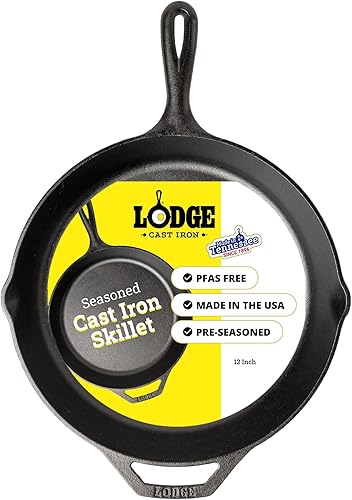
This is the pan reviewers most often credit with ending their nonstick-replacement cycle. It sears a steak better than most alternatives, goes from stovetop to a 500°F oven without a second thought, and with basic care can outlast decades of use — a recurring theme in long-term owner reviews is inheriting, or passing down, the same skillet. Our cast iron vs. carbon steel comparison goes deeper on the seasoning routine and how the two stack up if you’re deciding between them.
The con: it’s heavy — genuinely a workout to maneuver one-handed — and it needs re-seasoning if it sits wet or gets scrubbed too aggressively. Not a grab-and-go pan for eggs on a rushed morning.
4. Amazon Basics Stainless Steel Stock Pot, 8-Quart
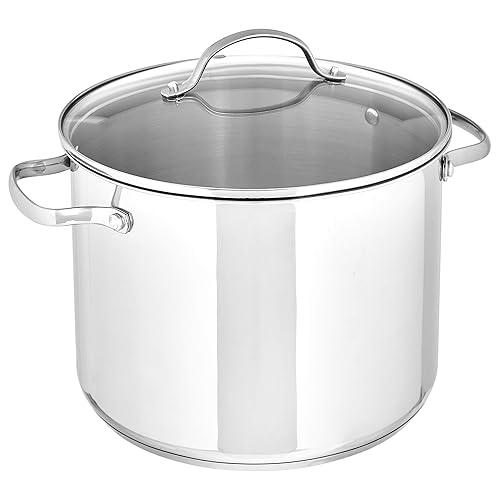
One pot, 8 quarts, plain stainless steel. It boils pasta for four, holds a double batch of soup, and works on induction if you ever upgrade your stove. Buyers who compare it against nonstick-coated and enamel versions consistently favor the plain stainless option for boiling and simmering — a straightforward pot with a glass lid does the job without a coating that eventually scratches off.
The con: thin stainless steel can develop hot spots without a heavy tri-ply base, so it’s better suited to dishes that get stirred on high heat than ones that need to sit and simmer undisturbed.
5. Fat Daddio’s Aluminum Half Sheet Pan

Roasted vegetables, sheet-pan dinners, cookies, reheated leftovers under the broiler — one uncoated aluminum half sheet handles all of it and won’t warp in a hot oven the way thin, cheap pans do. Most owners report needing only one; on the rare occasion a second pan is needed, the lid of a stockpot works fine as a stand-in tray, which says something about how infrequently that actually comes up.
The con: bare aluminum will darken with use, and without parchment or a silicone mat, sugary or acidic foods can react with the metal and leave a metallic taste. Lining it for anything sweet avoids the issue.
6. FineDine Stainless Steel Mixing Bowls, 6-Piece
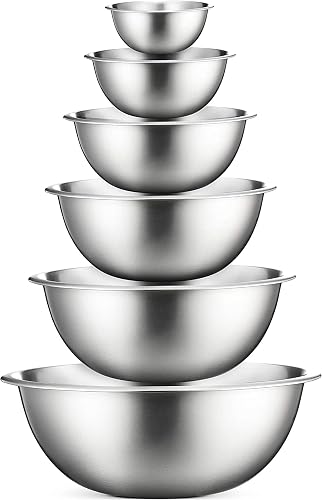
A dozen mismatched plastic bowls that stain and never nest cleanly is a common starting point — this six-piece nesting set is the upgrade reviewers most often mention replacing that drawer with. They stack into a footprint far smaller than a scattered bowl collection, they don’t hold onion or garlic smell the way plastic does, and owners use them for everything from whisking eggs to tossing a salad to holding prepped ingredients before they hit the pan.
The con: stainless steel is loud — expect a clatter if you drop one on tile — and the smallest bowl is really only useful for sauces or dressings, not much else.
7. Instant Pot Duo 7-in-1, 6-Quart

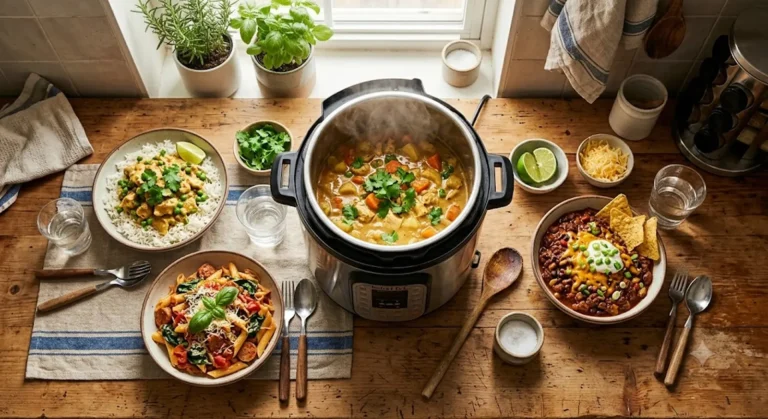
This is the one appliance that consistently earns a permanent spot on the counter, because it replaces three others: a slow cooker, a rice cooker, and — for most owners — a steamer basket setup. Dried beans without an overnight soak, weeknight shredded chicken, and yogurt on a lazy Sunday all show up repeatedly as common uses in long-term reviews. One appliance covering that much ground is exactly the multi-use logic this whole list is built on. Our Instant Pot recipes guide rounds up more weeknight-friendly ideas for it.
The con: the learning curve is real for the first few cooks — venting, natural release, and altitude adjustments all take some getting used to — and it’s the biggest, heaviest thing on this list to find cabinet space for.
8. DI ORO Silicone Spatula Set, 3-Piece

For a lot of home cooks, this three-piece set becomes the entire cooking-utensil drawer: a large spatula for flipping, a smaller one for scraping bowls clean, and a spoon-spatula hybrid that reviewers often say gets used more than either of the other two. All three are heat-rated to 600°F, so they go straight into a cast iron skillet without melting, and the one-piece silicone-over-steel-core design means no crevices where old food hides. It’s a common thread in reviews: owners donating or retiring wooden spoons, a separate rubber scraper, and single-purpose flippers once these three prove they can do all of it.
The con: silicone can pick up strong odors like garlic or curry over time, and it’s soft enough that it’s not the best tool for breaking up ground meat — a wooden spoon still wins there occasionally.
Quick Comparison
| Tool | Replaces | Price | Care level |
|---|---|---|---|
| Victorinox Chef’s Knife | Paring knife, serrated knife for most tasks | $46.93 | Hone monthly, hand wash |
| Hiware Cutting Board | Multiple boards, cutting mats | $13.99 | Oil occasionally, hand wash |
| Lodge Cast Iron Skillet | Nonstick pan, oven-safe sauté pan | $24.98 | Season a few times a year |
| Amazon Basics Stock Pot | Saucepan, pasta pot, soup pot | $41.21 | Dishwasher safe |
| Fat Daddio’s Sheet Pan | Roasting pan, cookie sheet, broiler tray | $17.65 | Line for sweets, hand wash |
| FineDine Mixing Bowls (6pc) | Prep bowls, salad bowl, serving bowls | $26.99 | Dishwasher safe |
| Instant Pot Duo 6qt | Slow cooker, rice cooker, steamer | $109.99 | Wipe down, dishwasher-safe insert |
| DI ORO Spatula Set (3pc) | Wooden spoons, scrapers, flippers | $21.97 | Dishwasher safe |
The Real Cost of Eight Tools vs. a Cluttered Kitchen
Add up the eight products above at current prices and the total lands around $303.71 — a one-time cost that covers essentially every common cooking task. Compare that to what a cluttered kitchen actually costs over time: reviews and decluttering threads routinely describe $150–200 worth of gadgets — panini presses, personal blenders, duplicate nonstick pans, egg slicers, avocado tools, extra cutting boards — sitting unused for a year or more before getting donated, sold, or tossed. The math isn’t “spend less,” it’s “spend once, on things that work.” A cast iron skillet at $24.98 that lasts decades beats three $20 nonstick pans that get replaced every 18 months once the coating fails — which is exactly the coating lifespan our non-stick coating guide breaks down.
What Consistently Ends Up Unused (and Why)
Usage-frequency patterns across reviews and long-term-owner comments tell a clear story about what actually gets used. Here’s what shows up first on the “barely touched it” list, and why:
- Single-use gadgets — an egg slicer, an avocado tool, a strawberry huller. Each does one job a knife already does, and each takes up a drawer slot for a task most people do maybe once a month, going by how rarely reviewers mention reaching for them again.
- Duplicate pans — three “everyday” nonstick skillets in slightly different sizes is a common starting point. One cast iron pan covers what all three were doing.
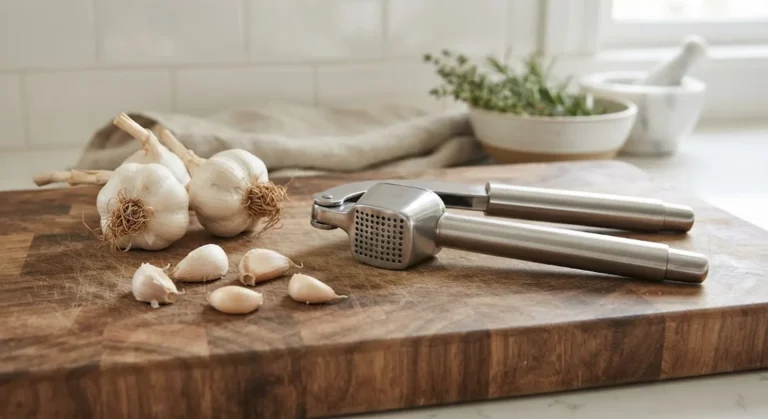
- The garlic press — the flat of a chef’s knife minces garlic just as fast and it’s one less gadget to wash.
- Novelty small appliances — panini presses and personal blenders are frequent entries on “barely used it” review lists, often five uses or fewer in the first year. If a tool doesn’t get monthly use, it’s not earning its cabinet space.
- A second cutting board — separate boards for meat and produce feel necessary until you try flipping one board to a dedicated side, which works just as well and halves the storage footprint.
If counter clutter is your bigger problem right now rather than drawer clutter, the one-zone counter organization method is the natural next step after this list — it’s the system built to keep these eight tools from sprawling back across every surface.
How to Run Your Own Kitchen Declutter Test
You don’t need this exact list of eight tools — you need your own version of this test. Box up everything except what you use in the next 24 hours, store the box somewhere slightly inconvenient (a closet, the garage, under a bed), and give yourself two to four weeks. Every time you genuinely need something from the box for an actual meal, it comes back out and earns a permanent spot. At the end of the window, whatever’s still boxed up gets donated, sold, or tossed — no “but I might need it for Thanksgiving” exceptions, because that’s one day a year, not a reason to keep clutter for the other 364.
FAQ
What are the minimum kitchen tools you actually need?
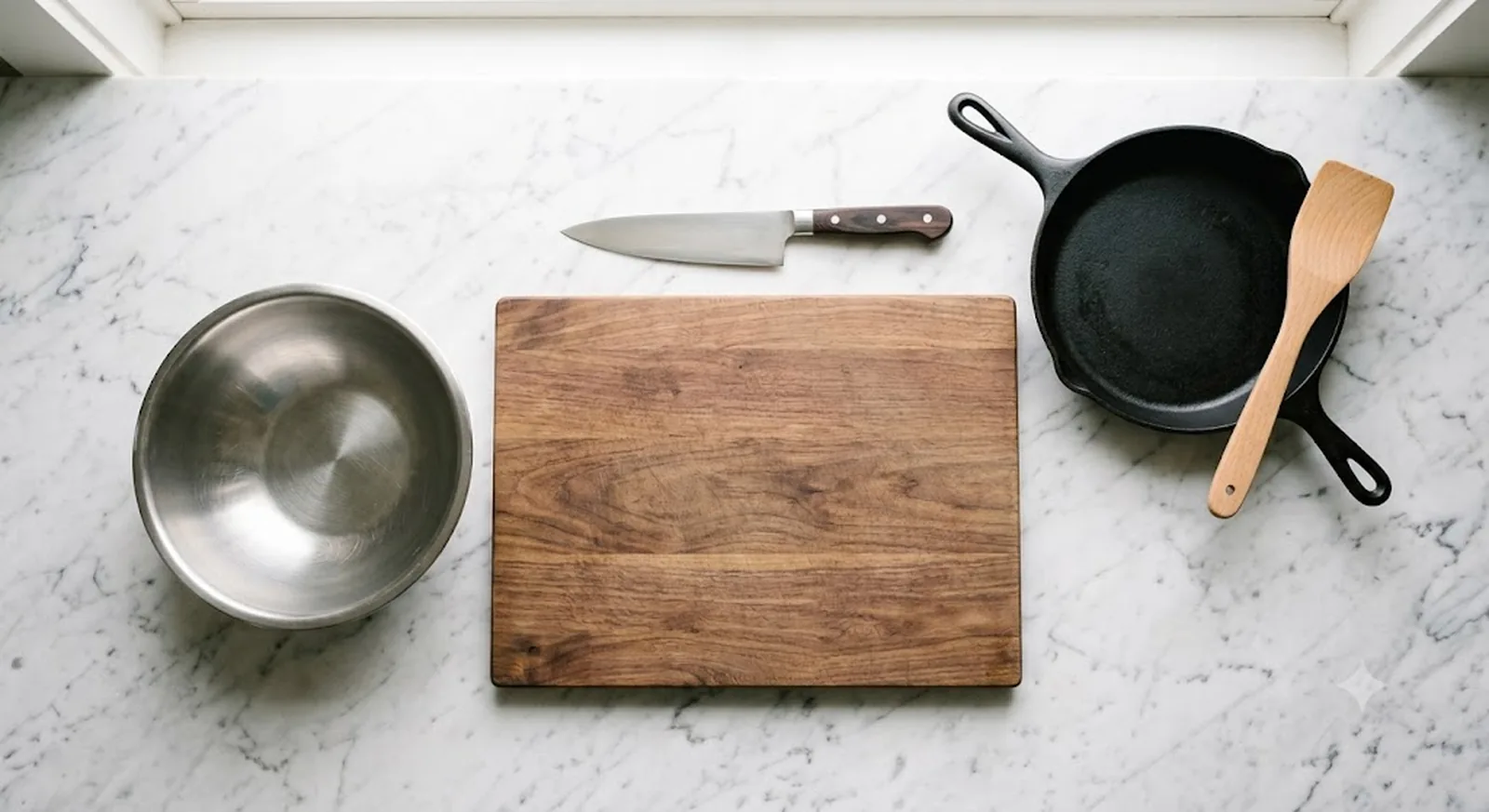
A chef’s knife, one cutting board, one skillet, one pot, one sheet pan, a set of mixing bowls, basic measuring tools, and a couple of flexible utensils cover the overwhelming majority of home cooking. Everything past that is convenience, not necessity — which is fine to add back in deliberately, just not by default.
Do I need a stand mixer if I have a multi-cooker?
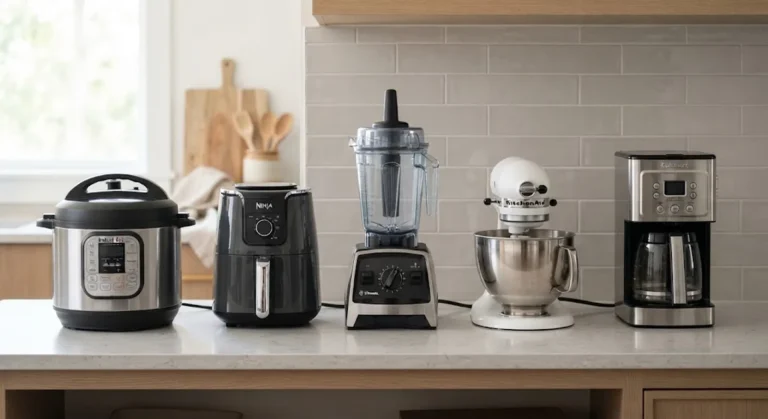
No — they solve different problems. A multi-cooker like the Instant Pot handles pressure cooking, slow cooking, and steaming; a stand mixer handles kneading and whipping. If you bake bread or cake often, a stand mixer earns its space; if you don’t, skip it. Our stand mixer testing guide covers when it’s actually worth the counter real estate.
What’s the one knife every kitchen needs?
An 8-inch chef’s knife. It handles slicing, dicing, mincing, and even light bread-cutting duty in a pinch. A serrated bread knife is a nice second knife, but if you’re only buying one, this is it.
Is it okay to have just one pan?
For most home cooks, yes — a well-seasoned cast iron skillet sears, sautés, bakes, and goes straight to the table. The main reason to add a second pan is delicate egg or fish cookery, where a dedicated nonstick pan is genuinely easier to manage than cast iron.
How long should a minimalist kitchen tool set last?
Bought well, this list should run five to ten years before anything needs replacing — the cast iron skillet and chef’s knife arguably longer, since both can be restored (reseasoned or resharpened) rather than replaced. The one exception is the Instant Pot’s internal gasket and sealing ring, which most manufacturers recommend swapping every 18–24 months with regular use.
The Bottom Line
These eight tools consistently show up as the core of a well-used kitchen across owner reviews: the Victorinox chef’s knife, a bamboo cutting board, a cast iron skillet, one stock pot, one sheet pan, a set of mixing bowls, an Instant Pot, and a spatula set. None of it is flashy, and that’s the point — every piece earns its cabinet space by doing real work, most days, without a gimmick attached. Try your own declutter test before you buy anything new; you might find you already own more than you need.
Live alone? This same keep-only-what-works philosophy, taken one step further, is the basis for a right-sized six-tool starter kit for one-person households — same thinking, sized for a household of one.