Counter Organization: The One-Zone Method I Stole From Pro Kitchens
Step into any professional kitchen and one thing stands out: the counters are nearly empty. A line cook works a station maybe two feet wide, holding only the tools that move constantly — everything else is put away. Home kitchens do the opposite, leaving everything out “just in case” until the counter disappears under appliances used twice a month. The fix worth borrowing is the one-zone method of counter organization, built straight from how pros set up a station.
Disclosure: This post contains affiliate links. If you buy through them, I may earn a commission at no extra cost to you.
In Brief:
The one-zone method works like a chef’s station: you pick a single active counter zone between your sink and stove, keep only the items you use every day inside it, corral those items into one defined footprint, and send everything else vertical or behind a cabinet door. The counter reads as one tidy work surface instead of a shelf for clutter — and it stays that way because putting things back is faster than leaving them out.
What the One-Zone Method Actually Is
In a professional kitchen, mise en place — having everything in its place before service — is not a nice-to-have. It is the difference between a smooth night and a disaster. Each cook owns one tight station, and that station holds only what the job in front of them requires. Nothing decorative, nothing “someday,” nothing that lives there out of habit.
The one-zone method takes that idea home. Instead of spreading tools and appliances across every inch of available counter, you designate one working zone and treat the rest of the counter as off-limits for storage. Most home cooks already have a natural zone: the stretch of counter between the sink and the stove, where you do the bulk of your prep. That run of maybe 24 to 36 inches becomes your station. Everything that earns a spot there has to earn it daily. Everything else moves.
The reason this beats a typical declutter is that it gives you a rule to follow on autopilot, instead of relying on willpower. You are not deciding item by item whether something looks tidy. You are asking one question — do I use this every day, in this zone? — and the answer sorts the counter for you.
Step 1: Find Your One Zone
Stand in your kitchen and watch where your hands actually go during a normal dinner. For almost everyone, the action happens on the counter run between the sink and the cooktop — you rinse, you chop, you turn and cook. That is your one zone. If your sink and stove are far apart, the zone is wherever your main cutting board lands.
Mark it mentally as your station. The goal is that this single stretch stays clear enough to roll out a cutting board and work without shoving anything aside. Every other counter surface — the far end by the fridge, the lip behind the stove, the corner by the toaster — is now a no-storage zone. It can hold things temporarily while you cook, but nothing lives there permanently.
Step 2: The Daily-Five Rule
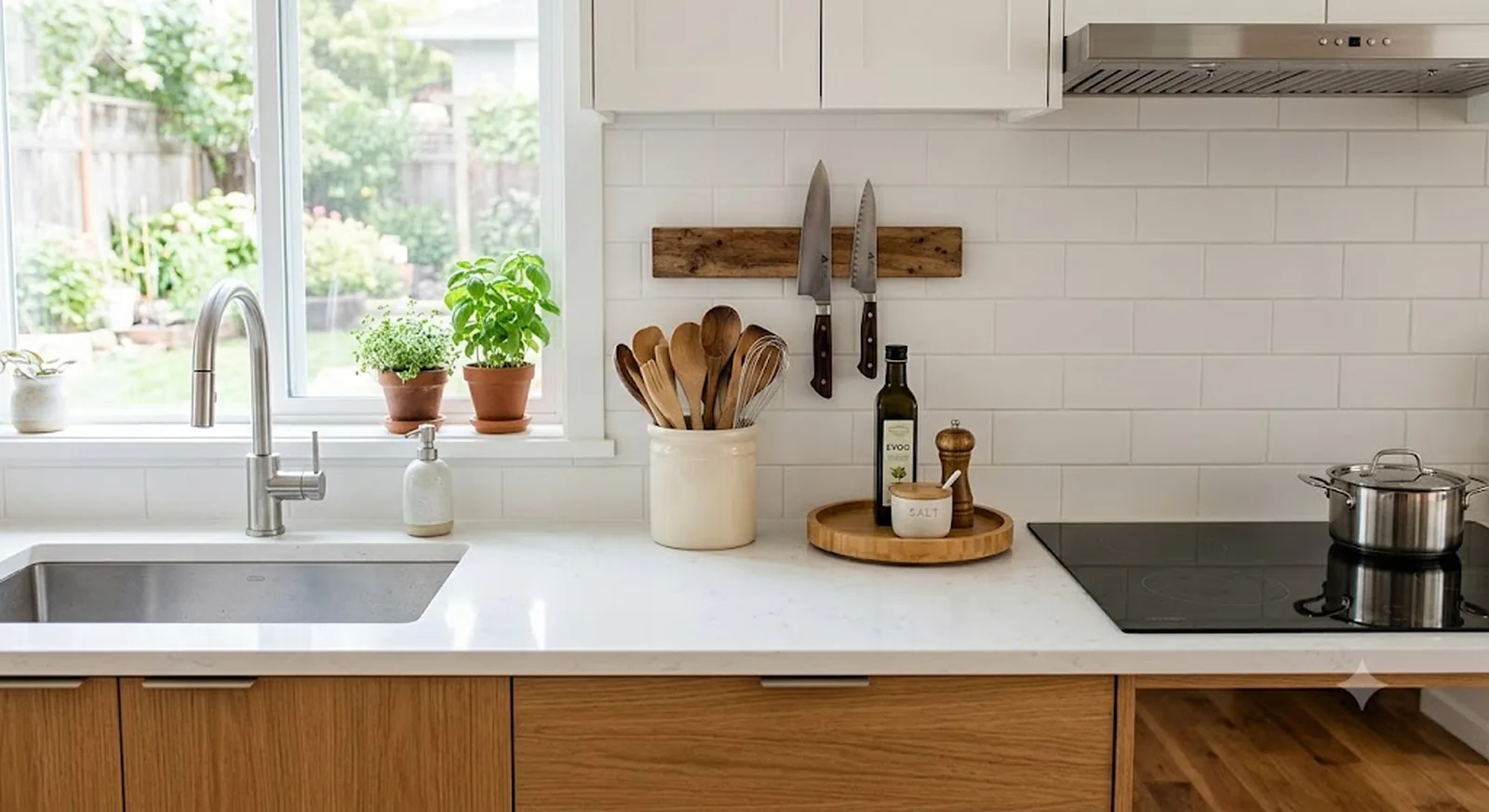
Here is the rule that does the heavy lifting: only items you reach for every single day get to stay in the zone. In most home kitchens, that is a surprisingly short list — usually a knife, a cutting board, the cooking oil, salt, and a crock of the spoons and spatulas you actually use. That is five categories, and it is rarely more.
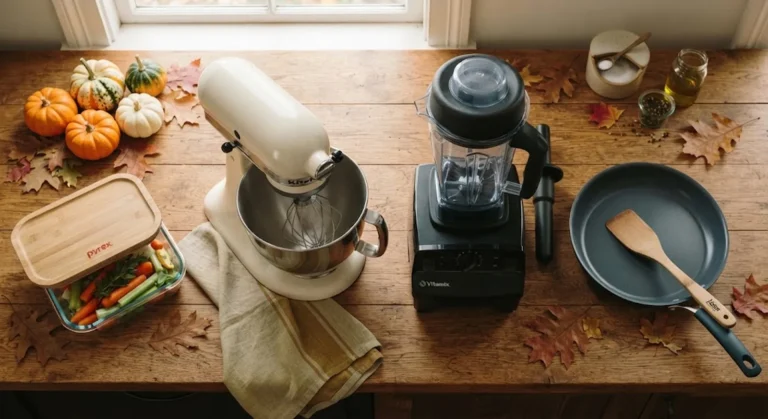
The stand mixer you use on Sundays is not daily. The blender you pull out for smoothies twice a week is not daily. The decorative bowl of fruit that nobody eats is definitely not daily. Be honest here — the entire method falls apart if you let “I might use it” sneak past the daily test. When you first run through this test, it’s common to be surprised by how much counter space is taken up by things used maybe once a month.
Step 3: Corral the Daily Five Into One Footprint
Even five items, scattered, read as clutter. The trick pros use is to make their daily tools occupy one defined footprint so the eye registers a single object, not a pile. Two inexpensive tools do this better than anything else: a utensil crock and a turntable.
A utensil crock collects your everyday spoons, spatulas, whisk, and tongs into one upright container next to the stove. Instead of a utensil drawer you dig through mid-sauté, the five tools you actually use stand handle-up, ready to grab. I have used the DOWAN 7.2-inch ceramic utensil holder for exactly this — it is wide and heavy enough that it does not tip when you yank a tool out one-handed, and the ceramic wipes clean of oil splatter.

DOWAN 7.2-inch Extra Large Kitchen Utensil Holder — one upright footprint for your daily spoons, spatulas, and tongs.
Con: It is ceramic, so it can chip or crack if you knock it off the counter — keep it back from the edge.
The second footprint is for your cooking liquids — oil, the vinegar you reach for, salt, a pepper grinder. Left loose, these spread. On a turntable, they become one rotating cluster you spin instead of reach behind. I keep a 10-inch bamboo lazy Susan by the stove for exactly this group. The non-skid base means bottles do not slide when I spin it, and bamboo holds up to the inevitable oil drips far better than plastic, which gets a sticky film.

10-Inch Non-Skid Bamboo Lazy Susan Turntable — corrals oil, salt, and spices into one spin-to-reach footprint.
Con: At 10 inches it is sized for bottles and small jars — it will not hold a row of tall, heavy oil tins without feeling crowded.
Step 4: Send Everything Else Vertical or Out of Sight
Once your daily five live in two neat footprints, you are left with the items that failed the daily test but still need to be handy — spices you cook with a few times a week, the knives, the things that used to colonize the counter. The professional move is to go vertical: get them off the horizontal surface and onto the wall or a riser, where they take up zero counter square footage.
For the near-daily spices and small bottles, a small footprint shelf riser stacks them in tiers so you can read every label at a glance without a flat sprawl. The 2-tier countertop shelf organizer I use tucks against the backsplash and turns a slim strip of counter at the edge of the zone into two readable rows. It keeps the active surface clear while still putting the second-string ingredients within arm’s reach.

2-Tier Countertop Shelf Organizer — stacks near-daily spices and bottles vertically against the backsplash.
Con: The wood-and-metal build is light, so a top shelf loaded with heavy jars can feel tippy — keep the weight low.
Knives are the biggest counter hog in most home kitchens. A traditional wooden block eats a chunk of prime real estate right in the work zone. The pro answer is a wall-mounted magnetic strip: knives go on the wall, blade-down, fully visible, and your counter gets the footprint back. I switched to the Gorilla Grip stainless steel magnetic knife holder and reclaimed the corner my block used to own. The magnet is strong enough to hold a chef’s knife securely, and mounting it is a straightforward job with just a screwdriver.
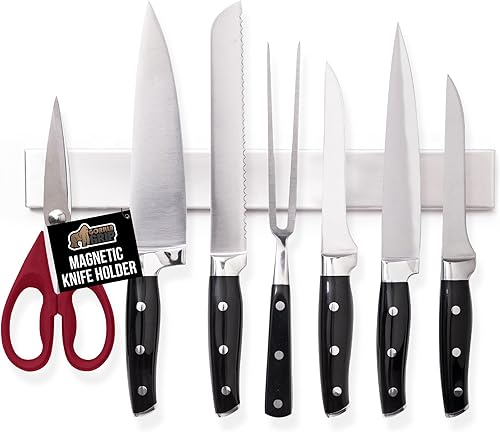
Gorilla Grip 304 Stainless Steel Magnetic Knife Holder — moves your knives off the counter and onto the wall.
Con: It mounts with screws, so it is a commitment — renters who cannot drill into the wall will need an adhesive alternative, which holds lighter knives only.
Step 5: The 60-Second Reset
The part most home organization advice skips is the one that actually keeps a counter clear: the reset. In a pro kitchen, you break down your station at the end of service — wipe it, put everything back, leave it ready for the next person. At home, that is a 60-second habit. After you finish cooking, everything that came out of the crock, off the turntable, or off the strip goes straight back, and you wipe the zone down. One pass.
Because the daily five each have an obvious home, the reset is genuinely fast — there is no deciding where things go, just returning them. That is the whole point of the footprints in Step 3. The reason most counters drift back into chaos is that putting an item away requires a decision; the one-zone method removes the decision, so the habit sticks.
Where Everything Else Goes
The items that failed the daily test do not disappear — they just leave the counter. Weekly appliances move to a cabinet shelf or a rolling cart; pantry overflow goes behind a door; the random stuff that lands on counters gets a single tray elsewhere. If you want the full system beyond the counter, my pillar guide to kitchen organization ideas that actually work covers cabinets, drawers, and under-sink storage in depth.
For specific zones, I have tested the gear separately: the best kitchen drawer organizers for the utensils that did not make the crock, the best pantry organization products under $30 for the dry goods that came off the counter, and a renter-friendly set of small kitchen storage ideas if you are short on cabinet space to begin with.
Frequently Asked Questions
What should I keep on my kitchen counter?
Only what you use every single day in your main work zone — for most home cooks that is a knife, cutting board, cooking oil, salt, and a crock of everyday utensils. Appliances used a few times a week or less belong in a cabinet, not on the counter.
How do professional kitchens keep counters so clear?
Pros work from a tight station holding only the tools the current job needs, store everything else below or behind them, and reset the station after every shift. The one-zone method is the home version of that station-and-reset discipline.
How do I keep my counter clear if I have almost no cabinet space?
Go vertical. A wall-mounted magnetic knife strip, a slim shelf riser against the backsplash, and a rolling cart for overflow move storage off the counter without needing more cabinets. The daily five stay in their footprints; everything else goes up or out.
Is the one-zone method realistic for a busy family kitchen?
Yes, and it helps more in a busy kitchen, because everyone follows the same simple rule. The key is that each daily item has one obvious home, so anyone can do the 60-second reset without a system to memorize.
The Bottom Line
Clear counters are not about owning less or buying matching containers — they are about giving every daily item one home and sending everything else off the work surface. Pick your zone, apply the daily-five rule, corral your essentials into a crock and a turntable, push the rest vertical, and reset in 60 seconds. That is the entire one-zone method, and it is the closest thing to counter organization that holds up week after week without willpower.