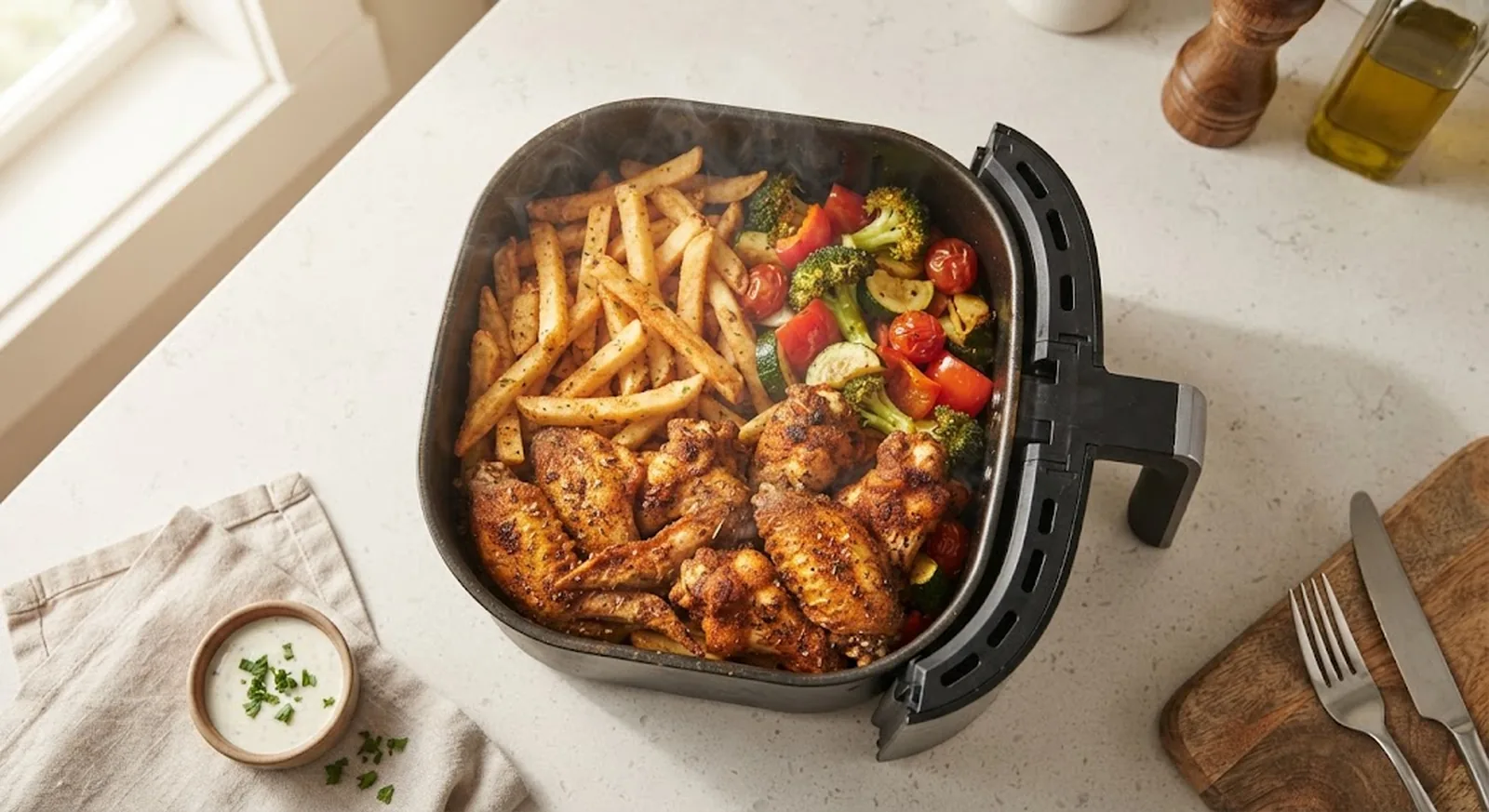
50 Air Fryer Recipes for Beginners: Quick, Easy, and Foolproof
This post contains affiliate links. As an Amazon Associate I earn from qualifying purchases — at no extra cost to you.
In Brief
Air fryer recipes for beginners don’t need to be complicated. The machine does most of the work — your only job is to not overcrowd the basket and pick the right temperature. Start with frozen foods (400°F, 8–12 min), chicken thighs (380°F, 25–28 min), or roasted vegetables (375°F, 12–15 min). Those three categories alone will cover 80% of your weekly cooking. This guide gives you 50 recipes across 8 categories, with exact temps and times so you can stop guessing.
Why Air Fryer Recipes for Beginners Are Easier Than You Think
Overcrowding the basket is the single most common beginner mistake, and it’s also the easiest to fix. Air fryers work by circulating hot air around food — pack the basket tight and you’re basically steaming, not frying.
Once you understand that one principle, everything clicks. Across buyer reviews and spec comparisons of dozens of air fryer models, this consistently comes up as the most forgiving appliance a beginner can own. Vegetables come out better than roasted. Chicken stays juicy. Reheating pizza actually works.
This post covers 50 air fryer recipes for beginners, organized by category and difficulty. Every recipe includes a temperature, a time, and at least one practical tip drawn from buyer reviews and spec comparisons. If you’re still shopping for your first unit, my best air fryers roundup and the air fryer vs. convection oven comparison are good reads before you commit.
What you’ll learn:
- The 3 rules that prevent 90% of beginner failures
- 50 recipes organized by category with temps and times
- A quick-reference cheat sheet you can print
- 5 common beginner mistakes (and how to avoid them)
The 3 Rules Every Beginner Needs to Know
Before the recipes, let’s cover the ground rules. These apply to every single thing you’ll cook.
Rule 1: Never fill the basket more than halfway. Hot air needs to circulate. A full basket means the bottom layer cooks and the top layer barely heats. Cook in batches if needed — it’s faster than you think.
Rule 2: Shake or flip halfway through. For anything small (fries, vegetables, nuggets), shake the basket at the halfway mark. For larger items (chicken, fish), flip with tongs. This gives you even browning on all sides.
Rule 3: Preheat for 3 minutes. Most recipes don’t mention this, but starting with a hot basket cuts cooking time by 15–20% and helps food brown instead of steam. A quick 3-minute preheat at the target temperature is all you need.
One more thing: air fryers run hot and fast. If a recipe was written for a conventional oven, reduce the temperature by 25°F and the time by 20%. That’s the standard conversion rule, and it holds up across every air fryer model covered in this guide. The FDA safe food handling guidelines are worth bookmarking for internal temperature reference.
Category 1: Frozen Foods (The Beginner’s Best Friend)
Frozen foods are where every air fryer owner should start. They’re forgiving, they teach you the machine’s behavior, and the results are dramatically better than the oven.
1. Frozen French Fries
Temp: 400°F | Time: 15–18 min | Shake: at 8 min
The air fryer was practically designed for this. Don’t thaw. Pour from bag to basket (half full), shake halfway, and they come out crispier than the oven. Thin shoestring fries need 13–15 min; thick steak fries need 18–20 min.
2. Frozen Chicken Nuggets
Temp: 400°F | Time: 10–12 min | Flip: at 6 min
Any brand, any shape. They come out hot all the way through with a genuinely crispy exterior — much better than the microwave. Make two batches; the first will disappear before you sit down.
3. Frozen Mozzarella Sticks
Temp: 375°F | Time: 6–8 min | Flip: at 4 min
Don’t go higher than 375°F or the cheese blows out before the coating crisps. Watch the last two minutes closely. Serve immediately — they harden fast.
4. Frozen Fish Fillets
Temp: 400°F | Time: 12–14 min | Flip: at 7 min
Breaded cod or pollock fillets come out with a real crunch instead of a soggy oven-baked result. Internal temp should hit 145°F — the same standard as fresh fish.
5. Frozen Egg Rolls
Temp: 390°F | Time: 10–12 min | Flip: at 5 min
Spray lightly with oil for best browning. No oil is fine too — just not as golden.
6. Frozen Tater Tots
Temp: 400°F | Time: 12–15 min | Shake: at 6 min
Don’t thaw. Half basket only. Shake twice if you want maximum evenness.
7. Frozen Pizza Rolls
Temp: 380°F | Time: 7–8 min | Shake: at 4 min
One layer only. They puff up and brown perfectly. Better texture than microwave or oven.
Category 2: Vegetables (Where the Air Fryer Actually Shines)
This is the category that surprises most beginners. Roasted vegetables from an air fryer often taste better than oven-roasted because the high heat and airflow concentrate the flavor faster without over-softening the inside.
8. Broccoli Florets
Temp: 375°F | Time: 8–10 min | Shake: once
Toss with 1 tsp olive oil and a pinch of salt. The edges will char slightly — that’s flavor, not a mistake. Add garlic powder if you want.
9. Asparagus
Temp: 380°F | Time: 7–9 min | Toss: once
Thin spears: 7 min. Thick spears: 9–10 min. Light oil, salt, lemon zest after cooking.
10. Brussels Sprouts
Temp: 380°F | Time: 14–16 min | Shake: at 8 min
Halve them first. The cut side caramelizes against the basket. Many reviewers say these beat oven-roasted brussels sprouts at 425°F for 25 minutes.
11. Zucchini Slices
Temp: 375°F | Time: 8–10 min | Flip: at 5 min
Cut into ¼-inch rounds. Don’t stack. Season with Italian herbs and a little parmesan.
12. Cauliflower Florets
Temp: 390°F | Time: 12–15 min | Shake: twice
Cut uniform pieces for even cooking. Toss with olive oil, turmeric, and cumin for an easy side dish.
13. Cherry Tomatoes
Temp: 375°F | Time: 10–12 min | Leave alone
They blister and concentrate into something incredible. Add a few garlic cloves at the same time — they roast alongside perfectly.
14. Green Beans
Temp: 375°F | Time: 7–9 min | Shake: once
Dry them before seasoning — moisture equals steam instead of roast. Toss with sesame oil and soy sauce for an easy Asian-inspired side.
15. Corn on the Cob
Temp: 380°F | Time: 12–15 min | Turn: twice
Cut cobs in half if they don’t fit. Butter before or after cooking — both work. The slight char tastes like summer.
Category 3: Chicken (The Most Versatile Protein)
Chicken is where most beginners get nervous about food safety. The rule is simple: internal temperature of 165°F, measured at the thickest part. An instant-read thermometer makes this instant and accurate — I covered the best options in my kitchen gifts guide, and the ThermoPro TP19H at under $20 is a consistent top pick in buyer reviews. For exact temps and times by cut, see my air fryer chicken recipes guide.
16. Chicken Thighs (Bone-In)
Temp: 380°F | Time: 25–28 min | Flip: at 12 min
Season with salt, pepper, garlic powder, smoked paprika. Crispy skin, juicy inside. Always check the internal temp — 165°F minimum. This is a favorite weeknight protein for many air fryer owners.
17. Chicken Breast (Boneless)
Temp: 370°F | Time: 18–22 min | Flip: at 10 min
Flatten to even thickness first — about 1 inch. Brine in saltwater for 30 minutes if you have time. It stays noticeably juicier than without brining.
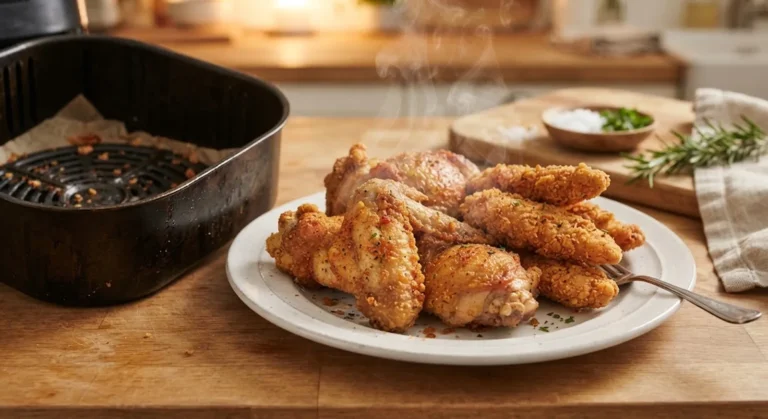
18. Chicken Wings
Temp: 400°F | Time: 22–25 min | Flip: at 12 min
Pat completely dry before seasoning — this is the key to crispy skin. Toss in sauce after cooking, not before. Cook in small batches or the skin steams instead of crisping.
19. Chicken Tenders
Temp: 375°F | Time: 12–14 min | Flip: at 7 min
Coat in seasoned breadcrumbs and spray with oil. Much better than oven-baked and faster too.
20. Chicken Drumsticks
Temp: 380°F | Time: 25–27 min | Flip: at 12 min
Score the skin before seasoning so spices penetrate. Season generously — drumsticks can handle a lot of flavor.
21. Whole Chicken (3–4 lbs)
Temp: 360°F | Time: 55–65 min | Flip: at 30 min
Brush with butter and herbs. This only works in a larger air fryer (5.8 qt+). Check multiple spots with a thermometer. The skin comes out like rotisserie chicken.
Category 4: Beef and Pork
22. Burgers
Temp: 375°F | Time: 10–12 min | Flip: at 6 min
½-inch thick patties. Don’t press them down. Season simply: salt, pepper, garlic. Medium at 10 min; well-done at 12–13 min.
23. Pork Chops (Bone-In)
Temp: 380°F | Time: 14–16 min | Flip: at 8 min
Season well, lightly oil. USDA recommends 145°F internal temp for pork. Let rest 3 minutes after cooking.
24. Bacon
Temp: 375°F | Time: 8–10 min | No flip needed
Lay flat, don’t overlap. The grease drips away. Check at 8 min — thickness varies.
25. Meatballs (1.5-inch diameter)
Temp: 400°F | Time: 10–12 min | Shake: once
No sticking, no flipping — just shake halfway. Internal temp 165°F.
26. Steak (1-inch thick)
Temp: 400°F | Time: 10–14 min | Flip: at 5–6 min
Medium-rare: 10–11 min (130°F). Medium: 12–13 min (145°F). Pat dry, season generously, bring to room temperature first. Rest 5 minutes before cutting.
27. Hot Dogs
Temp: 375°F | Time: 5–6 min | No flip needed
Score with a knife first so they blister nicely. Much better than boiling.
Category 5: Seafood
Seafood in the air fryer cooks fast and stays moist — the biggest win is not having to deal with a smoky pan or a smelly oven.
28. Salmon Fillet (1-inch thick)
Temp: 380°F | Time: 10–12 min | Don’t flip
Brush with olive oil, season with salt, pepper, and dill. Internal temp 125–130°F for medium, 145°F for well-done. The skin crisps up beautifully.
29. Shrimp (Large, Peeled)
Temp: 380°F | Time: 6–8 min | Shake: once
Season with garlic powder, paprika, salt. Single layer. They curl and pink up fast — 6 minutes is usually enough for large shrimp.
30. Tilapia
Temp: 390°F | Time: 10–12 min | Flip: at 6 min
Season with lemon pepper and a light oil coat. Flakey, moist, no fishy smell in the kitchen.
31. Scallops (Sea)
Temp: 390°F | Time: 5–7 min | No flip
Pat bone dry — moisture is the enemy of a good sear. Single layer. Check at 5 min — overcooking makes them rubbery.
32. Crab Cakes (Pre-made)
Temp: 375°F | Time: 10–12 min | Flip: at 6 min
Fresh or frozen. Lightly spray with oil. They hold together better in the air fryer than in a pan.
Category 6: Eggs and Breakfast
33. Hard-Boiled Eggs (in shell)
Temp: 270°F | Time: 15–17 min | Ice bath after
No water. Just place eggs directly in the basket. 15 min = slightly jammy yolk. 17 min = fully hard-boiled. Peel under cold water — the shells slide off easily.
34. Soft-Boiled Eggs
Temp: 270°F | Time: 11–12 min | Ice bath immediately
Same method, less time. Runny yolk at 11 min. Custard-like at 12 min.
35. Bacon-Egg Bites (in silicone cups)
Temp: 300°F | Time: 10–12 min | Don’t shake
Whisk eggs with cheese, pour into silicone muffin cups, add bacon bits. Fits most 5.8 qt+ baskets.
36. French Toast Sticks
Temp: 375°F | Time: 8–10 min | Flip: at 5 min
Cut thick bread into strips. Dip in egg-milk mixture. Spray with oil. Crispy outside, custardy inside.
37. Hash Browns (Shredded)
Temp: 400°F | Time: 15–18 min | Flip: at 9 min
Use frozen or make fresh (squeeze out ALL the moisture). Spray with oil for crispy edges.
Category 7: Snacks and Appetizers
38. Chickpeas (Canned)
Temp: 400°F | Time: 15–18 min | Shake: twice
Drain, dry completely, toss with olive oil and cumin. Crunchy snack or salad topper. Drying is critical — wet chickpeas won’t crisp.
39. Tofu (Extra-Firm)
Temp: 400°F | Time: 15–18 min | Shake: twice
Press for 30 minutes, cut into 1-inch cubes, toss with soy sauce and sesame oil. Chewy with crispy edges.
40. Onion Rings
Temp: 375°F | Time: 10–12 min | Flip: once
Bread with seasoned panko, spray with oil. Single layer only. Much lighter than deep-fried.
41. Jalapeño Poppers
Temp: 370°F | Time: 7–9 min | No flip
Fill halved jalapeños with cream cheese, wrap with bacon. The cheese stays in when you stay below 375°F.
42. Loaded Potato Skins
Temp: 380°F | Time: 8–10 min | No flip
Pre-bake the potatoes (microwave 5 min), hollow out, fill with cheese and bacon, then air fry.
43. Spring Rolls
Temp: 390°F | Time: 8–10 min | Flip: at 5 min
Spray all sides with oil. They blister and brown evenly without the grease of deep frying.
44. Stuffed Mushrooms
Temp: 360°F | Time: 8–10 min | No flip
Fill with cream cheese and garlic mixture. The mushrooms soften perfectly while the filling sets.
Category 8: Quick Sides and Starches
45. Baked Potatoes
Temp: 400°F | Time: 35–45 min | Flip: at 20 min
Pierce, rub with oil and salt. Comes out with crispy skin — better than the microwave, faster than the oven.
46. Sweet Potato Fries
Temp: 380°F | Time: 15–18 min | Shake: twice
Cut evenly, half basket only. Toss with a little cornstarch to help crisp up — sweet potatoes are naturally wetter than regular potatoes.
47. Garlic Bread
Temp: 350°F | Time: 5–7 min | No flip
Spread butter-garlic mix on sliced baguette. Watch it — it goes from perfect to burnt fast.
48. Corn Tortilla Chips
Temp: 350°F | Time: 6–8 min | Shake: at 4 min
Cut tortillas into triangles, spray with oil, salt lightly. Homemade chips in 8 minutes.
49. Roasted Garlic
Temp: 380°F | Time: 25–30 min | Leave alone
Cut the top off a whole head, drizzle with olive oil, wrap in foil. Spreadable, sweet, and good on everything.
50. Mac and Cheese Bites (Leftover)
Temp: 375°F | Time: 8–10 min | Flip: at 5 min
Make balls from leftover mac and cheese, freeze for 30 min, bread with panko, air fry. Crispy outside, gooey inside.
Quick-Reference Temperature and Time Cheat Sheet for Air Fryer Recipes
| Category | Temp (°F) | Time (min) | Flip? |
|---|---|---|---|
| Frozen fries | 400 | 15–18 | Shake at 8 |
| Frozen nuggets | 400 | 10–12 | At 6 min |
| Broccoli | 375 | 8–10 | Shake once |
| Brussels sprouts | 380 | 14–16 | Shake at 8 |
| Chicken thighs | 380 | 25–28 | At 12 min |
| Chicken breast | 370 | 18–22 | At 10 min |
| Chicken wings | 400 | 22–25 | At 12 min |
| Burgers | 375 | 10–12 | At 6 min |
| Bacon | 375 | 8–10 | No |
| Salmon | 380 | 10–12 | No |
| Shrimp | 380 | 6–8 | Shake once |
| Hard-boiled eggs | 270 | 15–17 | No |
| Baked potato | 400 | 35–45 | At 20 min |
| Sweet potato fries | 380 | 15–18 | Shake twice |
5 Common Beginner Mistakes (So You Don’t Have To Make Them)
Mistake 1: Skipping the preheat. It’s tempting to skip, but it matters. A cold basket means the food sits in gradually increasing heat instead of hitting high heat immediately. The difference in crispiness is noticeable.
Mistake 2: Using too much oil. Air frying needs far less oil than you think — 1 teaspoon to 1 tablespoon is usually plenty. More oil doesn’t mean crispier. It often means soggy.
Mistake 3: Not drying food before cooking. Moisture is the enemy of crispiness. Pat chicken dry. Drain canned chickpeas. Press tofu. Dry vegetables after washing. This step alone improves results more than any temperature tweak.
Mistake 4: Opening the basket constantly to check. Every time you open the basket, you drop the temperature and lose momentum. Set a timer, trust the process, and check once at the halfway mark.
Mistake 5: Using the wrong rack or not using any rack. If your air fryer came with a rack or skewer kit, use it for meats. Lifting meat off the basket floor improves air circulation underneath and reduces sticking.
What Air Fryer Should a Beginner Buy?
If you’re still choosing your first air fryer, a 5–6 quart basket model is the right size for 1–4 people. It handles everything in this guide without taking up too much counter space. The Cosori Pro LE 5Qt is the model I recommend most to beginners — straightforward controls, accurate temps, easy cleanup.

I covered it (and 6 others) in full detail in my best air fryers review. If you’re comparing it to a convection oven, that head-to-head comparison breaks down exactly when each one wins.
Key Takeaways
- The single most important rule: never fill the basket more than halfway.
- Preheat for 3 minutes before every cook — it cuts time and improves browning.
- Dry your food before seasoning — moisture prevents crispiness.
- Shake or flip halfway through for even results on everything small.
- Use a thermometer for meat — 165°F for poultry, 145°F for pork and fish, 130–145°F for beef depending on preference.
- Start with frozen foods to learn your specific machine’s behavior before raw proteins.
- Air fryers vary by brand — check your model’s guide for adjustments on the first few cooks.
Cooking through the summer heat? These summer salads you can make without the oven pair perfectly with anything you pull from the air fryer. And for the nights you want something warm and hands-off, my Instant Pot recipes for weeknight dinners are the one-pot companion to this guide. Cooking in a dorm without an air fryer? My dorm cooking 101 guide adapts this beginner approach to just five compact, dorm-legal tools. And if your garden or farmers-market haul is piling up faster than you can cook it, my harvest-season recipes guide covers 15 ways to use it all up.