Dorm Cooking 101: 20 Meals You Can Make With 5 Tools
Affiliate disclosure: I’m Maya Sterling, and Kitchaneers is reader-supported. When you buy through links on this page I may earn a small Amazon commission at no extra cost to you. I only recommend gear that holds up under real buyer feedback — verified-purchase reviews, recurring complaints and praise, and honest comparisons across price tiers.
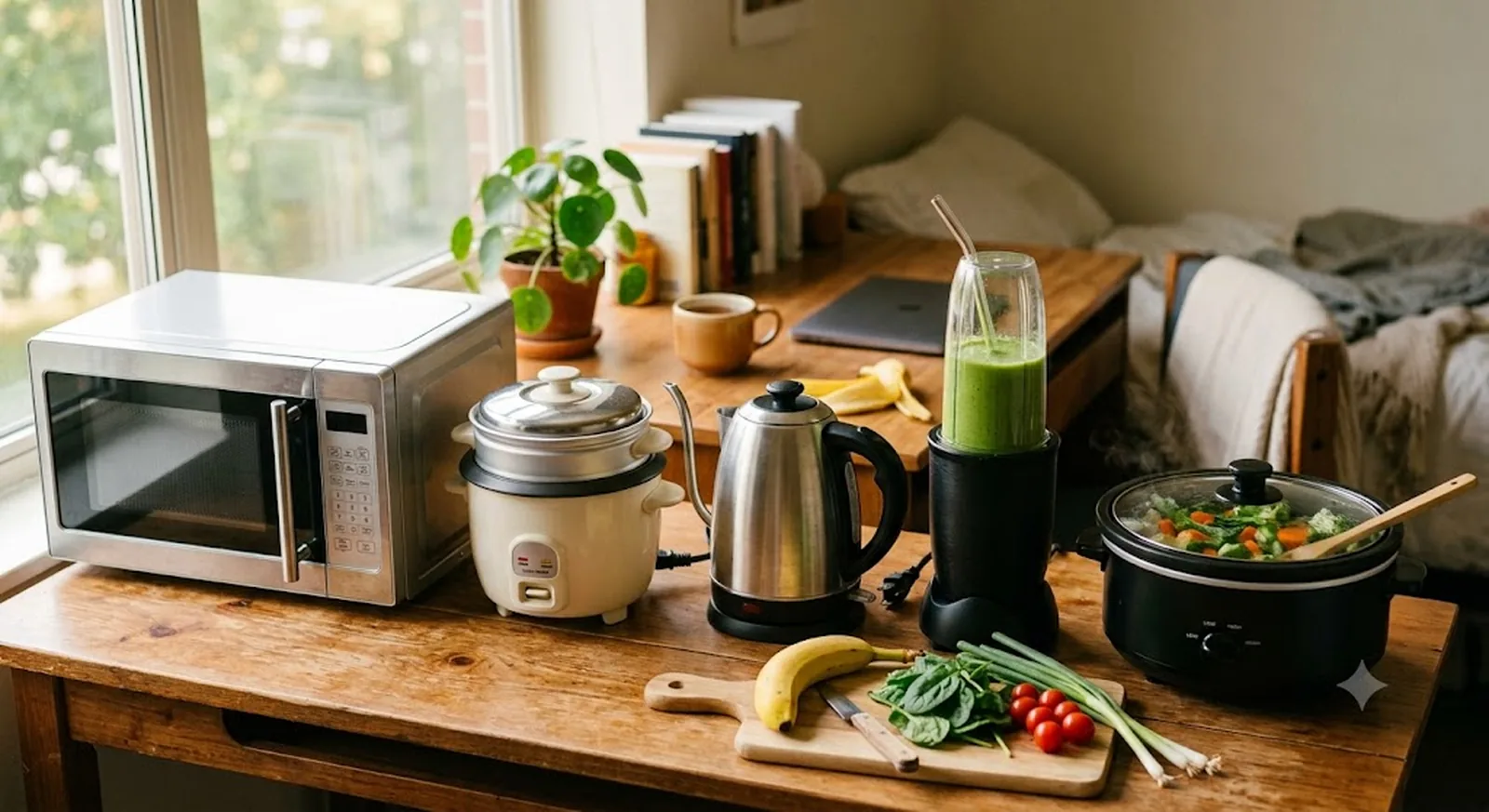
Dorm cooking sounds like a contradiction. You get one outlet you’re allowed to use, a strict “no open heating element” rule taped to the wall, and a room the size of a walk-in closet. Yet dorm cooking, done properly, works better than most people expect — and after digging through hundreds of verified-purchase reviews from students furnishing their own dorm setups, the same pattern keeps showing up: it comes down to five appliances and a short list of meals that repeat well without getting boring.
Below I’ll walk through the five tools I’d buy again, why each one earns its footprint, and then 20 meals you can rotate through with just those five. Every appliance here is UL-listed with auto shut-off — the kind most dorms actually permit. If you’re still assembling the shopping side of this, my back-to-college kitchen starter pack covers the full $150 build; this guide is about what to cook once the boxes arrive.
How I chose these five tools
I had three rules. First, each tool had to be dorm-legal in most residence halls — enclosed heating elements, automatic shut-off, nothing that trips an RA’s inspection. Second, every appliance had to pull double or triple duty, because counter space in a dorm is measured in inches. Third, the whole kit had to cost less than a semester’s worth of takeout. For each one, I dug through hundreds of verified-purchase reviews looking for recurring praise and recurring complaints, then weighed those patterns against specs and price tier before it made this list. I kept a genuine drawback next to every pick — because no appliance this small is perfect, and pretending otherwise helps nobody.
The 5 tools that do the heavy lifting
1. A mini rice cooker (the quiet workhorse)

Dash Mini Rice Cooker, 2-Cup
Do not let the name fool you — this little pot cooks far more than rice. Reviewers use the 2-cup Dash for quinoa, steel-cut oats, mac and cheese, soup, and even a batch of dumplings, and the keep-warm function comes up again and again as the reason breakfast is ready when you drag yourself out of bed. The removable ceramic-nonstick bowl lifts out for a 30-second rinse, which matters when your sink is a shared bathroom down the hall. Even heating is a recurring theme in verified-purchase reviews, with buyers noting it doesn’t scorch a pot of oatmeal the way some budget cookers do.
The genuine con: two cups is genuinely small. It’s built for cooking for one, so if your roommate wants in, you’re running two batches. There’s also no digital timer — it’s a single switch — so you learn the timing by feel over the first few tries.
2. A compact microwave (the reheating anchor)

BLACK+DECKER 0.7 Cu. Ft. Countertop Microwave
A microwave is the one tool nobody argues about, and the 0.7-cubic-foot BLACK+DECKER is about as much as a dorm desk can spare. At 700 watts it’s not fast, but it’s honest: it reheats leftovers, steams vegetables in a covered bowl, bakes a mug omelet, and rescues cold coffee at 11 p.m. The push-button presets are self-explanatory, and the stainless finish hides fingerprints better than the cheaper white models. Buyers who run it daily consistently report that it holds up to constant reheating without the turntable acting up.
The genuine con: 700 watts means you’ll add 20–30 seconds to most package instructions written for a full-size unit. And the interior really is small — a dinner plate barely clears the turntable, so oversized containers are out.
3. An electric kettle (fast water, zero fuss)

Amazon Basics 1.7L Electric Kettle
An electric kettle feels almost too basic to recommend until you live somewhere without a stove. This 1.7-liter Amazon Basics model boils in a few minutes, then shuts itself off — it has both auto shut-off and boil-dry protection, which is exactly the safety spec that keeps a dorm kettle from becoming a fire drill. It’s a strong fit for instant oatmeal, couscous, ramen you actually doctor up, French-press coffee, and blanching a handful of green beans right in the pot. Boiling water is the single most useful thing you can produce in a dorm, and this does it faster than the microwave.
The genuine con: it only boils water — there’s no simmer or temperature control, so anything needing a gentle heat has to move to the hot pot. A recurring complaint in reviews is a lid that opens stiffly out of the box, though multiple buyers note it loosens up after a few days of use.
4. A personal blender (breakfast and beyond)

NutriBullet Pro 900
The NutriBullet Pro 900 is the one tool on this list that handles anything you don’t want to heat. It blends a real smoothie in under a minute, and reviewers also lean on it for pancake batter, hummus, overnight-oats bases, and pourable dressings — the blending cup doubles as a to-go cup, so there’s one fewer dish. At 900 watts it crushes frozen fruit and ice without laboring, which is where the cheaper personal blenders quit according to buyer feedback. For a student surviving on grab-and-go breakfasts, this earns its space faster than almost anything else here.
The genuine con: it’s loud, and in a shared room at 7 a.m. that matters — plan to blend before your roommate’s alarm or after they leave. The blades and cups are hand-wash-recommended, so factor in a trip to the bathroom sink.
5. A mini electric hot pot (the closest thing to a stove)

Dezin 1.5L Electric Hot Pot
If the kettle only boils and the rice cooker only steams, the Dezin hot pot is the appliance that lets you actually cook. Its non-stick 1.5-liter pan has a dual power setting — low for simmering, high for a fast boil — and owners report scrambling eggs, stir-frying vegetables, simmering a one-pot pasta, and softening onions in it, all from a desk. It heats quickly, wipes clean, and the removable pan makes it the most stove-like tool a dorm allows. This is the piece that turns “reheating” into “cooking,” and it’s the one I’d add second, right after the microwave.
The genuine con: the 700-watt element is slow to recover once you add cold ingredients, so searing anything is off the table — think gentle sauté, not high heat. And at 1.5 liters, a one-pot pasta for two is right at its ceiling.
20 meals you can make with just these 5 tools
Here’s the part that makes dorm cooking feel doable instead of depressing. None of these needs a stove, an oven, or more than the five appliances above. I’ve grouped them by the tool that does the main work, but most of the good ones borrow from two.
A short pantry list makes all twenty come together fast. Keep rice or quinoa, quick oats, a couple of boxes of pasta, canned beans, jarred sauce, eggs, cheese, a bag of frozen vegetables, and one all-purpose seasoning blend on hand, and you can improvise most of what follows without a grocery run. Everything on the list survives a mini-fridge or a shelf, and none of it demands sharp knife work or precise timing — which is exactly what you want when the kitchen is a desk and the clock says midnight.
Rice cooker meals
- Rice-cooker burrito bowl — rice on the bottom, canned black beans, salsa, and pre-cooked chicken stirred in at the end.
- Savory breakfast oatmeal — steel-cut oats with a soft egg cracked in for the last few minutes.
- Quinoa and roasted-veg bowl — quinoa cooked in broth, topped with microwave-steamed frozen vegetables.
- Mac and cheese — pasta cooked right in the cooker, then stir in cheese and a splash of milk.
- Congee (rice porridge) — extra water plus leftover rice, simmered soft with ginger and soy.
Microwave meals
- Mug omelet — two eggs, a splash of milk, cheese, and pre-diced peppers, microwaved 90 seconds.
- Loaded baked potato — pierced, microwaved until soft, split, and topped with cheese and Greek yogurt.
- Steamed-veg-and-rice plate — frozen vegetables steamed in a covered bowl over reheated rice.
- Nacho plate — tortilla chips, beans, and shredded cheese, zapped until melted.
- Single-serve mug brownie — the payoff meal every dorm cook needs on a bad week.
Electric-kettle meals
- Upgraded ramen — pour boiling water over the noodles, then add a soft-boiled egg and frozen spinach.
- Instant couscous — just add boiling water, cover five minutes, fluff with a fork and lemon.
- Overnight-oats shortcut — hot water over quick oats, chia, and peanut butter for a fast warm breakfast.
- Instant mashed potatoes — boiling water, butter, and a handful of cheese for a five-minute side.
Blender meals
- Green protein smoothie — frozen banana, spinach, protein powder, and milk, blended to go.
- Blender pancakes — oats, egg, and banana blended into batter, then cooked in the hot pot.
- Five-minute hummus — canned chickpeas, tahini, lemon, and garlic for a dip that doubles as a spread.
Hot-pot meals
- One-pot pasta — pasta, water, and jarred sauce simmered together until the liquid thickens.
- Veggie stir-fry — frozen stir-fry mix, soy, and a splash of sesame oil over the high setting.
- Egg fried rice — scramble an egg, add day-old rice, frozen peas, and soy for a two-minute dinner.
That’s twenty, and the list barely scratches what these five can do once you get comfortable. If you want a deeper bench of ideas, my beginner recipe guide translates cleanly to a hot pot and microwave — most of the techniques carry over even without an air fryer.
Dorm rules, safety, and staying on the RA’s good side
Before you buy anything, read your housing contract. Most dorms ban open coils, toasters, hot plates, and anything above a set wattage — but they usually allow enclosed, UL-listed appliances with automatic shut-off, which is exactly why every tool here fits that description. Keep cooking away from curtains and bedding, never leave a hot pot unattended, and unplug everything when you’re done. A cheap outlet with a built-in shut-off timer is worth adding if you’re forgetful. None of this is glamorous, but a single tripped smoke detector can cost you your cooking privileges for the year.
How the five tools work together
The real advantage isn’t any single appliance — it’s the overlap. Boil pasta water in the kettle, finish the sauce in the hot pot, and warm garlic bread in the microwave, and you’ve cooked a real dinner with no stove in sight. The rice cooker handles your grains while the blender handles breakfast, so mornings and dinners never compete for the same tool.
Bought together, these five cost less than a mid-range coffee machine and cover nearly every meal a student actually eats. If you later move into your own place, they all still earn a spot — see my first-apartment kitchen essentials guide for what to add once you have a real stove, and my small kitchen appliances roundup for upgrade picks.
What to buy first (and in what order)
You don’t need all five on move-in day. If you’re spreading the cost across a semester, buy the microwave first — it’s the tool you’ll reach for daily, and it makes even a bare mini-fridge of leftovers useful. Add the electric hot pot second, because that’s the jump from reheating to genuinely cooking. The kettle comes third; it’s inexpensive and quietly earns its keep every single morning.
The rice cooker and personal blender round things out once you know which meals you actually gravitate toward — some students live on smoothies and grain bowls, others never touch them, so let your own habits decide the last two. Spacing the purchases out this way spreads the outlay so no single month takes the hit, and it gives you time to learn each tool before the next one lands on the desk.
Frequently asked questions
What’s the single most useful tool for dorm cooking?
If I could only keep one, it’d be the electric hot pot. A microwave reheats and a kettle boils, but the hot pot is the only tool here that lets you sauté, simmer, and actually cook a dish from raw ingredients. Start with it and the microwave, then add the other three as your budget allows.
Are these appliances actually allowed in dorms?
Usually, yes — every tool on this list is UL-listed with auto shut-off and an enclosed heating element, which is the standard most housing contracts require. That said, rules vary by school, and some ban anything with a heating element in the room itself. Always check your specific residence-hall policy before buying.
Can I really cook without a stove or oven?
You can, and better than you’d think. Between a hot pot’s simmer, a microwave’s steam, and a rice cooker’s gentle heat, you can cover most cooking methods except high-heat searing and baking. The 20 meals above are proof — none of them touches a conventional range.
How do I clean these with only a bathroom sink?
Choose tools with removable, non-stick pots — the rice cooker and hot pot here both lift out for a quick rinse, and the blender cup wipes clean. Keep a small bottle of dish soap, a sponge, and a drying mat in your room, and wash right after eating so nothing dries on. A collapsible dish tub makes carrying everything to the sink far easier.
Is this setup worth it over the dining hall meal plan?
It’s a complement, not a replacement. A meal plan covers the big meals; this kit covers the late-night studying, the weekend the dining hall is closed, and the mornings you’d rather not walk across campus. For the price of a few weeks of takeout, it pays for itself and gives you control over what you eat.
The bottom line
Dorm cooking isn’t about squeezing a full kitchen into a shoebox — it’s about picking five tools that overlap enough to cover real meals. A mini rice cooker, a compact microwave, an electric kettle, a personal blender, and a mini hot pot do exactly that, and the 20 meals above are proof the rotation doesn’t get repetitive. Buy the microwave and hot pot first, add the rest as you go, and you’ll eat better than most of your hall by October. When you’re ready to build the full shopping list, my back-to-college starter pack lays out every piece and the budget to match.