Best Kitchen Tools for One-Person Households (2026 Starter Kit)
The biggest lesson in outfitting a one-person kitchen doesn’t come from a recipe — it comes from watching what solo cooks actually complain about once a 12-inch skillet scorches a single chicken breast. The best kitchen tools for one-person households aren’t the same tools everyone else buys, just fewer of them. They’re differently sized. As an Amazon Associate I earn from qualifying purchases — this post contains affiliate links, at no extra cost to you.
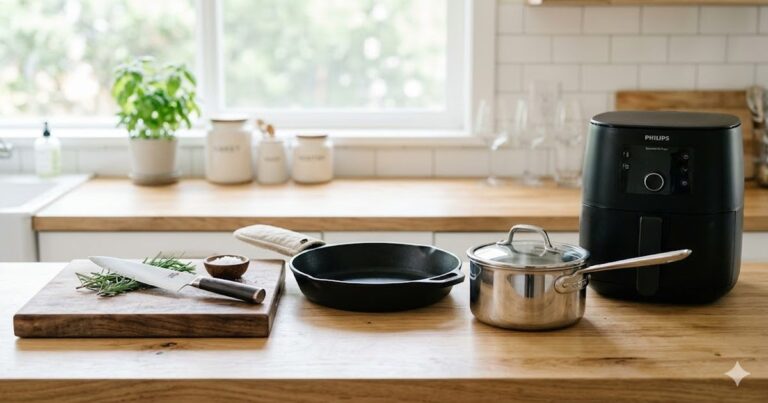
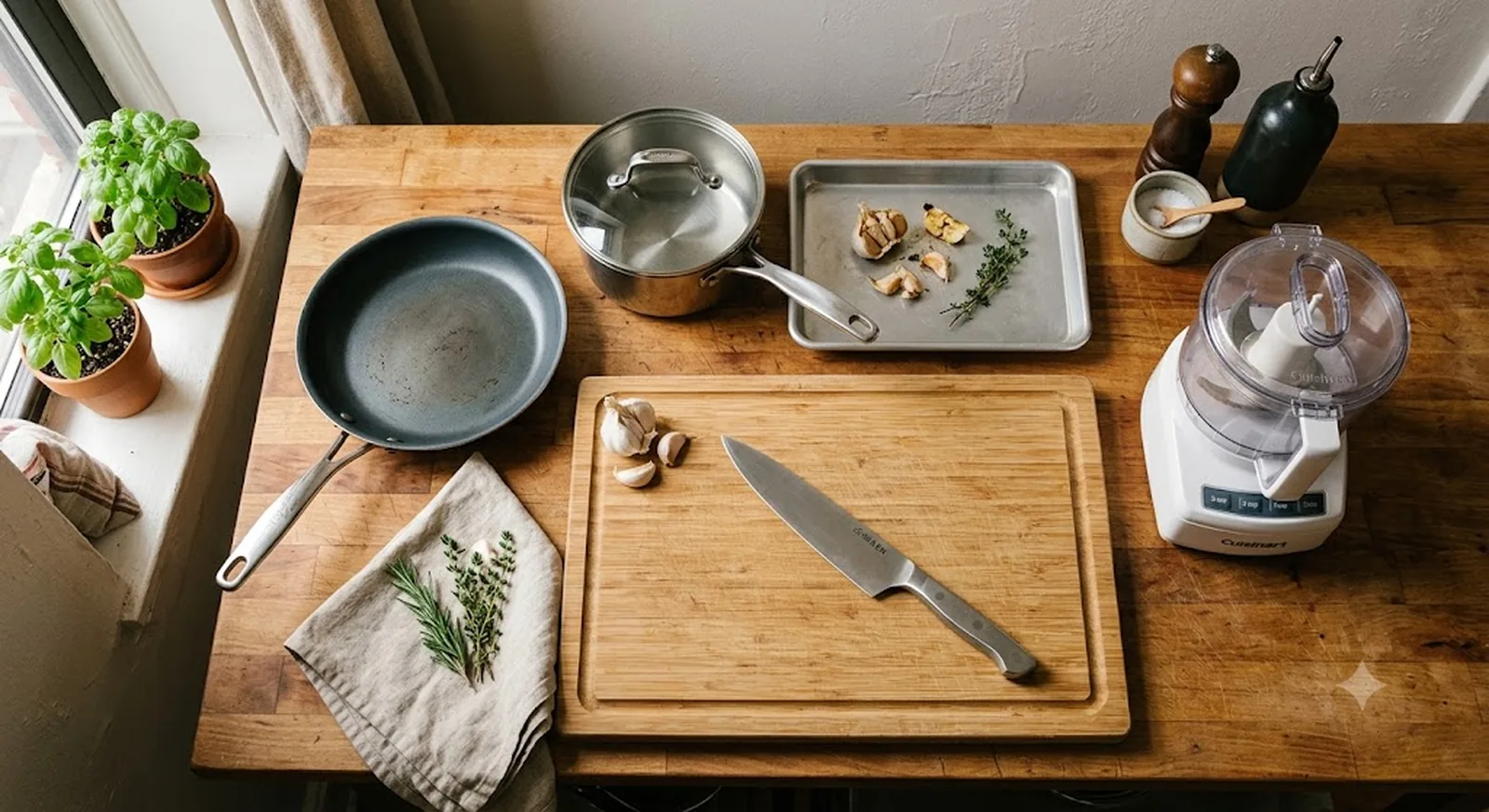
The short answer: a one-person household can cook almost anything with six right-sized tools — an 8-inch nonstick skillet, a 2-quart saucepan, a quarter sheet pan, one good 8-inch chef’s knife, a proper cutting board, and a 3-cup mini food processor. Skip the 12-piece sets; they’re sized for families you don’t have to feed.
Why Cooking for One Needs Different Gear (Not Less Gear)
Most kitchen-essentials lists are written for a default household of four. Buy that gear as a solo cook and you’ll run into three problems that show up over and over in buyer reviews from other one-person households.
Big pans punish small portions. A skillet only behaves when most of its surface is covered. Put one salmon fillet in a 12-inch pan and the empty metal around it overheats, the fond burns before your fish is done, and your kitchen smells like regret. America’s Test Kitchen makes the same point in its cooking-for-one guidance: match the pan to the portion, or the pan wins. An 8-inch skillet keeps the heat where your food actually is.
Storage is the real constraint. One-person households usually come with one-person kitchens — a single utensil drawer, two or three cabinets, maybe two working burners if the landlord was feeling generous. Every tool has to earn its footprint. A 15-piece cookware set doesn’t fail you on the stove; it fails you in the cabinet you don’t have.
Waste compounds quietly. When a recipe serves four and you serve one, the gap has to go somewhere — into the fridge, into the trash, or into four straight nights of the same chili. The right tools shrink that gap at the source: smaller cooking vessels nudge you toward smaller batches, and a mini food processor makes prepping half an onion feel like less of a chore than it sounds.
I went deeper on the minimalist philosophy in the only kitchen tools you need — that post is about cutting clutter. This one is about the opposite end: what to buy first when the household is just you.
The Right-Size Cheat Sheet for a Household of One
Before the picks, here’s the sizing logic in one table. I put this together after cross-referencing buyer reviews and product specs across dozens of listings, which made it obvious that “standard” sizes assume a family. Tape it inside a cabinet door if you’re outfitting from scratch.
| Tool | Family default | Right size for one | Why it matters |
|---|---|---|---|
| Skillet | 12-inch | 8-inch | Full pan coverage = even heat, no scorched edges |
| Saucepan | 3–4 quart | 2-quart | Boils faster, sauces don’t spread thin and burn |
| Sheet pan | Half sheet (18×13″) | Quarter sheet (13×9″) | Fits toaster ovens and small ovens; roasts one portion evenly |
| Chef’s knife | 8-inch | 8-inch (same) | Knife skills don’t scale down — don’t buy a tiny knife |
| Cutting board | 18×12″ | 18×12″ (same) | The one tool you should not shrink — small boards spill prep everywhere |
| Food processor | 8–14 cup | 3-cup mini | Half an onion doesn’t need a countertop appliance the size of a toaster |
Notice the pattern: cookware scales down, but hand tools don’t. Heat behaves differently in a smaller vessel; your hands are the same hands regardless of how many people you feed. That’s the mistake most “compact kitchen” lists make — they shrink everything, and you end up dicing an onion on a board the size of a paperback.
The 6 Kitchen Tools I’d Buy First for a One-Person Household
Every pick below is grounded in verified-purchase reviews, recurring complaint and praise patterns, and spec-and-price comparisons against the alternatives in its category — not just a spec sheet. The whole kit lands well under what a single premium cookware set costs, and it covers weeknight dinners, weekend cooking projects, and everything a small kitchen throws at you. Each one includes the honest downside, because every tool has one.
1. Tramontina Professional 8-Inch Nonstick Skillet — the right-size hero

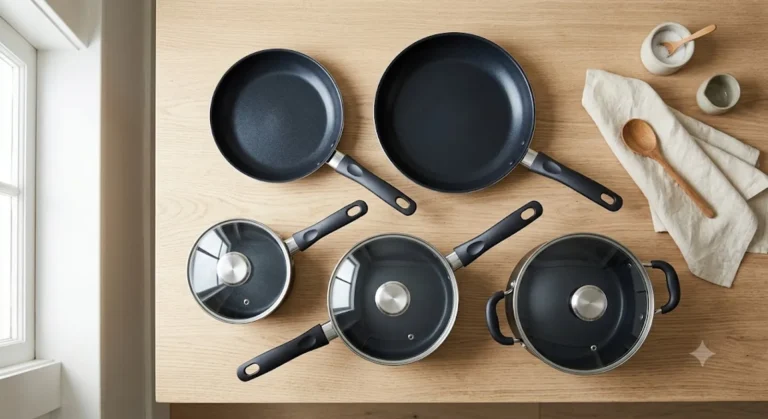
This is the pan solo cooks reach for night after night: two eggs, one chicken thigh, a single portion of fried rice. It’s the restaurant-supply pick that keeps beating pans at triple the price — heavy-gauge aluminum, a nonstick surface that reviewers consistently report holding up to near-daily use well past the one-year mark, and a shape that makes tossing food easy instead of aspirational. In the under-$30 tier, the review consensus doesn’t turn up anything that cooks more evenly.
The honest con: the removable silicone handle grip can slide around once oil finds its way underneath, and the bare metal handle gets hot in the oven. Wash the grip occasionally and use a towel past 400°F.
2. Cuisinart Chef’s Classic 2-Quart Saucepan — one pot, most jobs

Two quarts is the single-cook sweet spot: enough for a portion of pasta, a batch of rice, soup for tonight plus one planned leftover, or oatmeal that doesn’t crust itself onto a too-big pot. This Cuisinart has been in production for decades for a reason — even heating, a comfortable stay-cool handle, a tight lid, and stainless steel that shrugs off metal utensils and the dishwasher alike.
The honest con: it’s plain stainless, not tri-ply all the way up the walls, so on high heat sauces can catch at the sides if you wander off. Medium heat and an occasional stir solve it — and for a 2-quart pan the price difference over tri-ply is hard to justify.
3. Nordic Ware Naturals Quarter Sheet Pans (2-Pack) — sheet-pan dinners, scaled down
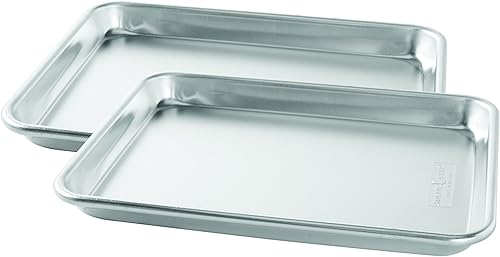
The quarter sheet (13×9-inch) is the most underrated piece of solo-kitchen gear in this whole list. One pan roasts a portion of vegetables while the other handles a chicken thigh or a few salmon bites — a full sheet-pan dinner without heating a half sheet’s worth of empty aluminum. They fit toaster ovens and the small ovens that come with small apartments, and pure uncoated aluminum means they brown evenly and last basically forever. Getting two for well under $25 is the best baking-gear value on Amazon.
The honest con: natural aluminum can’t go in the dishwasher — it discolors and turns chalky. Hand-wash, and expect a well-used patina within months. (Reviewers are consistent on this point: the patina is cosmetic, and the pans still bake evenly once it sets in.)
4. Victorinox Fibrox Pro 8-Inch Chef’s Knife — don’t downsize this one

Here’s where the right-sizing rule flips: your knife shouldn’t shrink just because your household did. A paring-size knife makes butternut squash a wrestling match. The Fibrox Pro is the knife I recommend to every new solo cook — light, grippy even with wet hands, sharp out of the box, and forgiving to sharpen. It’s the same knife that topped our comparison of chef’s knives under $100, outscoring blades at twice the price once we weighed buyer reviews against spec and price.
The honest con: the stamped blade lacks the heft and balance of a forged knife, and the utilitarian handle won’t impress anyone on looks. It’s a workhorse, not a showpiece.
5. Hiware 18×12″ Bamboo Cutting Board — the other thing you keep full-size

Small apartment, big board — I mean it. A cramped cutting board is the fastest way to hate cooking for yourself: diced onion on the floor, prep spread across three tiny plates, a knife stroke that runs out of runway. This bamboo board gives you real working space for a coffee-money price, the juice groove catches what roast chicken and tomatoes throw at it, and at just over a pound-and-change of bamboo it still stands upright behind the faucet to dry, so it stores in space you weren’t using anyway.
The honest con: bamboo is harder than maple, so it dulls edges slightly faster than an end-grain wood board — and like all wood boards it needs a monthly minute of mineral oil to keep from drying out. Fair trade for the price, in my book.
6. Hamilton Beach 3-Cup Mini Food Processor — prep for one, minus the sink full of parts

A full-size food processor is the most abandoned appliance in solo kitchens — too big to store, too annoying to clean for one carrot. This 3-cup mini is the opposite: stack, press, done. Half an onion, a single batch of pesto, a cup of salsa, breadcrumbs from the heel of the loaf you weren’t going to eat. It lives in a cabinet corner, and every part that touches food goes in the dishwasher. It’s the kind of tool that shows up in review after review as the reason someone actually started making sauces instead of buying jars.
The honest con: one speed, one blade, no feed tube — it chops and purées, and that’s the whole résumé. Texture control takes short pulses, and it will turn nuts into nut butter if you blink. Don’t expect it to shred cheese or slice anything.
What You Can Skip When You Live Alone
Right-sizing is as much about what you don’t buy. These are the things that show up again and again in returns and one-star reviews from solo cooks — bought, stored, and then quietly resented.
The 12-to-15-piece cookware set. You will use three pieces. The other nine exist to make the box look like a deal, and they’ll spend their lives nested in a cabinet playing percussion every time you want the one pan at the bottom. Buy the skillet and saucepan above instead, and add a small budget set later only if your cooking actually outgrows them.
The stand mixer (for now). Unless you bake weekly, it’s a very heavy way to store nostalgia. A hand whisk and that mini processor cover most solo baking. If you do bake, rescue counter space first.
Single-purpose gadgets. Avocado slicers, egg cookers, banana keepers, quesadilla makers — each one does a thing your knife, skillet, or microwave already does, and in a one-drawer kitchen every slot is prime real estate. My rule: a tool earns its spot only if it replaces a job most people do at least twice a week.
The knife block set. Eight knives, three of which are the same knife in different lengths. One great chef’s knife, a serrated bread knife when you can, a paring knife eventually. That’s the whole progression — I broke it down in the first-apartment kitchen essentials guide.
Make Leftovers Work For You, Not Against You
Here’s the part no gear list mentions: cooking for one is really a leftovers-management problem. Even with right-sized pans, plenty of good recipes bottom out at two or three portions. The solo cooks who eat well are the ones who plan for the extra portion instead of being ambushed by it.
Cook once, eat twice — on purpose. Treat tomorrow’s lunch as part of tonight’s recipe. That quarter-sheet dinner roasts six thighs’ worth of space just as easily as two; the second portion goes straight into a container before you sit down, which is the only reliable way to stop “leftovers” from becoming “midnight second dinner.”
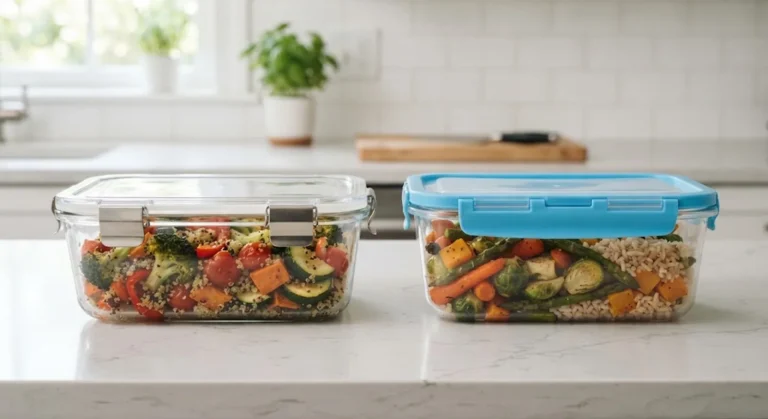
Right-size the containers too. Family-size storage containers do to your fridge what family-size pans do to your stove. Two-cup containers stack a week of single portions in one fridge shelf — I compared my favorites in the lunch-container guide, and the same logic applies even if the “commute” is to your own couch.
Let the freezer be your sous chef. The mini processor’s pesto, that extra soup portion, the second half of the loaf — flat-frozen in labeled bags, they turn future weeknights into assembly instead of cooking. If your kitchen is truly tiny, a compact microwave plus a stocked freezer beats takeout on speed, not just cost.
The Upgrade Path: What to Add in Months Two Through Six
The six tools above are the day-one kit. Once they’ve settled into your routine, real gaps will announce themselves — and they’re different for every cook, which is exactly why I don’t recommend buying ahead of them. Here’s the order that shows up again and again as the next upgrade in buyer feedback and forum threads from solo cooks.
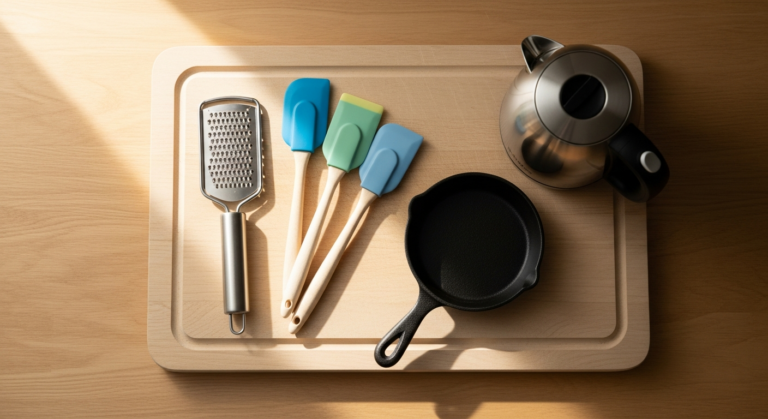
Month two: an electric kettle and a digital thermometer. The kettle earns its plug faster than any appliance in a small kitchen — tea, pour-over, jump-starting pasta water on a slow electric stove. The thermometer ends the era of cutting into chicken to check it.
Month three or four: a 10-inch skillet or a small Dutch oven, but only when a specific dish demands it — a whole seared steak with room to baste, a braise that becomes three planned freezer meals. Let the recipe justify the cabinet space, never the sale price.
When weeknights get crowded: a 6-quart multicooker. It sounds oversized for one, and for daily cooking it is — but as a batch machine that turns Sunday’s hour into four hands-off dinners, it earns the shelf. My weeknight Instant Pot recipe list is where I’d start deciding whether that trade fits how you eat.
FAQ: Kitchen Tools for One-Person Households
What size skillet is best for one person?
An 8-inch skillet is the sweet spot for one person. It fully covers a single protein plus a side’s worth of vegetables, heats evenly without scorching empty surface, and weighs little enough for one-handed tossing. Add a 10-inch later if you regularly cook for guests — not before.
Is a full cookware set worth it for a single person?
Usually not. Large sets are priced to look like savings, but a solo cook uses two or three pieces regularly while the rest consume storage a small kitchen doesn’t have. An 8-inch skillet plus a 2-quart saucepan covers the overwhelming majority of one-person cooking; add pieces individually as real needs appear.
What’s the best small appliance for someone living alone?
A 3-cup mini food processor gives the most cooking-per-cubic-inch: it makes small-batch prep (half an onion, single-serving sauces, dressings) fast enough that you’ll actually do it. If your kitchen lacks one, a compact microwave is the other high-value slot — see my small-kitchen microwave picks.
How do I stop wasting food when cooking for one?
Three habits fix most of it: portion the extra serving into a container before you eat (not after), flat-freeze anything you won’t touch within three days, and shop for recipes that share ingredients across the week. Right-sized cookware helps too — smaller vessels naturally pull batch sizes down toward what you’ll actually finish.
The Bottom Line: Buy for the Household You Have
Outfitting a one-person kitchen isn’t a budget version of outfitting a family kitchen — it’s a different problem with a shorter, smarter shopping list. Six right-sized tools, all of them under $50 apiece, and you can cook essentially anything a solo week calls for without donating a cabinet to cookware you’ll never touch. Start with the skillet; it changes the most dinners the fastest.
Setting up your first place from zero? The first-apartment essentials checklist covers the non-cooking gear this list assumes. Feeding yourself from a dorm-size setup instead? Start with dorm cooking 101 — same right-sizing logic, even fewer square feet.