Coffee Makers for Home Baristas: Home Coffee Machines by Brew Style (2026)
Disclosure: I’m Maya Sterling. Some links below are affiliate links — if you buy through them, I may earn a small commission at no extra cost to you. My recommendations are based on close analysis of verified-purchase buyer reviews, spec comparisons, and price comparisons, and every pick here includes the honest downsides too.
“Home barista” sounds intimidating, like you need a $2,000 machine and a chemistry degree. The honest truth is the opposite: the best coffee maker for a home barista is the one that fits the way you actually drink coffee, not the one with the most chrome.
This guide is organized by brew style rather than a single ranked list, because a person who wants a fast morning latte needs something completely different from someone who wants to fuss over a single-origin Ethiopian on a Sunday. I’ll walk through how to match the method to your morning, the one upgrade that matters more than the machine itself, and then six standout brewers — across espresso, precision drip, classic drip, pour-over, and immersion.
How to choose: match the brewer to your morning
Before you spend anything, answer four questions honestly. I’ve watched too many friends buy a gorgeous espresso machine that now holds up a shelf because it didn’t fit their life.
- How many cups, and for how many people? Brewing one cup for yourself points you toward pour-over or immersion. Filling a carafe for a household points to drip.
- How much time do you have on a weekday? If you’re out the door in ten minutes, manual pour-over will frustrate you. A programmable drip or a fast-heating espresso machine respects your clock.
- Milk drinks or black coffee? Lattes and cappuccinos mean you want espresso with a steam wand. If you drink it black, espresso is optional and arguably overkill.
- How much counter space do you genuinely have? Measure your own counter before buying anything. A pour-over dripper tucks in a drawer; an espresso machine claims real estate permanently.
If you answer “one or two cups, black, a little patience,” pour-over or AeroPress is your lane. “Several cups, whole household, set-and-forget” is drip territory. “Milk drinks, I want cafe texture” is espresso. There’s no wrong answer — but matching honestly is what separates a beloved daily tool from counter clutter. For the bigger picture on which appliances actually earn their space, my guide to the best small kitchen appliances is a good companion read.
Drip vs. espresso vs. pour-over: which brew style fits you?
If you’re still deciding between brew styles before you look at specific machines, here’s the side-by-side. Each method rewards a different kind of morning — there’s no universal “best,” only the best fit for how you actually drink coffee.
| Brew style | Hands-on time | Skill curve | Best for | Typical price tier |
|---|---|---|---|---|
| Drip (classic or precision) | Low — set and forget | Easy | Households, batch brewing, weekday mornings | Mid ($150) to invest-once ($300+) |
| Espresso | Medium — pull shot, steam milk | Moderate to steep | Milk drinks, cafe-style texture | Mid ($150) to serious setup ($300+) |
| Pour-over | High — full manual pour | Moderate (V60) to easy (Kalita Wave) | Single cups, weekend ritual, black coffee drinkers | Entry (~$50) |
| Immersion (AeroPress) | Low-medium — steep and press | Easy | Travel, small spaces, one cup at a time | Entry (~$50) |
Finding the right home coffee machine for small kitchens
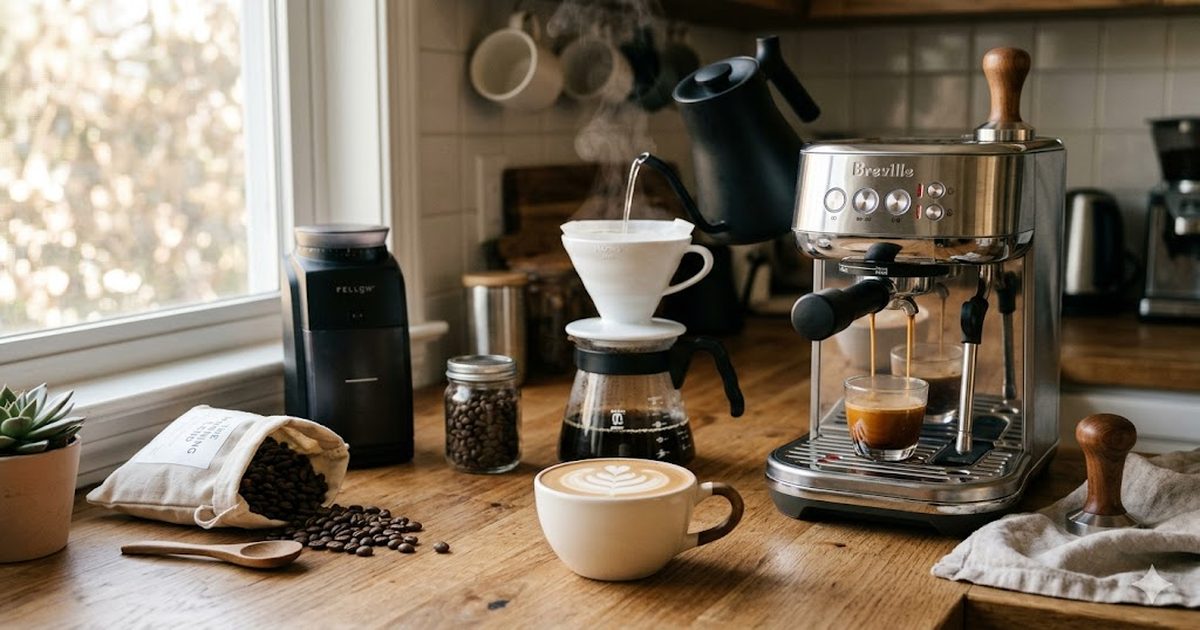
Not every home coffee machine needs to dominate the counter. If you’re working with a galley kitchen, a shared apartment, or a home office coffee corner, the footprint of the machine matters as much as what’s in the cup. The good news: most of the best coffee machines for home use today are built with compact kitchens in mind — pour-over drippers store flat in a drawer, the AeroPress fits on a single cabinet shelf, and even a compact espresso machine like the Bambino below is barely wider than a cereal box.
If counter space is genuinely tight, skip anything with a built-in grinder or a wide water reservoir, and look instead at manual brewers or a slim drip machine you can tuck under a cabinet. A single home coffee machine that does one thing well will always beat a bulky all-in-one that does three things poorly and eats your whole counter doing it. If you’re outfitting a small kitchen and want your coffee maker to sit alongside other space-saving picks, my best single-serve appliances guide covers single-serve coffee options too.
The thing every roundup skips: your grinder matters more than your brewer
Here’s the uncomfortable truth most coffee-maker lists bury at the bottom. A budget pour-over cone with freshly ground beans will beat a $400 machine running pre-ground supermarket coffee, every single time. It isn’t close.
Coffee starts losing its best aromatics within minutes of grinding. Pre-ground coffee — even good pre-ground coffee — has already given most of that away by the time it reaches your kitchen. A consistent burr grinder, ground right before you brew, is the single biggest jump in cup quality you can make. It’s easy to blame the brewer for flat, dull coffee when the real culprit is a bean-freshness problem.
So before you over-invest in the machine, budget for a decent burr grinder and buy whole beans with a roast date on the bag. If your money is tight, spend less on the brewer and more on the grinder. Your future self, standing bleary-eyed at the counter, will thank you. With that settled, here are the brewers worth your counter space.
Best espresso machine for new home baristas: Breville Bambino

Breville Bambino Espresso Machine (BES450BSS)
If you want real espresso and milk drinks without surrendering half your counter, the Bambino is where I send people first. It’s startlingly compact — barely wider than a cereal box — yet it heats from cold in a few seconds and pulls a 9-bar shot with genuine crema. It’s the machine reviewers reach for when they want a flat white before work and don’t want to wait for a big machine to warm up.
What makes it a good first espresso machine is that it removes the parts beginners get wrong: the heat-up wait, the temperature inconsistency between shots. You still pull the shot and steam the milk yourself, so you learn the craft, but the machine isn’t fighting you while you learn.
The honest con: the milk steam wand is manual, which means there’s a real learning curve to texturing microfoam. Your first few attempts will look like bubbly dish soap rather than glossy latte milk. It’s a skill that takes a couple of weeks of daily practice — if you want milk frothing handled automatically, you’ll need to step up to a pricier model. There’s also no built-in grinder, so factor a separate grinder into your plan (see the section above — you want one anyway).
Best precision drip (set-and-forget cafe quality): Fellow Aiden

Fellow Aiden Precision Coffee Maker
The Aiden is the machine built for busy mornings when hand-pouring isn’t realistic. It’s a drip brewer, but it behaves like a precision instrument: it controls water temperature in stages and pulses the water over the grounds the way a careful pour-over does, instead of dumping it all at once. The result, according to buyer reviews, is a cup with the clarity of manual pour-over and the convenience of pressing one button.
Where it really shines is medium roasts. Standard drip machines often run too hot and pull out bitter, woody notes; the Aiden’s temperature profiling keeps those in check, and it handles small one-mug batches without the weak, under-extracted result you get from most carafe machines brewing tiny amounts. It also schedules, so coffee can be ready before you even walk into the kitchen.
The honest con: it sits at the premium end of drip pricing, which is a lot to ask if you’re happy with a straightforward cup. The app-and-profiles approach is wonderful if you like tinkering and a little much if you just want coffee — some mornings you just want to press one button and not think about brew profiles at all. If “precision” sounds like a chore rather than a joy, save your money.
Best classic drip built to last: Technivorm Moccamaster KBGV Select

Technivorm Moccamaster KBGV Select 10-Cup
The Moccamaster is the brewer I recommend to people who want excellent drip coffee for years and never want to think about it again. It’s hand-built, it brews fast and hot in the range that actually extracts coffee well, and the cup it produces is bright, clean, and consistent. Owners trust it the way you trust a cast-iron skillet — it just keeps working, year after year.
The other quiet advantage is repairability. Parts are replaceable, so a single component failing doesn’t send the whole machine to a landfill. In a world of appliances designed to be thrown away, that’s rare and worth paying for. If you batch-brew for a household every morning, this is the workhorse.
The honest con: it does one thing — straight black drip — and offers little control beyond a half-carafe setting. There’s no temperature profiling, no scheduling, no fancy app. It also struggles to brew a great single cup; it’s happiest making a near-full carafe. If you want a one-mug machine or you love dialing in variables, look elsewhere. For where a brewer like this fits in a longer-term kitchen plan, see my kitchen upgrade guide.
Best pour-over for control: Hario V60

Hario V60 Ceramic Dripper (Size 02, White)
The V60 is the classic gateway brewer for many home baristas. It’s a simple ceramic cone with spiral ridges and one big hole at the bottom, and that design gives you almost total control over how the water moves through the bed of coffee. For a special single-origin bag, this is the dripper reviewers reach for, because buyers consistently say nothing else pulls out brightness and delicate floral or fruity notes quite like it.
It’s also gloriously cheap to live with. The filters are inexpensive and sold nearly everywhere, the ceramic holds heat well, and there’s nothing electronic to break. For someone who genuinely enjoys the ritual — weighing beans, pouring in slow circles, watching the bloom — it’s deeply satisfying and costs very little to start.
The honest con: the V60 is unforgiving. Because you control everything, you can ruin a cup with a too-fast pour or the wrong grind, and it rewards a steady hand and ideally a gooseneck kettle and a scale. On a rushed Tuesday, the precision it demands becomes a liability rather than a pleasure. It’s a weekend joy and a weekday hazard if you’re not a morning person. If you want a solid kettle-and-scale combo to pair with it (plus a couple of easier alternatives), see my pour-over coffee setups under $100 guide.
Best forgiving pour-over: Kalita Wave 185
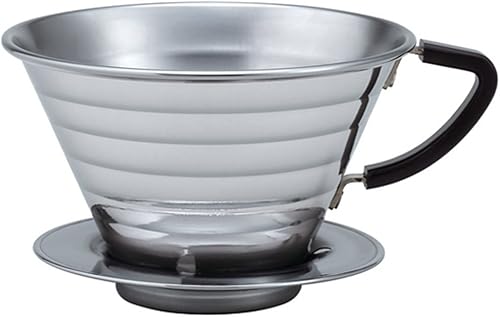
Kalita Wave 185 Stainless Steel Dripper
If the V60 is the brewer for control freaks, the Kalita Wave is the brewer for the rest of us who still want a great pour-over without the anxiety. Its flat bottom and three small holes slow the water down and even out the extraction, so a slightly sloppy pour still lands you a balanced, sweet, well-rounded cup. It’s the dripper commonly recommended for first-timers who’ve never done pour-over, since it’s forgiving enough to nail on the first try.
The stainless-steel version is also basically indestructible — buyers report dropping it without damage, which isn’t something you can say for ceramic. For a beginner moving from drip into manual brewing, it’s the gentlest, least frustrating on-ramp I know.
The honest con: the Wave’s signature filters are pricier and harder to find than V60 filters — you’ll likely be ordering them online rather than grabbing a pack at the grocery store. And because it’s so forgiving, it tops out a little lower than the V60 on a truly exceptional coffee; it smooths everything toward “balanced,” which is wonderful for daily drinking but slightly mutes the sparkle of a standout bean.
Best versatile and portable brewer: AeroPress Original

AeroPress Original Coffee Press
The AeroPress is one of the most quietly clever coffee makers around. You steep the grounds like a French press, then push them through a paper filter with gentle pressure, and the result is a smooth, low-acidity, full-bodied cup that lands somewhere between pour-over and espresso. It’s a favorite travel brewer, small enough to toss in a bag, and a solid pick for anyone who’s curious about better coffee but doesn’t want to commit to a whole setup.
It’s almost impossible to brew a bad cup with it, it cleans up in about ten seconds — you just pop the puck of grounds straight into the compost — and it’s nearly unbreakable. For a tiny apartment, a dorm, an office drawer, or a camping trip, nothing matches its combination of quality and convenience. If you’re outfitting a first kitchen on a budget, it pairs nicely with the picks in my first-apartment kitchen essentials guide.
The honest con: it brews one cup, maybe a strong concentrate you dilute, so it’s a poor choice if you need to serve several people at once. The plastic build is practical but won’t satisfy anyone who wants a beautiful object on the counter, and the small capacity means a household of coffee drinkers will be brewing in shifts.
How much should you actually spend?
Prices shift constantly, so instead here’s a framing that’s more durable. Think in three tiers. At the entry level, a pour-over cone or an AeroPress plus a modest burr grinder will get you genuinely excellent coffee for less than you’d guess — this is the highest-value path and where I’d start almost anyone. The mid tier adds a precision drip machine or a compact espresso machine, which buys you convenience and milk drinks. The invest-once tier is a built-to-last drip brewer or a serious espresso setup for people who know they’ll use it daily for years.
| Tier | What you get | Best if… |
|---|---|---|
| ~$50 (entry) | Pour-over cone or AeroPress + a modest burr grinder | You drink black coffee, brew one or two cups, and want the highest value per dollar |
| ~$150 (mid) | Compact espresso machine or an upgraded precision drip brewer | You want milk drinks or hands-off convenience without going all-in |
| $300+ (invest-once) | Built-to-last carafe drip machine, or a serious espresso setup with grinder, scale, and tamper | You’ll use it daily for years and want to buy it once |
The one warning worth giving every aspiring home barista: espresso is a rabbit hole. The machine is only the beginning. To pull good shots you’ll also want a quality grinder, a scale, a tamper, and fresh beans — so the real cost of “getting into espresso” is meaningfully higher than the sticker on the machine. There’s nothing wrong with that if it’s a hobby you’ll love. But go in with your eyes open, and don’t let the espresso dream stop you from enjoying outstanding coffee from a $30 brewer in the meantime. If you’re weighing a coffee machine against other countertop appliances, my air fryer testing guide shows the same “match it to how you actually cook” logic applied elsewhere.
Frequently asked questions
Do I need an expensive machine to make good coffee at home?
No. The biggest jump in quality comes from fresh whole beans and a consistent burr grinder, not an expensive brewer. A simple pour-over cone or an AeroPress with good grinding will beat a costly machine running stale pre-ground coffee. Spend on freshness and grinding first.
Is pour-over actually worth the effort?
If you enjoy the ritual and drink your coffee black, yes — pour-over gives you control and clarity that’s hard to match. If you’re rushed in the mornings or brew for several people, a programmable drip machine will make you happier. Be honest about your mornings before committing.
Espresso machine or drip — which should a beginner buy first?
If you mainly drink milk drinks like lattes, start with a compact espresso machine such as the Bambino. If you drink black coffee or brew for a household, a precision or classic drip machine is the smarter, lower-stress first purchase. Espresso is a deeper commitment of time and accessories.
What’s the best coffee maker for milk drinks?
An espresso machine with a steam wand, because lattes and cappuccinos need real espresso and textured milk. A manual-wand machine like the Bambino works well once you’ve practiced steaming; if you’d rather not learn milk texturing, look at a model with automatic frothing.
How do I keep my coffee maker working well?
Descale drip and espresso machines on the schedule the manufacturer recommends, since mineral buildup is the most common reason they fail or brew too cool. Rinse pour-over gear after each use, and replace paper filters every brew. A little maintenance dramatically extends a machine’s life.
The bottom line
There is no single best coffee maker for home baristas — there’s the best one for your morning. If you drink milk drinks and want cafe texture, the Breville Bambino is the gentlest entry into real espresso. If you want hands-off precision, the Fellow Aiden brews like a careful barista at the press of a button, while the Technivorm Moccamaster is the buy-it-once carafe machine for a busy household. For hands-on ritual, the Hario V60 rewards a steady hand and the Kalita Wave forgives a shaky one, and the AeroPress quietly does a bit of everything, anywhere.
Whatever you choose, put your money toward fresh beans and a good grinder before you over-invest in the machine. Get that right, and even the humblest brewer on this list will pour you a cup worth waking up for. If you’re still mapping out your wider setup, my best small kitchen appliances guide covers the rest of the counter.