
How to Season a Cast Iron Skillet: The Right Way (and 3 Mistakes to Avoid)
Some of the links below are affiliate links. If you buy through them, I may earn a small commission at no extra cost to you. I only point to gear that holds up well based on verified buyer reviews and spec comparisons.
Cast iron seasoning trips people up constantly — a new Lodge pan, a rusty skillet rescued from an estate sale, or a well-loved 12-inch workhorse can all end up with the same sticky, blotchy problems. The good news: seasoning a cast iron skillet is genuinely simple once you understand what you’re actually doing. The bad news: most of the “rules” people repeat about cast iron are either outdated or flat wrong, and following them is exactly what leaves you with a sticky, blotchy pan.
So let’s do this properly. First the 30-second science, then the three mistakes that wreck seasoning, then the actual step-by-step. By the end you’ll know how to season a cast iron skillet the right way — and why most of what you’ve heard about soap is nonsense.
What “seasoning” actually is (the 30-second science)
Seasoning isn’t a coating you paint on, and it isn’t oil sitting on the surface. When you heat a thin layer of oil on iron past its smoke point, the fat goes through polymerization — the molecules bond together and chemically fuse to the metal, forming a hard, plastic-like layer that’s slick and rust-resistant. That’s it. That bonded layer is your nonstick surface.
Two things follow from that. First, seasoning is cumulative — every time you cook with fat, you’re adding to it. Second, because it’s chemically bonded to the iron rather than just resting on top, it’s far tougher than people give it credit for. Understanding that one fact clears up most of the myths below.
3 cast iron mistakes that wreck seasoning
Mistake 1: “Never use soap”
This is the big one, and it’s outdated. The rule comes from a time when dish soap was made with lye — harsh, alkaline, and genuinely capable of stripping a fragile film. Modern dish soap is a mild detergent designed to lift grease, not dissolve a polymerized layer that’s bonded to metal. A few drops of Dawn and a quick scrub will not strip a well-seasoned pan. Lodge itself now says mild soap is fine. Buyers who wash their pans with soap regularly report the seasoning holding up fine — often improving over time as it builds up. What you should avoid is soaking the pan or running it through the dishwasher — that’s how rust starts, not a squirt of soap.
Mistake 2: Re-seasoning after every wash
You don’t need to do a full re-season every time you clean the pan. Because seasoning is cumulative and you’re maintaining it every time you cook with oil or fat, a healthy pan only needs a quick wipe of oil after washing — not a trip to the oven. Full re-seasoning is for restoration (rust, flaking, a stripped pan), not routine maintenance. Treating every wash like an emergency is how people burn themselves out on cast iron and give up.
Mistake 3: Using the wrong oil (and too much of it)
This is the mistake behind almost every complaint about a sticky, tacky pan in seasoning reviews. Two parts: people reach for olive oil (low smoke point, leaves a gummy residue), and they use way too much. Seasoning needs a coat so thin it looks like the oil is gone. If you can see oil pooling or beading, you’ve used too much, and it will bake into a sticky, uneven mess. The fix is almost comically simple: oil it, then wipe it off like you made a mistake. More on oils in a minute.
How to season a cast iron skillet, step by step
This is the oven method recommended for a new pan or one that needs restoring. It takes about 90 minutes start to finish, mostly hands-off.
- Wash and dry completely. Hot water, a little soap, and a scrub. For a rusty or crusty pan, this is where a chainmail scrubber earns its keep. Then dry it thoroughly — a couple of minutes on a warm burner drives off every trace of moisture.
- Apply a thin coat of oil. A few drops on a paper towel, rubbed over the entire pan — inside, outside, handle. Then take a clean towel and wipe it all back off. The surface should look barely oiled, almost dry.
- Bake upside down. Place the skillet upside down on the top rack (a sheet pan or foil below catches drips), in an oven preheated to 450–500°F.
- Bake one hour, then cool in the oven. After an hour, turn the oven off and let the pan cool inside. That’s one layer.
- Repeat for 2–3 coats. A new pan benefits from a few thin rounds. Three thin coats beat one thick coat every single time.
If you only remember one thing from this whole guide: thin coats, wiped to nearly nothing. That single habit prevents the sticky-pan problem that sends most people back to Google.
The best oil to season cast iron (smoke-point table)
You want a neutral oil with a high smoke point, because polymerization happens at high heat. Here’s how the common options compare:
| Oil | Approx. smoke point | Good for seasoning? |
|---|---|---|
| Grapeseed | ~420°F | Yes — a top pick |
| Canola / vegetable | ~400°F | Yes — cheap and reliable |
| Flaxseed | ~225°F (but polymerizes hard) | Slick finish, but can flake if over-applied |
| Avocado (refined) | ~520°F | Yes — excellent |
| Olive oil / EVOO | ~325–375°F | No — gummy residue |
Grapeseed is one of the most consistently recommended options. If you’d rather not keep a separate bottle around, a purpose-made seasoning oil takes the guesswork out — it’s pre-blended for exactly this job.
Recommended gear for seasoning cast iron
Lodge Seasoned Cast Iron Skillet (12″)
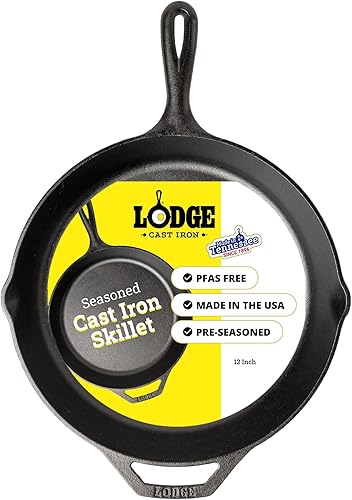
This is one of the most popular seasoned cast iron skillets for good reason. It comes pre-seasoned, so it’s usable out of the box, and the factory seasoning gives you a head start before you build your own layers. The one honest downside: the surface starts out a little rough and pebbly compared to vintage or machined cast iron, so the first few weeks of cooking are part of the break-in. It smooths out with use.
Lodge Chainmail Scrubber

A chainmail scrubber is a favorite among cast iron owners for painless cleanup. It lifts stuck-on food without stripping seasoning, which is exactly what you want — it’s abrasive to debris but not to the bonded layer underneath. The downside: stuck food can wedge into the rings, so you’ll want to rinse and shake it out, and it can rust if you leave it sitting wet. Hang it to dry and it lasts for years.
Field Company Cast Iron Seasoning Oil

If you don’t want to think about smoke points, a pre-blended seasoning oil takes the decision off your plate — this one is a grapeseed-and-sunflower blend made specifically for conditioning cast iron. It’s convenient and the thin formula spreads nicely. The honest catch: you’re paying a premium for what is essentially high-smoke-point oil, and a bottle of plain grapeseed from the grocery store does the same job for less. Worth it for the convenience, not strictly necessary.
Everyday care: the 2-minute routine after cooking
This is the routine that keeps a pan healthy so you almost never need a full re-season:
- Rinse with hot water while the pan is still warm; add a drop of soap if it’s greasy.
- Scrub stuck bits with the chainmail or a stiff brush.
- Dry completely — towel first, then a minute on a warm burner.
- Wipe a tiny amount of oil over the cooking surface and buff it off.
That’s it. For the full rundown on caring for cast iron alongside your knives and nonstick, I put together a complete kitchen tool care guide that goes deeper on each material.
When to fully re-season (and how to tell)
Save the oven method for when the pan actually needs it. Signs it’s time: patchy or flaking seasoning, dull gray spots where the iron shows through, surface rust, or food suddenly sticking everywhere on a pan that used to be slick. For rust, scrub it back to bare metal first, then run the full step-by-step above. A stripped, restored pan can come back better than new, and plenty of buyer accounts describe rescuing pans that looked like lost causes.
If you’re still deciding whether cast iron is even the right pan for you, my cast iron vs. carbon steel comparison breaks down which one suits different cooks, and the best cookware sets guide covers how a skillet fits into a full kitchen.
FAQ
Can I really use soap on cast iron?
Yes. Modern dish soap is a mild detergent and won’t strip properly bonded seasoning. The “no soap” rule dates back to lye-based soaps that no longer exist on store shelves. Just don’t soak the pan or leave it wet. It’s one of several kitchen myths that are ruining your cookware.
What’s the best oil to season cast iron?
A neutral, high-smoke-point oil. Grapeseed and refined avocado are excellent; canola works fine and is cheap. Avoid olive oil — its low smoke point leaves a sticky residue.
Why is my cast iron sticky after seasoning?
Almost always too much oil. The coat needs to be wiped back to nearly nothing before it goes in the oven. Pooled oil bakes into a tacky film. Wipe it off harder, and bake hotter (450–500°F).
How often should I season my skillet?
Rarely, if you cook with it regularly. Cooking with fat maintains the seasoning. A full re-season is only needed for restoration — rust, flaking, or bare spots.
Season it right once, keep up the two-minute routine, and a cast iron skillet will outlast almost everything else in your kitchen — long-term owners consistently report decades of use. The same routine keeps a budget cast iron grill pan going for decades, too.