5 Kitchen Myths That Are Ruining Your Cookware
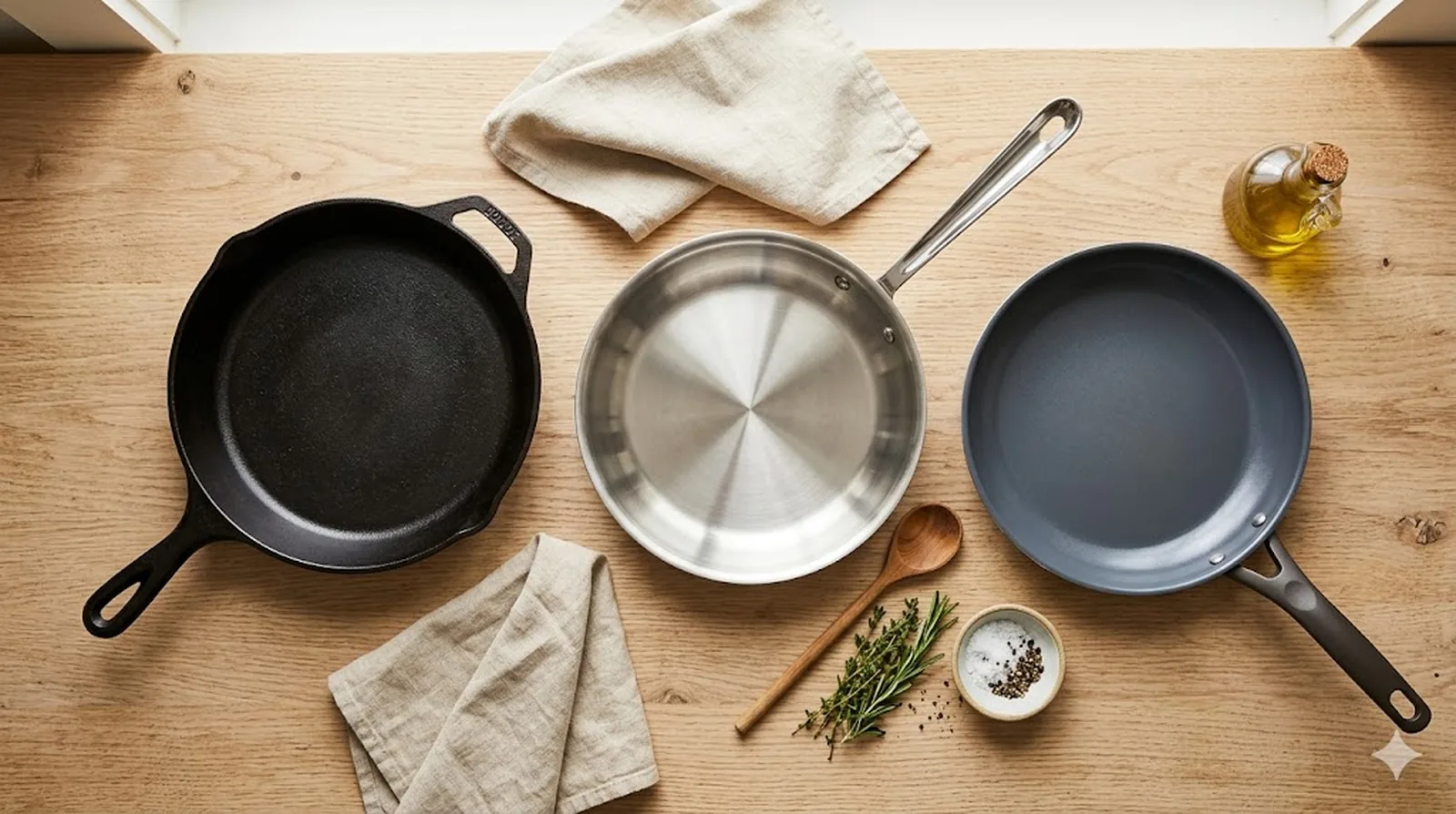
I have heard every one of these “rules” repeated so many times that people treat them as gospel — and a few of them are quietly destroying perfectly good pans. Looking across verified-purchase reviews and spec comparisons for these materials, the same patterns show up again and again: non-stick coatings dying early, stainless pans getting blamed for sticking that was never their fault, and cast iron skillets babied into uselessness over fears that simply are not true. Disclosure: this post contains affiliate links, and I may earn a small commission if you buy through them — at no extra cost to you. I only recommend gear that holds up well in verified buyer reviews and spec comparisons.
Below are the five cookware myths I hear most often, why each one is wrong, and what to do instead. None of this is contrarian for its own sake — every fix is backed by how these materials actually behave on the stove.
Myth 1: “You Should Never Use Soap on Cast Iron”
This is the big one, and it comes from a real historical fact that no longer applies. Decades ago, dish soap was lye-based and genuinely harsh enough to strip the polymerized oil layer that makes cast iron non-stick. Modern dish soap is a mild detergent — it lifts grease, it does not dissolve seasoning. Seasoning is baked-on polymerized oil bonded to the metal, not a fragile film that a squirt of Dawn washes away.
Verified-purchase reviews for cast iron skillets describe the same thing over and over: years of washing with a little soap after greasy cooks, with the seasoning only getting better over time. What actually ruins cast iron is leaving it wet (rust) or scrubbing through the seasoning with steel wool — not soap.
What to do instead: wash with warm water and a small amount of mild soap, dry it immediately and completely (a quick pass over low heat helps), then wipe on a thin film of oil. If you want the full method, I walk through it step by step in my guide on how to season a cast iron skillet.
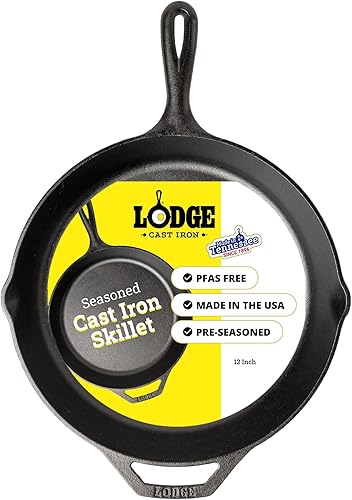
Lodge Seasoned Cast Iron Skillet (12″) is the pan I point beginners to because it is nearly indestructible and shrugs off normal washing. The honest con: it ships with a fairly rough factory seasoning, so the first few months of cooking are what make it truly slick — patience required.
Myth 2: “Non-Stick Pans Work Best on High Heat”
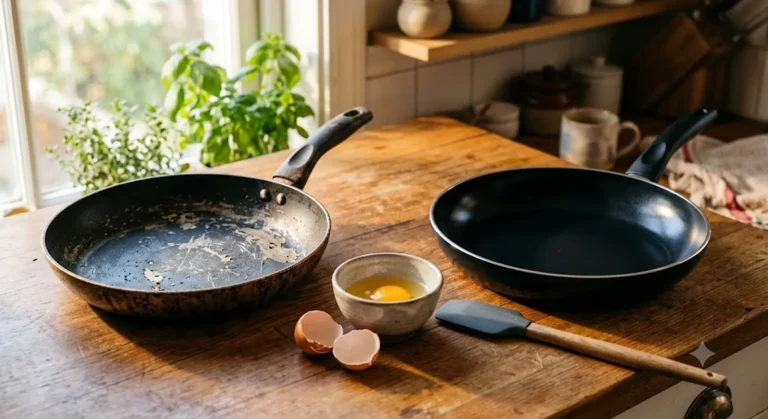
High heat is the single fastest way to kill a non-stick pan. PTFE and ceramic coatings start to break down and lose their release properties when the surface climbs past roughly 500°F — and an empty non-stick pan on a high burner blows past that in a couple of minutes. The coating does not fail dramatically; it just gets progressively less slick until eggs start grabbing and you blame the pan. (If you are wondering whether yours is already past the point of no return, here is how long non-stick coating lasts and the five signs it is done.)
The pattern across buyer complaints about dead non-stick pans is consistent: they were cooked too hot, too often. Non-stick is a low-and-slow tool: eggs, fish, pancakes, delicate proteins. It is not a searing pan.
What to do instead: keep non-stick on low to medium heat, never preheat it empty, and reach for stainless or cast iron when you want a hard sear. I break down which coatings survive longest in my roundup of the best non-stick pans that actually last.
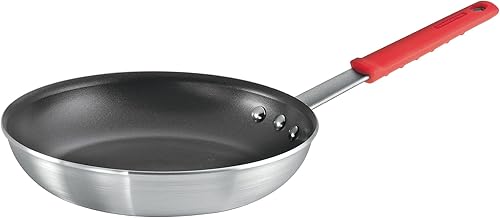
Tramontina Professional Non-Stick Frying Pan (10″) is my long-term value pick — a heavy-gauge restaurant-style pan that reviewers consistently praise for outlasting its price point. The con: the riveted handle gets hot on the stovetop, so keep a towel or mitt nearby.
Myth 3: “Stainless Steel Always Sticks”
Stainless steel does not stick because it is bad cookware — it sticks because most people add food before the pan is ready. Sticking is almost always a temperature problem, not a quality problem. A properly preheated stainless pan develops a brief non-stick effect as the food’s surface contracts and releases on its own once it is seared.
The trick chefs use is the water test (the Leidenfrost effect): heat the dry pan, then flick in a few drops of water. If they sizzle and evaporate, it is too cool. If they form a single ball of water that glides across the surface like mercury, the pan is at the right temperature. Add your oil then, let it shimmer, and only then add the food.
What to do instead: preheat, run the water-bead test, add fat, then add food — and resist the urge to move proteins early. They release when they are ready.
Myth 4: “You Can’t Cook Acidic Foods in Cast Iron”
You will read everywhere that tomatoes, wine, and citrus will instantly wreck your cast iron and leach a metallic taste into your food. The reality is a matter of time, not a hard ban. A well-seasoned skillet handles a quick pan sauce, a tomato sauté, or deglazing with wine without any issue, and plenty of reviewers describe doing exactly this on a regular basis. The seasoning is a barrier, and a short cook does not give the acid time to break through it.
The myth becomes true only at the extremes: simmering a very acidic sauce for 30 to 60 minutes or longer can start to strip seasoning and pick up a faint iron taste. That is a long-simmer problem, not a “never touch a tomato” problem.
What to do instead: keep acidic cooking in cast iron short and finish elsewhere if you need a long simmer. For all-day tomato sauce or braises, reach for stainless or enameled cast iron. More care details live in my full kitchen tool care guide.
Myth 5: “A Heavier Pan Is Always a Better Pan”
Weight feels like quality in the store, so a lot of buyers equate “heavy” with “good.” But mass is not the same as even heating. What actually matters is construction — specifically whether the conductive metal runs all the way up the walls (fully clad) or sits only as a thick disc on the bottom. A thinner fully clad tri-ply pan heats far more evenly than a heavy disc-bottom pan that leaves cool, food-sticking walls.
Reviews tell a consistent story here: budget pans that weigh a ton still get complaints about hot spots, while lighter clad pans get praised for browning a pancake edge to edge. If you want the science, I explain it in detail in why tri-ply cookware heats more evenly.

Tramontina Signature Tri-Ply Clad Stainless Steel Set is the set I recommend to people who want even-heating clad construction without the premium-brand markup. The honest con: stainless has a learning curve (see Myth 3), so it rewards cooks willing to learn the preheat technique rather than those wanting instant non-stick.
Frequently Asked Questions
Will one wash with soap really not hurt my cast iron?
No. Modern dish soap is a mild detergent and will not dissolve baked-on seasoning. The two things that genuinely damage cast iron are leaving it wet (rust) and abrasive scrubbing through the seasoning layer.
How do I stop food sticking to stainless steel?
Preheat the dry pan, then run the water-bead test — when a drop of water forms a single rolling ball, add oil, let it shimmer, then add the food. Let proteins sear undisturbed; they release on their own.
Is high heat ever okay on non-stick?
Briefly and rarely, but it is not worth it. High heat shortens coating life and risks overheating an empty pan. Keep non-stick to low and medium, and sear on cast iron or stainless instead.
Can I make tomato sauce in cast iron?
A quick tomato sauté or pan sauce is fine on well-seasoned cast iron. For a long simmer of 30 minutes or more, switch to stainless or enameled cast iron to protect the seasoning and avoid a metallic note.
The Bottom Line
Most cookware “rules” survive because they sound responsible, not because they are accurate. Use soap on your cast iron, keep non-stick off high heat, preheat your stainless properly, cook acidic foods in cast iron just briefly, and judge pans by construction rather than weight. Get those five right and your cookware will not only last longer — it will actually cook better. For the full care playbook across every material, start with my complete kitchen tool care guide.