Best Storage Jars and Canisters for a Visible Pantry
Buying the same bag of rice twice because you couldn’t see the one already open is one of the most common complaints buried in pantry-storage reviews. That’s the real problem the best storage jars and canisters solve. It isn’t about looking like a magazine spread (though that happens too); it’s about seeing your inventory at a glance so you stop double-buying and start cooking with what you own. Kitchaneers is reader-supported: as an Amazon Associate, I may earn a commission from qualifying purchases at no extra cost to you.
The short answer: for bulk staples like sugar and rice, the ComSaf 78-ounce glass jars are the best starting point, and if you’d rather redo the entire pantry in one box, the budget-friendly Vtopmart 24-piece set gets you there fastest. Below are the five jars and canisters that come out on top after digging through hundreds of verified-purchase reviews, a size map for beginners, and an honest glass-versus-plastic breakdown.
Why a Visible Pantry Changes How You Cook (and Shop)
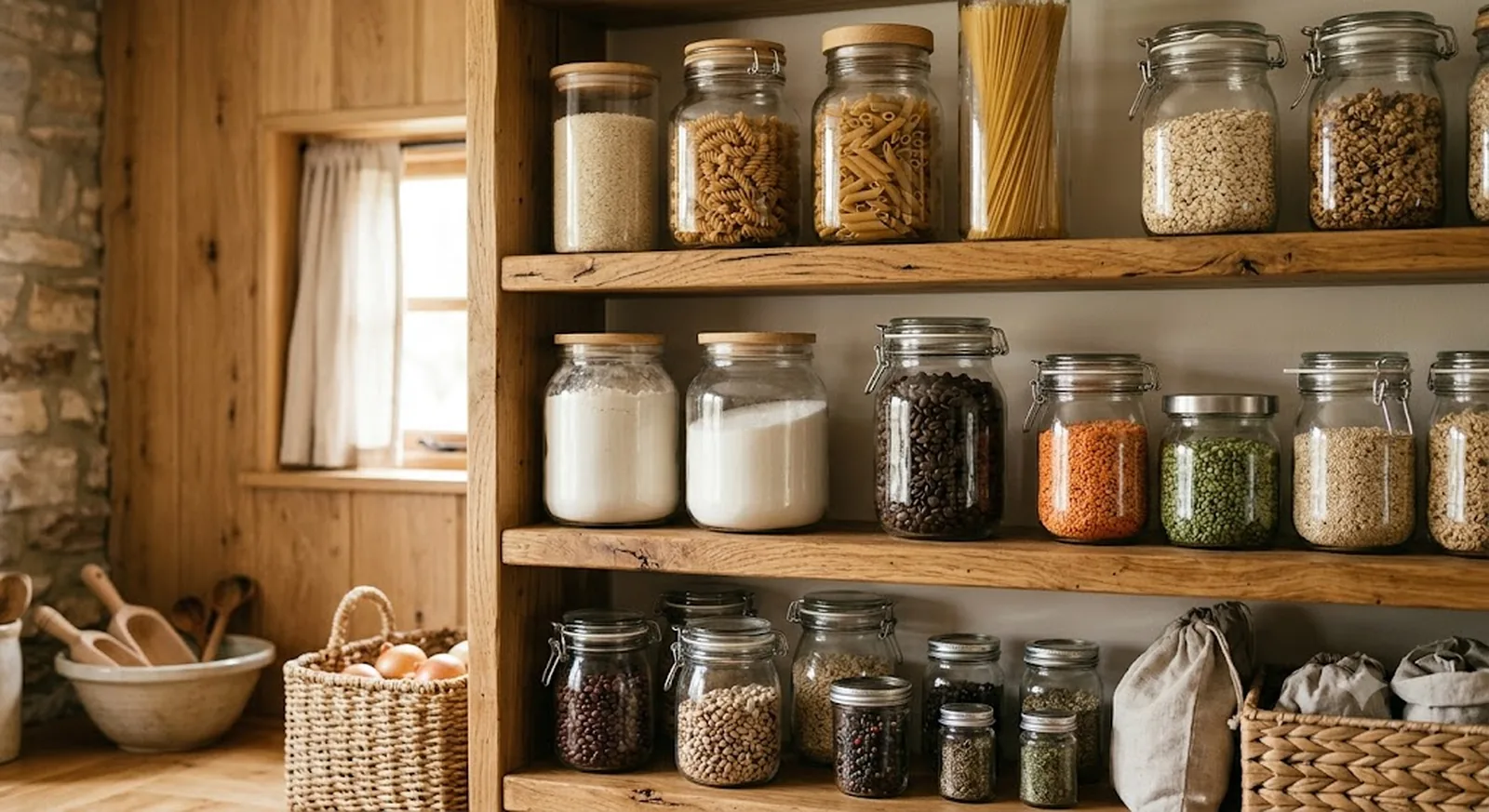
A visible pantry means every staple lives in a clear, sealed container, so the shelf itself is the inventory list. The effects compound quickly. You stop buying duplicates because the rice jar is either full or it isn’t. Weeknight decisions get faster because you can see that you have arborio, lentils, and half a jar of orzo without opening a single bag. And staples last longer, because an airtight gasket protects flour and cereal far better than a chip clip ever will.
Across verified-purchase reviews, that pattern shows up again and again: buyers report their “mystery bag” shelf disappearing, and their grocery list getting shorter once the jars show what’s running low before they shop. If you’re organizing beyond the pantry, my 24 kitchen organization ideas covers the whole kitchen — and if you want to start small, my pantry organization picks under $30 pair well with everything below.
How I Picked These Storage Jars and Canisters
Every pick had to clear four filters before making this list. First, a real airtight seal — confirmed by verified-purchase reviewers who specifically call out crackers, cereal, or chips staying crisp for weeks rather than relying on the manufacturer’s own claims. Second, a clear body, because an opaque canister defeats the whole visible-pantry idea. Third, a square or modular footprint that doesn’t waste shelf space. Fourth, honest cleanup: dishwasher-safe parts versus hand-wash-only lids, flagged because “hand-wash the lid” is a real cost you should know about before buying. I weighed specs and price against the complaint and praise patterns that show up again and again across thousands of ratings before ranking anything.
1. ComSaf Large Square Glass Jars, 78 oz (3-Pack) — Best for Bulk Staples

These 78-ounce square jars are where I’d start any visible pantry. The wide mouth takes a full measuring cup without dusting the counter, and the flat square sides sit flush against each other, so three jars use one shelf’s depth with no wasted gaps. Verified buyers repeatedly confirm the airtight seal holds up over weeks of storage, and at 4.7 stars across more than 7,700 ratings, plenty of other pantries agree.
Capacity reality check, based on the jar’s stated 78-ounce volume: one jar swallows a four-pound bag of sugar whole, but a five-pound bag of flour fills it only about two-thirds of the way — keep the overflow sealed as backstock. The honest cons buyers flag most often: full jars are a two-hand lift, and the lids are best hand-washed to keep the seal in shape.
2. OXO Good Grips POP 5-Piece Pantry Set — Best One-Hand Canisters
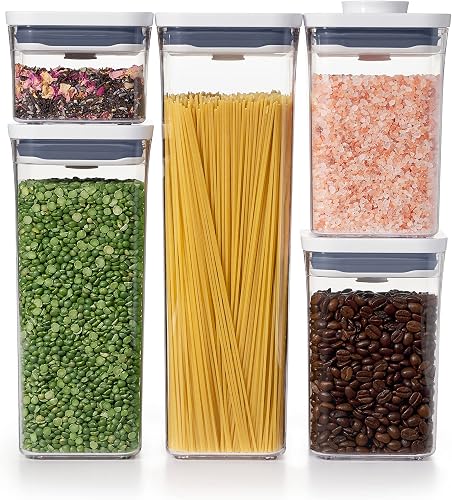
The POP system’s party trick is the button: press once and the lid seals airtight, press again and it releases — one hand, even with flour on the other. The flat lids stack securely, the square footprints share dimensions so they tile together neatly, and this five-piece set covers a starter pantry’s core staples. It holds 4.6 stars across 5,300-plus ratings.
Two cons worth knowing. You’re paying premium-brand money for plastic, which stings a little next to glass at similar cost. And a recurring theme in reviews is that the button assembly needs to come apart periodically to clean out fine flour dust — easy, but it must dry completely before you reassemble it.
3. Vtopmart 24-Piece Airtight Set — Best Budget Pantry Overhaul

If the goal is “entire pantry, one weekend, minimal spend,” this is the box I hand people. You get 24 BPA-free containers in four sizes with side-locking lids, plus a sheet of labels, which is why it has earned 4.7 stars from more than 28,000 ratings. Cereal, pasta, snacks, baking supplies — one purchase covers essentially every dry good in a typical kitchen.
The tradeoffs are classic plastic: bodies scratch and cloud over years of use (skip the dishwasher for the lids — they’re hand-wash only), and the tall, narrow shapes can tip on wire shelving. Set them on a solid shelf or add a liner and they behave.
4. Ball Wide Mouth Quart Mason Jars (8-Count) — The Classic That Still Wins

Eight identical quart jars produce an instantly uniform pantry for less money than most four-piece canister sets, and that uniformity is half of what makes a pantry feel organized. The quart size is right for beans, oats, lentils, and pasta; the wide mouth fits a half-cup scoop; and because these are canning-grade jars, lids and bands are cheap and replaceable forever. Reviewers frequently mention using the same jars for pantry storage, fridge storage, and actual canning, which is part of why this 8-count is rated 4.8 stars.
Cons: round jars waste shelf space compared to square canisters, the two-piece lid is fiddly to open one-handed, and the metal bands will rust eventually if you store them damp.
5. Vtopmart Glass Jars with Bamboo Lids (7-Pack) — Best for Open Shelving
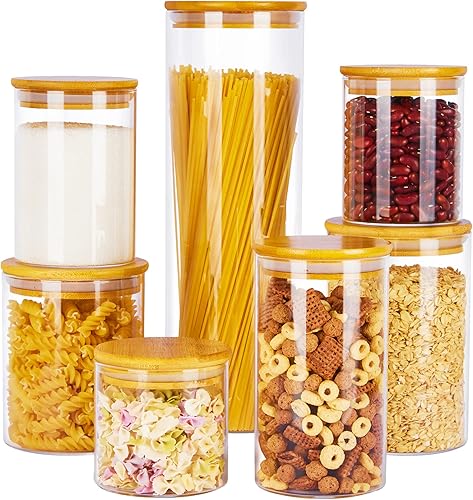
If your jars live on open shelves where guests see them, this is the set that looks intentional. Seven glass jars in mixed sizes with warm bamboo lids and silicone sealing rings — coffee beans, pasta, nuts, and cocoa suddenly look like a deliberate design choice instead of clutter. They hold 4.6 stars across roughly 2,900 ratings, and the mixed sizes are exactly what an open shelf needs to avoid the monotone warehouse look.
The bamboo is also the weakness: the lids can’t go in the dishwasher and shouldn’t sit wet, because the wood can swell and throw off the seal. Keep this set strictly for dry goods.
What Size Jars for Which Staples
The most common beginner mistake is buying one uniform size for everything. Here’s the map I wish I’d had: bulk staples like sugar, rice, and flour want 64 to 80 ounces or more (the ComSaf class); pasta, oats, beans, and lentils are happiest in quarts (the Ball jars); nuts, seeds, chocolate chips, and coffee fit 16-to-24-ounce jars; and anything smaller belongs in spice-size containers. Count your actual staples before you buy — most starter pantries need six to eight large vessels, six to eight mediums, and a handful of small ones.
One boundary worth drawing: these jars are for the dry pantry. For leftovers and the fridge side of the equation, see my reusable food storage containers guide — different job, different gear.
Glass or Plastic? The Honest Tradeoff
Glass is heavier, breakable, and costs more per container — and it’s still what I reach for at eye level, because it never stains, never clouds, and never holds the ghost of last year’s garlic powder. Plastic is lighter, cheaper, and safer around kids, but it scratches, and a scratched canister slowly stops being clear, which quietly defeats the visible-pantry goal. My split: glass for eye-level keepers and anything oily or strongly scented; plastic for high shelves, kids’ snacks, and bulk backstock. There’s no wrong answer, just a wrong shelf.
My 10-Minute Decanting Routine
- Do one shelf only — decanting an entire pantry in one session is how projects die.
- Toss anything expired or mysterious. Be ruthless; if you can’t identify it, it goes.
- Pour each staple into its jar, and cut the cooking instructions off the package — tape the panel to the back of the jar or drop it inside against the glass.
- Date the jar with masking tape or a chalk marker so freshness is never a guess.
- Anything that didn’t fit goes into one labeled “backstock” bin on a high shelf, still sealed.
FAQ: Storage Jars and Canisters
Are glass jars better than plastic for pantry storage?
For longevity and clarity, yes — glass won’t scratch, cloud, or absorb odors. For cost, weight, and drop-resistance, plastic wins. A good airtight seal matters more than the material; both can keep staples fresh for months.
Do airtight canisters keep pantry moths out?
They do two jobs: a sealed canister blocks pests from getting in, and it quarantines any eggs that arrive inside a grocery bag so they can’t spread. For flour and grains, freezing the bag for a few days before decanting adds cheap insurance.
What size canister fits a five-pound bag of flour?
You need at least four quarts (roughly 130 ounces) of capacity for the whole bag. Most “large” jars, including 78-ounce ones, hold about two-thirds of it — decant what fits and keep the rest sealed as backstock.
How do I label pantry jars?
Start with masking tape and a marker — it’s free and repositionable while your system settles. Chalk markers wipe cleanly off glass, and printed minimalist labels can come later, once you know which jars hold what for good. Whatever you choose, add the date.
The Bottom Line
Start with three big glass jars for your most-used staples and see how it changes your shopping before you commit to a full set. If you’re ready for the full overhaul, the Vtopmart 24-piece does it in one box, and the OXO POP set is the one-hand upgrade you’ll appreciate every baking day. Once the jars are sorted, give them a proper stage: my kitchen shelf organizers roundup covers the risers and racks that make a visible pantry actually visible.