Glass vs Plastic Food Containers: Which Should You Use in 2026? (The Honest Showdown)
Kitchaneers is reader-supported. When you buy through links on this page, I may earn a small affiliate commission — at no extra cost to you.
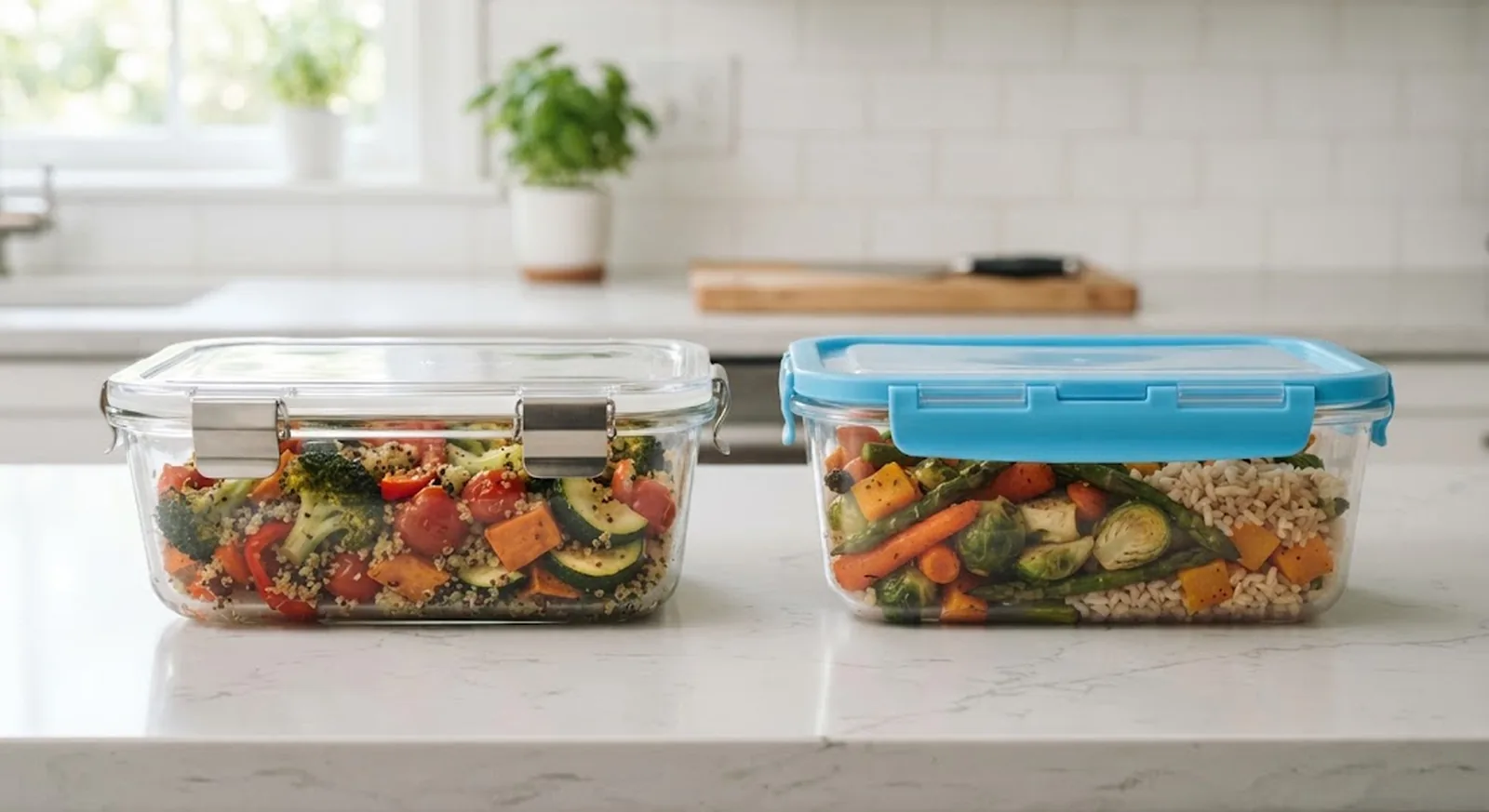
Open almost any fridge and you’ll find the argument frozen in place: a shelf of heavy glass containers and a drawer of mismatched plastic tubs. The glass vs plastic food containers debate gets framed as a health question online, but after reading thousands of verified buyer reviews across both materials, the real differences are practical: heat, stains, weight, and — above all — lids. Here’s the honest verdict, where each material wins, and 4 sets worth buying.
The short answer
Glass wins at home; plastic wins in transit. For leftovers you’ll reheat, anything tomato- or curry-based, and containers you plan to keep for years, buy glass. For lunches that ride in a bag, kids, picnics, and freezer overflow, buy plastic — a consumable you replace when it scratches or clouds. Most kitchens do best with a core set of glass food storage containers plus a few plastic ones for the road. If you can only pick one material, pick glass.
Glass vs plastic food containers: the difference at a glance
| Glass | Plastic | |
|---|---|---|
| Microwave reheating | Yes — heats evenly, no leaching worries | Only if marked microwave-safe; avoid where you can |
| Oven | Yes (base only, no lid; watch thermal shock) | Never |
| Freezer | Yes, with headspace; thaw before heating | Yes — the better freezer material |
| Stains and odors | Non-porous; wipes clean | Absorbs tomato, turmeric, garlic over time |
| Weight | Heavy — roughly 2–3× plastic | Light; easy to carry |
| Breakage | Shatters if dropped or shocked | Cracks at hinges and corners, warps with heat |
| Lifespan | Base lasts a decade; lids wear out first | Retire when scratched, cloudy, or warped |
| Price tier | Mid to premium upfront | Budget to mid; cheaper per piece |
Heat, microwave, and freezer: where the difference between glass and plastic food containers really shows
Heat is the biggest dividing line. Glass shrugs off the microwave and the oven because it’s non-porous and doesn’t react with food. With plastic, a “microwave-safe” stamp only means the container won’t melt or warp — not that it stays pristine over hundreds of reheating cycles.
On the chemistry: the FDA’s current position is that BPA is safe at the levels found in food, and most quality containers today are BPA-free polypropylene (recycling code #5) or Tritan anyway. Independent researchers are less relaxed, and ongoing class-action lawsuits allege that some “microwave-safe” plastic containers shed microplastics when heated. I’m not a chemist, so my rule is practical: reheat in glass when you can, and never microwave scratched, cloudy, or warped plastic.
The freezer flips the script. Plastic tolerates cold and won’t crack straight out of the freezer. Glass can go in too, but you have to respect thermal shock: a frozen glass dish on a hot surface, or a cold container filled with boiling soup, can crack. Two rules keep glass safe: leave about an inch of headspace for liquids to expand, and let frozen glass sit out for 15–20 minutes before it goes in the oven or microwave. Soda-lime glass (most Pyrex sold in the US today) is tougher against drops but more sensitive to temperature swings than borosilicate.
Stains, smells, and how long each one actually lasts
Plastic is microscopically porous. Every dishwasher cycle and fork scrape opens the surface a little more, and that’s where tomato sauce, turmeric, and garlic move in for good. A 6-year-old glass container looks new; a 6-year-old plastic one is usually orange-tinged and faintly smells of last spring’s chili.
Hence the retire rule: replace a plastic food container when it’s scratched, cloudy, warped, or permanently stained. Those aren’t cosmetic issues — a warped rim means the seal is gone, and a scratched surface holds bacteria and sheds more material when heated. Budget for plastic to last 1–3 years of daily use. Glass bases last more or less forever; it’s the lids that wear out.
The lid problem nobody warns you about
Read the one- and two-star reviews on any container set — glass or plastic — and the pattern is the same: it’s almost never the base that fails. It’s the lid. On glass sets, the recurring complaints are latch tabs that crack and gaskets that trap moisture and grow mold. On plastic sets, it’s lids that stiffen and become hard to snap on, or loosen and stop sealing.
Two things to check before you buy. Are replacement lids sold separately? A glass set you can re-lid lasts a decade; one you can’t is landfill the day the tabs snap. And is the gasket removable for cleaning, or molded in so nothing hides under it? Rubbermaid’s Brilliance range passes both.
Weight and fridge real estate
This difference shows up every day and almost never appears in comparisons. Glass walls are thicker, so a glass container holds noticeably less than a plastic one with the same footprint, and a full shelf of glass is heavy enough that flimsy fridge shelves complain. Glass also doesn’t nest as tightly, so a 9-piece glass set eats more cabinet space than 9 plastic pieces.
Plastic’s lightness is the whole point for anything that leaves the house: a glass lunch container adds real weight to a backpack and turns a dropped bag into a cleanup job. For a small fridge, my kitchen organization ideas guide covers zoning shelves so heavy glass sits low and light plastic goes up top.
When plastic food storage containers are the right call
Plastic food storage containers earn their place in four situations: packed lunches and commuting (see my lunch containers for adults roundup), anything a child will carry or drop, freezer stock you’ll thaw in the fridge anyway, and batch-cooking where you need 20 identical, stackable, cheap containers. Buy polypropylene (#5) or Tritan, and accept that they’re a consumable.
When glass food storage containers are the right call
Glass food storage containers win wherever heat and time are involved: leftovers you’ll microwave, sauces and curries that stain, prepped meals you’ll bake straight from the fridge, and anything you’d like to still own in 2036. They also double as serving and baking dishes, which quietly shrinks what you need to store.
My zone plan, one rule per shelf: fridge and reheating — glass; freezer — either, with headspace; commute, kids, and picnics — plastic; pantry dry goods — storage jars and canisters beat both. Choosing a single glass vs plastic food container for one job? Ask where it will be heated and who will carry it — those two answers settle it.
My picks in both materials
Two glass sets and two plastic sets, chosen by comparing specs and reading verified buyer feedback for the praise and complaint patterns that repeat. For a deeper look at the glass side, see the best reusable food storage containers. Prices move weekly, so each pick links to its live Amazon page instead of quoting a number that’ll be stale by Friday.
Rubbermaid Brilliance Glass Food Storage Containers, Set of 9 — best glass overall

The set to build a kitchen around. The glass bases go from freezer to oven, and the lids latch with a click and pass the shake test. Across 14,000+ ratings, the most-repeated praise is the airtight, leak-proof seal. The genuine con: a meaningful minority of buyers report latch tabs cracking after months of use, and the set is heavy — fridge-and-oven gear, not lunch-bag gear. Replacement lids are shared across the Brilliance line, so a cracked lid doesn’t retire the base.
Pyrex Simply Store 12-Pack Glass Set — best budget glass

Six round glass bowls in 1-, 2-, and 3-cup sizes with press-on plastic lids — the classic, and still the cheapest way to move a fridge to glass. Nearly 30,000 ratings praise the nesting sizes and dishwasher results, and the bases double as mixing and serving bowls. The genuine con: the lids are press-fit, not latching, so they’re fridge-tight but not bag-proof, and a recurring complaint is lids that loosen over time. A smaller group reports bases cracking in the dishwasher — usually thermal shock, so let them cool before a cold rinse.
Rubbermaid Brilliance Tritan Plastic Containers, Set of 5 (3.2 Cup) — best plastic for commuting
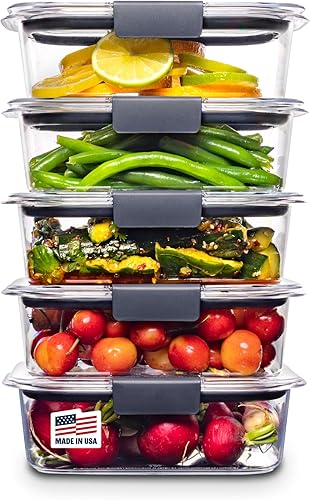
Same latching lid system as the glass Brilliance, on a crystal-clear Tritan base that weighs a fraction as much. This is the container I’d hand anyone who carries lunch on a train: it survives a drop, the seal holds soup upside down, and the vents let you reheat without spraying the microwave. Nearly 60,000 ratings, and the top praise is the leak-proof seal and how the plastic flexes rather than snaps. The genuine con: durability feedback is mixed — some owners report hinge cracks after a couple of years — and it’s premium-priced for plastic. This is the plastic you keep, not the plastic you lose at potlucks.
Rubbermaid 42-Piece Food Storage Containers with Lids — best bulk plastic set
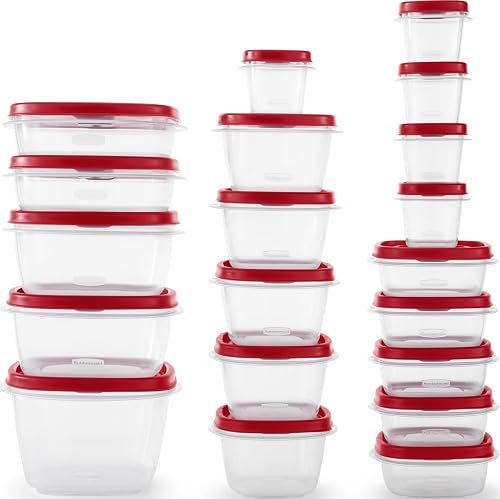
Twenty-one containers, twenty-one lids, one lid size per base shape — no matching games. This is the batch-cooking, freezer-stocking, send-leftovers-home-with-guests set, with 100,000+ ratings behind it. Buyers praise the vented lids for reheating and how neatly everything nests. The genuine con: it’s everyday polypropylene, so expect tomato staining and plan to retire pieces as they cloud; lid feedback splits between “snaps on perfectly” and “hard to open,” which usually comes down to hand strength and how cold the container is.
The bottom line
Glass vs plastic food containers isn’t a purity test. Glass is the better material for everything that gets heated and everything you want to keep; plastic is better for everything that gets carried, dropped, or frozen in bulk. Buy a good latching glass set as your foundation, add a few plastic pieces for the road, check that replacement lids exist before you commit, and retire plastic the moment it scratches or clouds.
Frequently asked questions
Is it better to store food in glass or plastic?
For food you’ll reheat or keep more than a day or two, glass — it doesn’t absorb stains or odors and heats evenly. For food that travels or goes to a child, plastic — it’s lighter and won’t shatter. Most kitchens need both.
Can you put glass food containers in the freezer?
Yes, if they’re labeled freezer-safe. Leave about an inch of headspace for liquids to expand, and never move frozen glass straight into a hot oven or microwave — let it sit out 15–20 minutes first to avoid thermal shock.
Why do plastic containers get cloudy and stained?
Plastic is slightly porous, and dishwasher heat plus utensil scratches open the surface over time. Pigments from tomato, turmeric, and paprika settle into those pores for good. Cloudiness is the same surface breakdown — and a sign the container is due for replacement.