Best Meal-Prep Containers for the 5-Day Work Week (Tested for Reheating and Stack Space)
Kitchaneers is reader-supported. When you buy through links on this page, I may earn a small affiliate commission — at no extra cost to you.
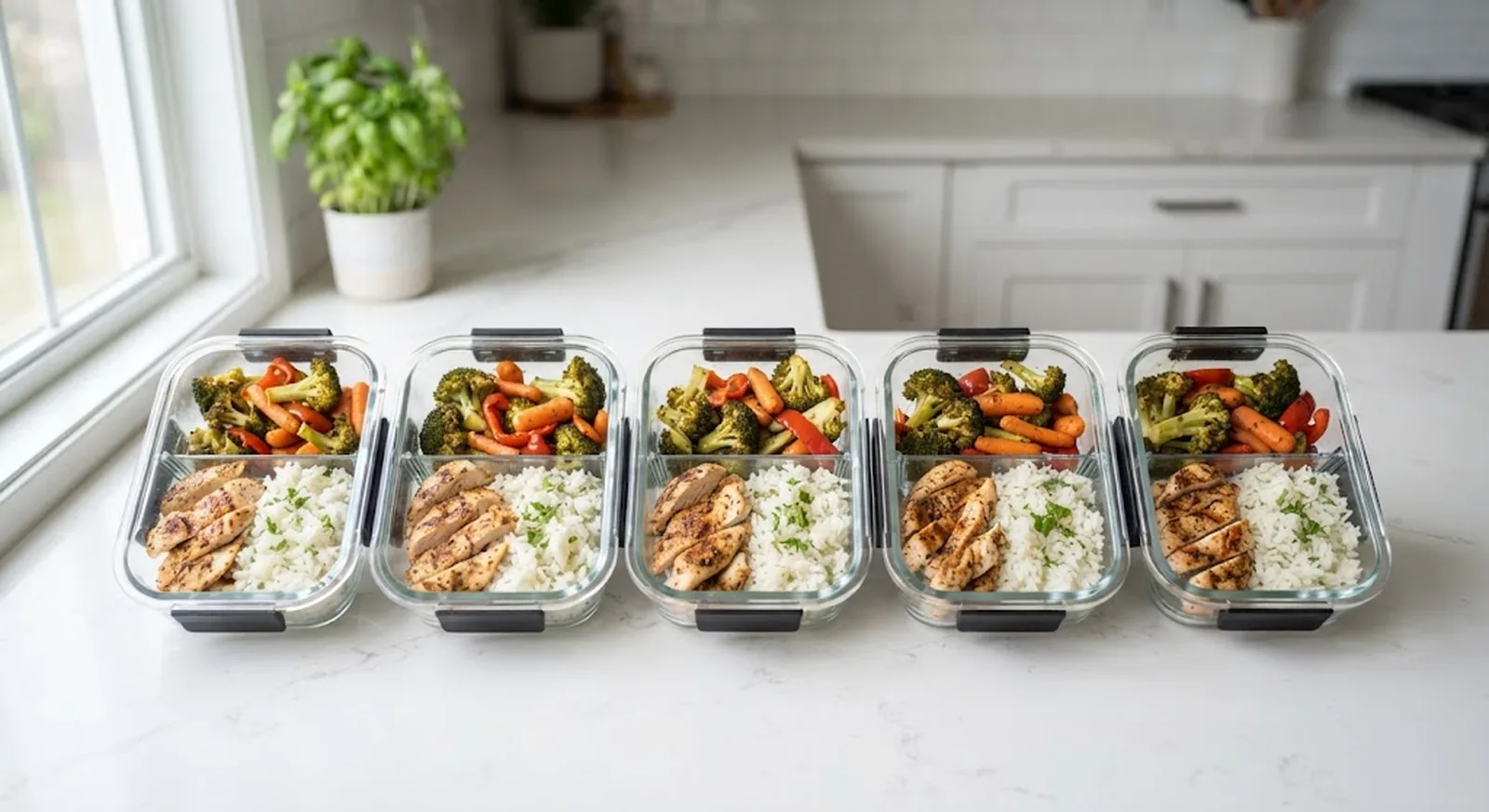
Sunday afternoon, you portion five perfect lunches into matching containers. By Thursday, one lid won’t latch, one base has an orange tomato-sauce ghost, and one “airtight” container has quietly leaked dressing into your bag. The problem usually isn’t your cooking — it’s the meal prep container. After cross-referencing verified-purchase reviews across the sets people actually use for a full five-day work week, the pattern is consistent: the meal prep containers that survive Monday through Friday share a handful of specific design traits, and the ones that don’t share the same complaints every time. Here’s what holds up, and the 5 containers worth buying.
The short answer
For most people prepping five lunches at once, the best meal prep container is a portioned glass set with a locking, gasketed lid — it reheats cleanly, resists the Wednesday-onward staining that ruins plastic, and the lid still latches on Friday the way it did on Monday. If you’re batch-cooking a whole week in one sitting and need volume over polish, a 24-piece bulk glass set gets you there without buying three smaller sets. If weight is the priority — a bag that won’t strain your shoulder by Friday — a leak-proof plastic set is the better trade.
How I evaluated meal prep containers for a 5-day work week
A meal-prep container has a harder job than an everyday food storage tub: it has to survive five reheating cycles, sit in a fridge under three other containers for days at a time, and still seal on day five as well as it did on day one. I compared verified-purchase reviews and spec sheets for the sets people repeatedly recommend for weekly prep, looking for four things:
- Reheat consistency across the week. Whether long-term reviewers report the lid, base, or gasket degrading after repeated microwave cycles by Thursday or Friday — not just out of the box.
- Portion accuracy. Whether the labeled capacity actually fits a real lunch (protein + grain + vegetable), not a snack-sized portion dressed up in marketing photos.
- Stack stability in a crowded fridge. Whether five to seven full containers stack without sliding, tipping, or eating an entire shelf.
- Lid survival. Whether the latch, gasket, or press-fit seal still works after months of daily open-close cycles — the single most common failure point across every brand.
I also weighted how each set performs specifically for a batch-and-forget workflow, since that’s how most people actually approach a work week: cook once on Sunday, grab-and-reheat five times, wash once on Friday. A container that scores well on paper but requires babying between uses lost points here.
Best meal prep containers for the work week, at a glance
| Meal prep container | Best for | Material | Portions per set | Price tier |
|---|---|---|---|---|
| Ello Duraglass Meal Prep Set | Best overall for 5-day prep | Glass + silicone sleeve | 5 single-serve | Mid-range |
| Rubbermaid Brilliance Glass (Set of 9) | Best for reheating all week | Glass + Tritan latch lid | 9 mixed sizes | Investment |
| Glasslock Ring Taper (24-Piece) | Best for batch-cooking the whole week at once | Tempered glass + hinged lid | 24 mixed sizes | Mid-range |
| Rubbermaid Brilliance Tritan Plastic | Best lightweight pick for the commute | Tritan plastic | 5 mixed sizes | Mid-range |
| Pyrex Simply Store (12-Pack) | Best budget pick for dry or solid meals | Glass + press-on lid | 6 round + lids | Budget |
Ello Duraglass Leak-Proof Glass Meal Prep Set — best overall for the work week
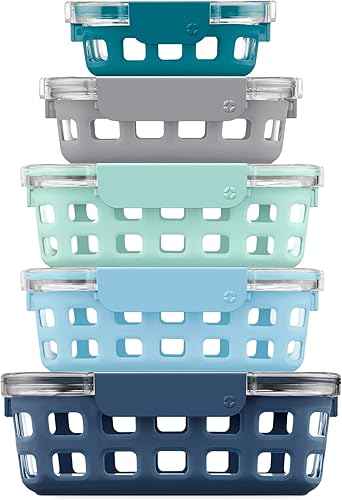
This is the set built specifically for the batch-and-forget workflow, and it shows. Each single-serve glass base is sized for one real lunch, the snap lid is consistently rated leak-proof across verified reviews, and the silicone sleeve does double duty — better grip pulling a container out of a packed fridge shelf, and a buffer so hot glass doesn’t go straight onto a bare counter. Reviewers who prep a full week at once report the set holding a Monday-through-Friday rotation without a lid going soft or a base clouding.
The genuine con: the silicone sleeves trap water in the dishwasher and take longer to air-dry than a bare container, and they add bulk — five sleeved containers eat noticeably more fridge shelf than bare glass would. Some owners strip the sleeves off entirely, but then you lose the grip and heat-buffer benefit that makes this set worth buying in the first place.
Rubbermaid Brilliance Glass Food Storage Containers, Set of 9 — best for reheating all week

If your prep includes bigger portions — a family-style lunch, a soup, a casserole square — this mixed-size set covers more ground than a single-serve system. The Tritan lids latch on all four sides over a silicone gasket, and across 14,000+ ratings the most-repeated praise is that the seal still holds after months of daily reheating. Because the glass base goes straight from fridge to microwave to oven, it’s the set I’d point to for anyone reheating dense, sauce-heavy meals five days running without worrying about lingering stains.
The genuine con: a meaningful minority of long-term owners report the latch tabs eventually cracking, and a full 9-piece glass set is heavy — this is fridge-and-microwave gear, not something you want to carry loose in a bag. Replacement lids are sold separately and shared across the Brilliance line, so a cracked latch doesn’t retire the whole container.
Glasslock Ring Taper Tempered Glass Container Set, 24-Piece — best for batch-cooking the whole week at once
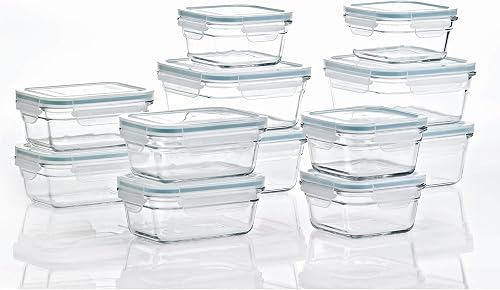
If Sunday prep means five lunches plus breakfasts and snacks, this is the set that gets you through the week without running out of clean containers by Wednesday. Each tempered soda-lime base has a four-hinge locking lid with a silicone gasket, and reviewers consistently rate the seal on par with sets costing considerably more. The bases are oven, microwave, and freezer safe, so overflow portions can go straight to the freezer in the same container you’ll reheat from later.
The genuine con: the hinged lids are bulky and don’t nest for storage, so an empty set takes up real drawer space, and 24 pieces is more than a single person needs for one work week — this is the pick for a household prepping for multiple people, not a single desk lunch.
Rubbermaid Brilliance Tritan Plastic Containers, Set of 5 — best lightweight pick for the commute
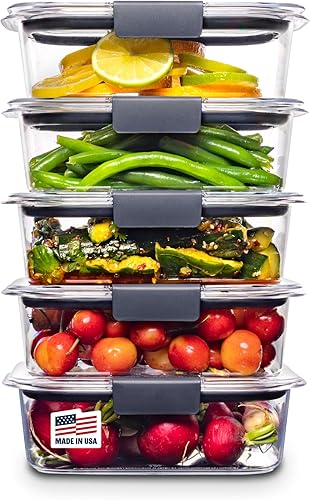
When five glass containers in a bag sounds like a shoulder injury waiting to happen, this is the answer. It uses the same latching, gasketed lid as the glass Brilliance line on a crystal-clear Tritan base that weighs a fraction as much — meaning the container you carry to work behaves exactly like the one you leave at home. Nearly 60,000 ratings back the leak-proof seal, and reviewers specifically call out that it survives a drop onto a train platform or office floor without cracking, unlike glass.
The genuine con: durability feedback is mixed at the two-year mark, with some owners reporting hinge cracks after extended daily use, and it’s premium-priced for plastic. It’s also not oven-safe and will pick up faint staining from curry or tomato-heavy meals over months, where the glass options in this list won’t.
Pyrex Simply Store Glass Food Storage Set, 12-Pack — best budget pick for dry or solid meals

If your prep is mostly grain bowls, roasted vegetables, and other foods that don’t slosh, this is the most durable glass you can buy for the price. The tempered bases handle freezer, oven, and dishwasher without complaint, and long-time owners routinely report Pyrex sets purchased years earlier still going strong — a real track record for base longevity that newer brands haven’t earned yet. It’s the honest budget entry point into a full glass system.
The genuine con: the press-on lids have no gasket, so this set only partially passes a leak test — fine for solids, not for anything with sauce or dressing that could tip in a bag. Reviewers consistently report seeping if a container of soup or dressing goes on its side, so treat this as fridge-and-desk storage, not a commuter container for liquids.
How many meal prep containers do you actually need for 5 days?
The math is simpler than the 24-piece sets suggest. For one person prepping lunch only, five main containers covers Monday through Friday — you wash the set once over the weekend and start again. Add two to three small containers for sauces, dressings, or a side you want to keep separate, since mixing a wet dressing into the main container all week is the single biggest driver of the soggy-lunch complaints in verified reviews. If you’re prepping both lunch and breakfast, or cooking for two people, double the count — which is where a bulk set like the Glasslock 24-piece earns its keep over a smaller single-serve set.
Buy one or two extra containers beyond the exact number you need. Reviewers who prep tightly to five containers consistently mention the one Sunday where a container is still in the sink or the dishwasher, and having zero spares turns that into a lunch problem on Monday morning.
What size meal prep container actually fits a full lunch?
The single most common sizing mistake in verified reviews is buying containers meant for a side dish and expecting them to hold a full meal. A real lunch — a protein, a grain, and a vegetable — needs roughly 24 to 34 ounces of usable space, not the 16- to 20-ounce single-compartment tubs sold generically as “meal prep containers” in bulk multipacks. Compartmentalized containers make this easier to judge at a glance: look for a set with one larger section (12–16 oz for a protein and grain) and one or two smaller sections (6–10 oz each) for vegetables or a side, rather than three equal thirds that force you to shrink the main course to fit.
Every set in this roundup clears that bar in at least one size option. The Ello and Rubbermaid Brilliance single-serve sizes run 24–32 ounces, which verified buyers consistently describe as enough for a full adult portion without needing a second container on the side. If you’re prepping smaller portions — a snack, a side salad, or a kid’s lunch — sizing down saves fridge space, but check the ounce count on the listing rather than trusting a product photo, since camera angles make every container look roomier than it is.
Glass or plastic meal prep container: which survives the week better?
For a single lunch stored overnight, the material barely matters. For a container that gets reheated, refrigerated, and reheated again across five days, it matters a lot. Glass doesn’t absorb the pigment from curry, chili, or tomato sauce, so a glass meal-prep container looks the same on Friday as it did on Monday. Plastic is microscopically porous, and by day three or four of a saucy meal, verified reviews consistently describe a faint orange tint starting to set in — cosmetic at first, permanent eventually.
Reheating tells a similar story: glass goes in the microwave without a second thought, while a plastic container is only as safe as its “microwave-safe” label promises, and that promise degrades as the plastic scratches and clouds with age. Where plastic wins outright is weight and breakage — a bag of five glass containers is genuinely heavy, and a dropped glass container on a train platform is a lost lunch and a mess, where Tritan plastic just bounces. For the full breakdown of where each material wins, see my glass vs plastic food containers comparison.
Keeping a 5-day rotation from falling apart by Wednesday
A few habits, pulled from the recurring advice in long-term owner reviews, keep a weekly meal-prep container rotation working instead of degrading mid-week:
- Cool food before sealing. Trapped steam is the single biggest cause of a lid that won’t latch cleanly by Thursday — let food sit 10–15 minutes before closing the container.
- Keep dressings and sauces separate until the moment you eat, using a small side container. It’s the difference between a crisp Wednesday salad and a soggy one.
- Rinse pigment-heavy meals promptly after eating rather than leaving a curry or tomato-sauce container to sit — staining and odor retention both get worse the longer residue sits.
- Store lids unlatched between uses so gaskets aren’t compressed for days at a stretch, which extends how long a “leak-proof” seal actually stays leak-proof.
Pair a good set with a fridge that’s actually organized for grab-and-go mornings — my kitchen organization ideas guide covers zoning a fridge shelf so five days of containers stay upright and visible instead of buried behind last week’s leftovers. And if lunch travels separately from what’s stored at home, a dedicated bag-friendly container is worth adding — see my best lunch containers for adults roundup for the commute-specific picks.
For the broader category — sets built for general fridge and freezer storage rather than portioned daily lunches — my best reusable food storage containers guide covers six additional sets evaluated the same way.
The bottom line
A meal prep container only earns its keep if it’s still sealing, stacking, and reheating cleanly on day five, not just day one. For most people prepping solo lunches for the work week, the Ello Duraglass set is the one built for exactly that job. If you’re reheating bigger, sauce-heavy portions, the Rubbermaid Brilliance glass set holds up best. And if you’re prepping for more than one person, the Glasslock 24-piece set gets a full household through Monday to Friday without a mid-week grocery-store container run.
Frequently asked questions
How many meal prep containers do I need for a work week?
Five main containers covers Monday through Friday for one person, plus one or two spares and a couple of small containers for sauces and dressings. Double it if you’re prepping for two people or adding breakfast to the rotation.
Are glass or plastic meal prep containers better?
Glass holds up better across a full week of reheating — it doesn’t stain, doesn’t absorb odors, and goes in the microwave and oven without restriction. Plastic is lighter and more break-resistant, which makes it the better choice for a container that travels in a bag every day.
How long do meal prep containers last in the fridge?
Most cooked meals stay safe for 3–5 days refrigerated in a properly sealed container, which lines up neatly with a 5-day work week if you prep on Sunday. Beyond day five, freeze the portion instead of pushing the fridge timeline.
Can meal prep containers go in the freezer?
Glass and Tritan plastic containers labeled freezer-safe both work well — leave about an inch of headspace for liquids to expand, and let frozen glass sit out 15–20 minutes before microwaving or baking to avoid thermal shock.
Why do my meal-prep containers stain after a few uses?
Plastic is slightly porous, and pigment from tomato sauce, turmeric, and curry settles into that surface over repeated reheating cycles. Rinsing promptly after eating slows it down, but glass sidesteps the problem entirely, which is why it’s the better long-term material for sauce-heavy weekly meals.