Best Blenders for Home Cooks (Not Just Smoothies)
Most “best blender” lists are really smoothie lists. But the blender that earns real counter space is the one that handles soup nights, sauce nights, and oat-flour mornings — not just green smoothies. After comparing specs, prices, and patterns across verified buyer reviews on kitchen blenders, I wanted a guide for people who actually cook. Heads up: some links below are affiliate links, which means I may earn a small commission if you buy through them — at no extra cost to you. I only recommend gear that holds up consistently in verified buyer reviews and spec comparisons.
If you want the short version: there is no single best blender for every kitchen — the Vitamix 5200 is the one I reach for when a recipe depends on the blender, the Ninja Professional Plus covers most home cooking for less, and the NutriBullet Pro handles small jobs like dressings and pestos without dirtying a big jar. Whether you’re comparing blenders for kitchen work beyond breakfast smoothies, or just sorting the good blenders from the hype before you spend, here’s how I’d actually choose.
What actually makes a blender good for cooking
Smoothies forgive a lot. Cooking doesn’t. A blender that turns kale and ice into a slushie can still leave gritty bits in a cashew sauce or refuse to climb a thick soup. Buyer reviews and spec comparisons consistently point to four things that separate a true cooking blender from a breakfast toy.
Power you can feel under load. Peak wattage on the box is marketing. What matters is whether the motor keeps spinning when the jar is packed with thick, sticky ingredients. The machines that never bog down on nut butter are the ones that earn their keep.
Jar geometry and a tamper. A narrow base creates a tight vortex that pulls food back down into the blades. A tamper lets you push stubborn ingredients in without stopping. This is the single biggest reason Vitamix jars handle thick mixtures that stall cheaper blenders — it’s design, not just horsepower.
Variable speed and a low start. Emulsions like mayonnaise and vinaigrette need a slow ramp; purées need a gentle finish so you don’t whip in air. Presets are convenient, but a real dial gives you control a recipe can rely on.
Blades built for friction, not sharpness. Counterintuitively, high-performance blender blades are fairly blunt. They work by speed and friction — enough that running a Vitamix on high for several minutes will heat soup to steaming from the blade action alone. That’s a genuinely useful cooking trick, and it’s also why I rate blade design over a flashy “razor” claim. For more on how I weigh these specs across appliances, see my guide to the best small kitchen appliances.
Blender wattage, explained: what the numbers actually buy
Wattage is the first spec on every box and the least honest one. The number printed largest is usually peak wattage — what the motor draws for a split second before it settles — not what it sustains under a full jar. Here’s how the ranges actually break down: under 700 watts covers smoothies, dressings, and light purées, and that’s genuinely all most personal blenders are built for. The 900-to-1,200-watt band is where most good blenders for everyday cooking live — enough sustained torque for soups, batters, and ice, as long as the jar design helps. Above 1,400 watts you’re in high-performance territory, where nut butters and grain milling stop being a gamble.
But wattage only tells half the story. A 1,200-watt machine with a wide, shallow jar will stall on jobs that a well-designed 1,000-watt jar walks through, because the vortex — not the motor — is what keeps food moving into the blades. Buy sustained torque and jar geometry together, never the number alone.
Jar material: copolyester, glass, or stainless
Nearly every high-performance jar is Tritan copolyester — a BPA-free plastic that shrugs off impacts and keeps the jar light enough to pull off a shelf one-handed. Its weakness is cosmetic: after a year or two of daily use it hazes slightly from abrasive blends, and it can hold onto garlic or curry smells if residue sits overnight. Glass, like the jar on my Oster pick below, never scratches, never clouds, and never smells like last week’s pesto — but it’s heavy when full, and you have to respect thermal shock: don’t pour ice water into a jar that just held warm soup. Stainless jars solve durability and odors completely, then create a new problem — you can’t see the blend, which matters more than you’d think when you’re chasing a texture. For a cooking-first kitchen, I rank them glass for care-free durability, copolyester for weight and visibility, and stainless only for specific needs.
The blenders worth buying for real cooking
Vitamix 5200 — Best Overall for Cooking

This is the machine to trust when a dish lives or dies on the blend. The tall 64-ounce jar, classic dial, and tamper make it relentless on thick work — verified-purchase reviews consistently describe making hot soup directly in the jar, cashew cream that turns out truly smooth, and almond butter without the motor flinching. The aircraft-grade drive is frequently praised in reviews for holding up for years without complaint.
The honest con: it’s loud and the tall jar won’t fit under standard upper cabinets, so you’ll likely store it on the counter. It’s also the heaviest investment here. If you only blend occasionally, it’s more machine than you need.
Vitamix Explorian E310 — Best Value High-Performance

The E310 gives you nearly all the cooking ability of the 5200 in a shorter, cabinet-friendly package. The 48-ounce jar and same variable-speed dial and tamper mean it handles soups, sauces, and nut butters almost identically — just in smaller batches. For a two-to-four-person kitchen, this is the Vitamix I’d actually buy.
The honest con: the smaller jar means you’ll blend big batches of soup in two rounds, and there’s no pulse on this model, a gap buyer reviews frequently flag for chunky salsas.
Ninja Professional Plus — Best Mid-Range
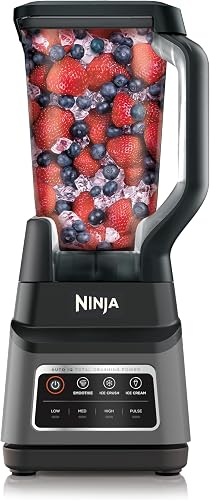
For most home cooks, the Ninja Professional Plus covers the everyday list well: puréeing soups, blending sauces, crushing ice, making frozen drinks. The stacked-blade tower does a good job pulling food down, and the big pitcher is great for batch cooking. It’s the blender I recommend to friends who cook regularly but don’t want to spend like a Vitamix owner.
The honest con: the tall blade stack is awkward to clean and a little nerve-wracking to wash by hand, and it can’t match a Vitamix on truly thick jobs like stiff nut butter, where buyer reviews report having to stop and scrape repeatedly.
Oster Pro 1200 — Best Budget Full-Size

If you want a real full-size blender without the premium price, the Oster Pro 1200 is the one I’d recommend. The glass jar is a genuine advantage for cooking — it won’t scratch, cloud, or hold onto garlic and onion smells the way plastic does, and there’s no need to worry about pouring hot soup into it. It handles everyday purées and sauces capably.
The honest con: it stalls on the thickest jobs and doesn’t have a tamper, so very stiff mixtures need extra liquid or a stop-and-stir. The glass jar is also heavy to lift when full.
NutriBullet Pro 900 — Best for Small-Batch Cooking
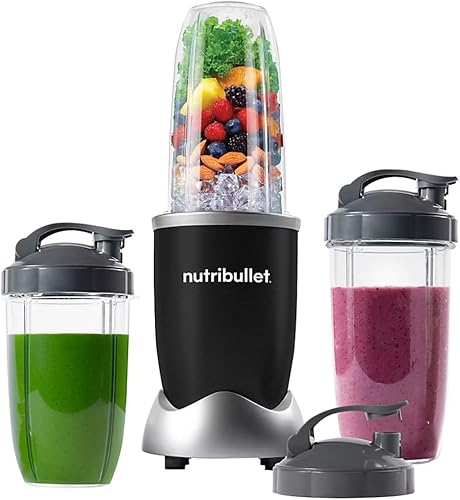
Not every job needs a big jar. The NutriBullet Pro suits a single batch of vinaigrette, a quick pesto, a small pour of pancake batter, or blending a few chipotles into adobo. The bullet cup goes straight from blade to fridge, which saves a real dish. For small, frequent cooking tasks it’s more useful than people expect.
The honest con: there’s no speed control — it’s push-and-go — and it isn’t built for hot ingredients, so let soup cool before it goes in. Capacity is limited to roughly two cups of usable volume.
What $100, $200, and $400+ actually buy you
Most blenders for kitchen duty fall into three real price tiers, and the jumps between them are bigger than the spec sheets suggest. The first tier buys a capable machine with compromises you’ll learn to work around. The second buys power and capacity for everyday cooking. The third buys the end of compromises — plus a machine that tends to outlast the cheaper tiers combined. Here’s the honest map:
| Tier | What you get | What you give up | My pick |
|---|---|---|---|
| Around $100 | Full-size jar and enough power for purées, sauces, and everyday blends; a glass jar is realistic at this tier | Stalls on nut butter and the thickest blends; no tamper; louder under load | Oster Pro 1200 |
| Around $200 | Big-pitcher capacity, real ice-crushing power, presets that mostly work | Still no tamper — stiff mixtures need stop-and-scrape; tall blade stacks are awkward to clean | Ninja Professional Plus (add the NutriBullet Pro for small batches) |
| $400 and up | Variable-speed dial, tamper, sustained torque for nut butter, grain milling, and friction-heated soup; decade-plus lifespan | Noise, counter height on the 5200, and the upfront cost | Vitamix E310 or 5200 |
The tier logic is the same buy-for-the-job thinking I use across every appliance guide: pay for the capability you’ll use weekly, not the one you’ll use twice a year. A $400 machine you run daily for a decade costs less per blend than a $100 machine you replace three times.
The best blender for each job you’ll actually do
People ask me for the best blender as if one answer fits every kitchen. It doesn’t — the right pick depends on the two or three jobs you’ll run most. If you actually cook with a blender at home, these are the four jobs that matter, and the machine I’d hand you for each.
For smoothies and everyday blends
Any machine on this list clears the smoothie bar — that’s the baseline, not the test. The real question is convenience. The NutriBullet Pro wins mornings because the cup you blend in is the cup you drink from, and rinsing it takes ten seconds. The Ninja’s big pitcher makes more sense when you’re blending for a household. If daily smoothies lean on tough ingredients — frozen fruit straight from the bag, fibrous greens — the Vitamix machines turn them silkier than either, but I wouldn’t buy one for smoothies alone.
For hot soups and silky purées
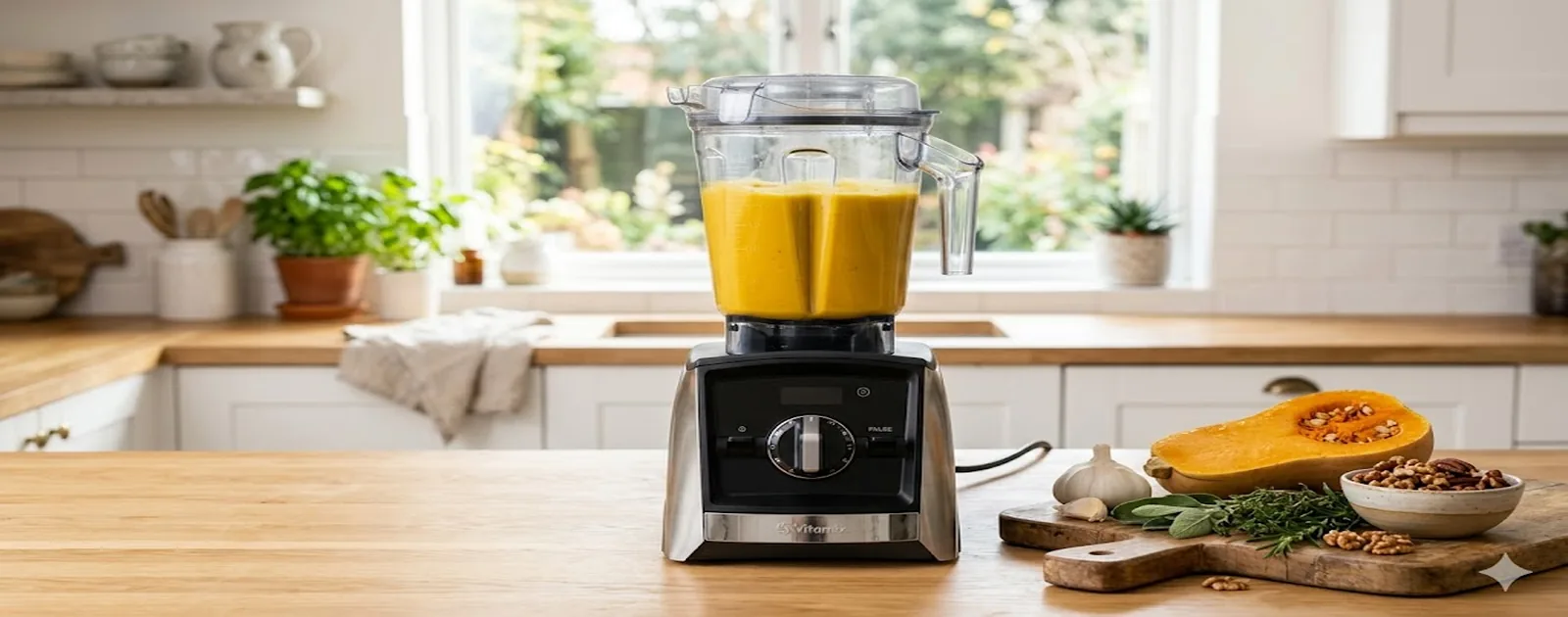
This is where jar design separates the field. The Vitamix 5200 takes a roasted squash soup from warm to steaming in about six minutes on high — friction heat from the blades alone, no stove involved. The E310 does the same trick in smaller batches. With the Ninja or Oster, blend the soup warm off the stove instead: work in batches, fill the jar no more than halfway, and leave the center cap loose so steam vents instead of blowing the lid. And if transferring hot soup to a jar at all sounds like a chore, that’s exactly the job an immersion blender exists for — a handy one to keep around for soup nights.
For nut butters and the thickest blends
Nut butter is the job that exposes every weak machine. Whole almonds pass through a stage where they’re a stiff, sticky paste that traps air pockets around the blades — and without a tamper to push the mass back down, most blenders just spin a hole in the middle. The Vitamix jars grind through to spreadable butter in a few minutes with no added oil. The Ninja gets there only if you stop and scrape every thirty seconds, and the Oster needs added oil to move at all. If thick blends are a weekly habit, buy the tamper tier — it’s the whole reason that tier exists.
For frozen desserts and drinks
Crushed ice and frozen fruit are where the Ninja punches above its price — the stacked blades chew through a full pitcher of ice evenly, which is what you want for frozen drinks in volume. The Vitamix handles banana nice cream and fruit sorbets beautifully, with the tamper keeping the frozen mass moving. The NutriBullet manages single-serve frozen smoothies but runs warm if you push it past a minute. One honest boundary: a blender makes sorbet-style desserts, not churned ice cream — if that’s the goal, my ice cream maker guide covers the machines built for it.
Blender jobs that have nothing to do with smoothies
Treat a blender as a cooking tool rather than an occasional smoothie machine, and it stops being an occasional appliance. These are the jobs that earn it daily counter space:
- Silky hot soups. Roast the vegetables, then blend with stock until velvety. A high-power machine will even heat the soup from blade friction if you run it long enough. For pureeing soup right in the saucepan, though, a dedicated immersion blender is often the easier tool.
- Nut and seed butters. Almond, peanut, sunflower — a tamper-equipped jar turns whole nuts into spreadable butter with no added oil.
- Emulsified sauces and dressings. Mayonnaise, Caesar, vinaigrette, and hollandaise come together when you drizzle oil in on a low, steady speed.
- Purées and baby food. Beans, squash, and cooked vegetables go perfectly smooth with a splash of liquid.
- Breadcrumbs and grinding. Stale bread becomes crumbs in seconds; a dry container handles spices, coffee, and even oat or rice flour.
If you’re building out a cooking-first kitchen from scratch, my first-apartment kitchen essentials guide walks through where a blender fits among your other priorities.
Blender vs. food processor: which one does your kitchen need?
This is the question I get most from readers outfitting a first kitchen, and the confusion is fair — the two machines overlap on maybe a third of their jobs. The difference between a blender and a food processor comes down to liquid. A blender needs it: the vortex that pulls food into the blades only forms when there’s enough moisture to flow. A food processor doesn’t: its wide, flat bowl and S-blade chop, shred, and knead things that would never move in a blender jar.
In practice, the blender wins everything pourable or ultra-smooth — soups, sauces, dressings, batters, nut butters, purées — while the food processor wins everything dry, chunky, or structured: shredding a block of cheese, slicing vegetables, cutting butter into pastry, kneading dough, or pulsing a salsa that should stay chunky.
| Job | Better tool |
|---|---|
| Silky soup or purée | Blender |
| Nut butter | Blender (with tamper) |
| Dressings and emulsified sauces | Blender |
| Shredding cheese or vegetables | Food processor |
| Pie dough and pastry | Food processor |
| Chunky salsa | Food processor |
| Hummus and pesto | Either — processor for chunkier texture, blender for smoother |
| Breadcrumbs | Either |
The overlap zone — hummus, pesto, breadcrumbs — is where people talk themselves into buying just one machine, and either genuinely covers those. My rule: if your cooking leans toward soups, sauces, and drinks, buy the blender first. If it leans toward baking, slaws, and prep-heavy dinners, start with my food processor picks instead. Most serious home kitchens eventually hold both.
How to choose the best blender for your kitchen
Match the machine to how you actually cook, not to the biggest wattage number. If recipes depend on the blender — nut butters, ultra-smooth soups, grain milling — buy a Vitamix and don’t look back; the 5200 for big batches, the E310 if counter space and budget matter. If you cook regularly but want to spend less, the Ninja Professional Plus handles the everyday list. On a tight budget, the Oster Pro 1200’s glass jar is the smart pick. And if your blending is small and frequent, the NutriBullet earns its spot beside a bigger machine, not instead of one. The same “buy for the job” logic guided my coffee maker comparison and my air fryer versus convection oven comparison.
Frequently asked questions
Can you really make hot soup in a blender?
Yes. High-performance blenders generate enough friction heat to bring soup to steaming after several minutes on high. With other blenders, heat your soup on the stove first and blend it warm — just vent the lid so steam can escape and never seal a hot jar shut.
Do I need a high-wattage blender for cooking?
Not necessarily. Sustained torque and good jar design matter more than peak watts. A well-built 1,200-watt blender with a narrow jar often out-cooks a higher-wattage machine with a wide, awkward container.
Is a blender or a food processor better for cooking?
They overlap but aren’t twins. Blenders win on anything liquid or ultra-smooth — soups, sauces, purées, nut butters. A food processor wins on chopping, shredding, and dough. Many cooks keep both.
Glass or plastic blender jar for cooking?
Glass resists scratches, staining, and odor absorption, and it’s worry-free with warm ingredients — great for a cooking-focused kitchen. Plastic is lighter and won’t shatter, which is why most high-performance jars use durable copolyester. Either works; choose based on weight and how often you blend hot foods.
What’s the best blender for everyday home cooking?
For most people who cook, the Vitamix E310 hits the sweet spot: full variable speed, a tamper for thick jobs, and a jar that fits under standard cabinets. If the budget stops sooner, the Ninja Professional Plus covers everyday soups, sauces, and drinks — you only give up the stiffest blends. Big-batch cooks who blend most days are who the 5200 is really for.
Are budget blenders good enough for home cooks?
Good ones are, within limits. A machine like the Oster Pro 1200 will purée soup, blend sauces, and make dressings for years — the tier’s real ceiling is thick, low-moisture work like nut butter, which stalls any machine without a tamper. If your cooking stays in the pourable zone, a budget pick is a fine place to start; upgrade when your recipes hit that ceiling, not before.
A blender that can cook quietly changes how often you reach for it. Buy for the jobs you actually do, take care of the jar, and the right machine will outlast a drawer full of single-use gadgets.