How to Store Leftover BBQ (Without Wasting Any of It)
How to Store Leftover BBQ (Without Wasting Any of It)
Kitchaneers is reader-supported: if you buy through the Amazon links below, I may earn a small commission at no extra cost to you.
If you spent the long weekend at the grill, there’s a good chance your fridge is now holding more brisket, pulled pork, ribs, or grilled chicken than any one household eats in a day. The question that actually matters isn’t whether you saved the leftover BBQ — it’s whether you stored it in a way that keeps it safe and keeps it from turning into dry, freezer-burned regret by Thursday.
The rules here aren’t complicated, but they’re specific: how fast you get food into the fridge, what you store it in, and how long it’s realistically good for all matter more than most people assume. Here’s what USDA food-safety guidance and pitmaster storage advice actually say, condensed into what you need to do tonight.
The 2-hour rule most people break
Cooked meat needs to go into the fridge within 2 hours of coming off the grill or smoker — and within 1 hour if it’s been sitting out in heat above 90°F, which describes most Labor Day backyards. Past that window, bacteria that cause foodborne illness can multiply fast enough that reheating won’t make the food safe again, no matter how hot you get it.
In practice, this is the step most cookouts fail. Food sits on a picnic table for “a few hours” while people eat in shifts, and the 2-hour clock quietly runs out. If you’re hosting, the fix is simple: portion leftovers into the fridge as soon as the meal winds down, not after everyone’s left and the cooler’s been cleaned. Refrigerate at 40°F or below, and use shallow containers so the meat cools through quickly instead of staying warm in the center of a deep dish for hours.
How long leftover BBQ actually keeps
Once it’s refrigerated properly, cooked meat is good for 3–4 days in the fridge. Past that window, the safe move is the freezer, not “it still smells fine.” Here’s how that breaks down by the cuts that usually end up as leftovers:
| Leftover | Fridge (40°F or below) | Freezer |
|---|---|---|
| Pulled pork | 3–4 days | Up to 2–3 months |
| Brisket | 3–4 days | Up to 3 months |
| Ribs | 3–4 days | Up to 3 months |
| Grilled chicken | 3–4 days | Up to 4 months |
| Burgers & sausages | 3–4 days | Up to 2–3 months |
Freezing doesn’t reset the fridge clock, either — meat that’s already sat 3 days in the fridge should be frozen at that point, not left for a 4th day “since it’s going in the freezer anyway.”
The best containers for BBQ leftovers
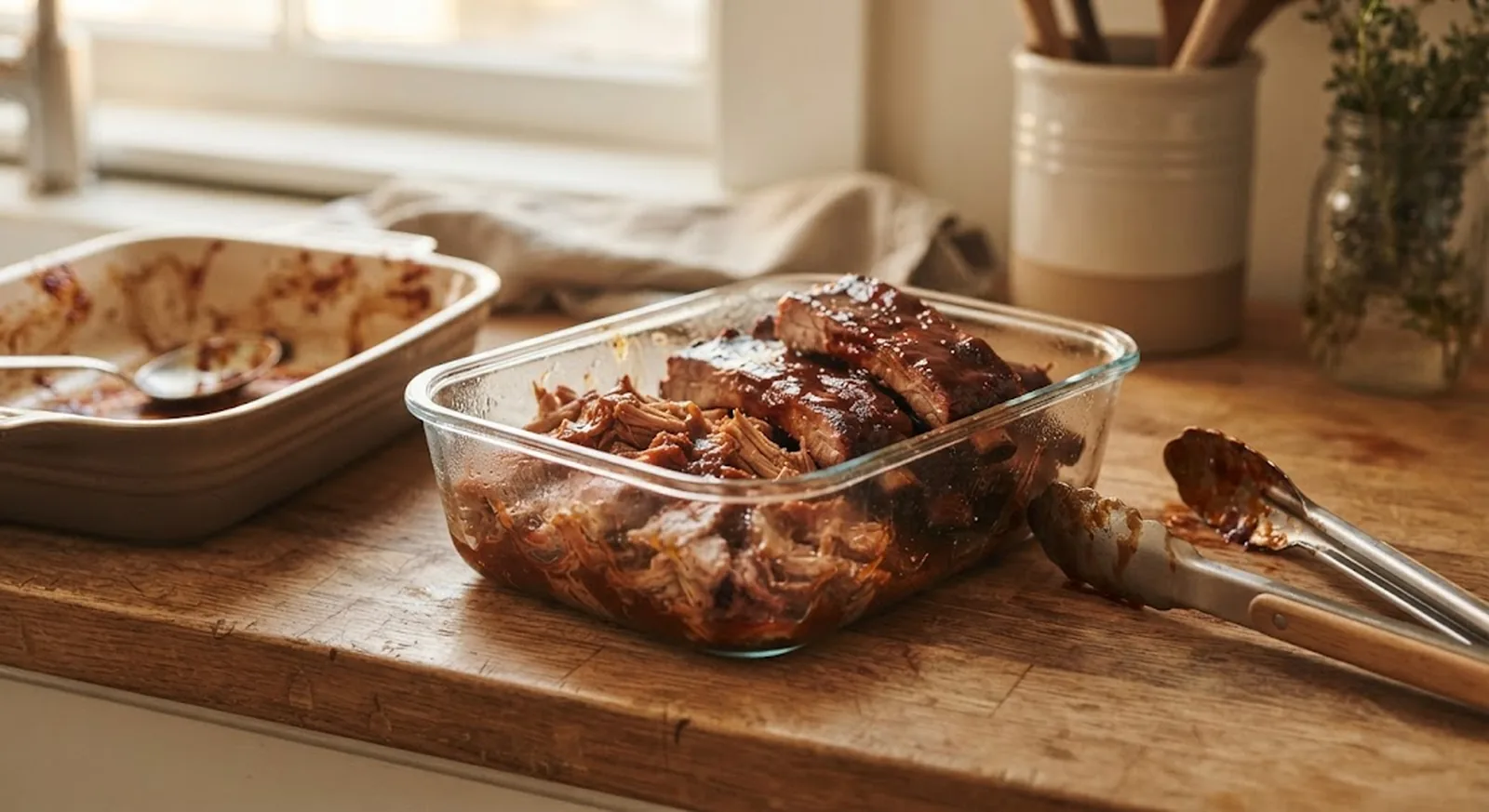
Saucy pulled pork and ribs are exactly the kind of pigmented, oily food that stains plastic and holds onto smells long after the leftovers are gone. For anything sauced, glass is the better call — it doesn’t absorb odor or color, and a lot of glass sets go straight from freezer to oven, which matters for reheating (more on that below). I cover the full material trade-off in my glass vs plastic food containers breakdown, but the short version for BBQ specifically: glass for anything saucy or smoky, leak-proof plastic only for drier cuts you’re carrying somewhere.
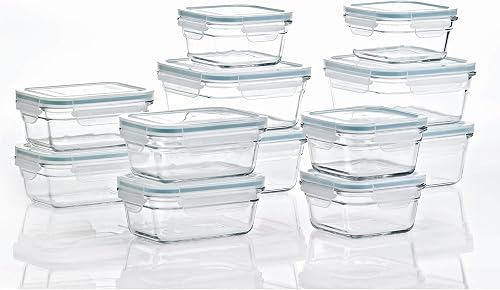
Glasslock Ring Taper Tempered Glass Container Set, 24-Piece
This is the set I point people to for BBQ leftovers specifically, because every base is rated freezer, microwave, and oven safe — you can freeze pulled pork in it, then reheat straight from frozen in the oven without switching dishes. The hinged, gasketed lid is rated leak-proof by reviewers even with saucy contents, and the tempered glass resists the staining that sauce-heavy meat leaves in plastic.
The genuine con: the hinged lids are bulky and don’t nest inside each other, so a 24-piece set eats real cabinet space. If you only need a few containers for one weekend’s leftovers, buying the smaller set makes more sense than the full bundle.
How to freeze pulled pork, brisket, and ribs the right way
Freezing BBQ well comes down to two things: getting the air out and portioning it before it goes in, not after.
- Portion first. Freeze in the amounts you’ll actually reheat — a single dinner’s worth, not one giant block you’ll have to thaw entirely to serve one plate.
- Squeeze or seal out the air. Air is what causes freezer burn. A resealable freezer bag with the air pressed out, or an airtight container filled close to the top, both work — the enemy is empty air space around the meat, not the container material.
- Wrap ribs and brisket in two layers. Because these cuts have more exposed surface area and irregular shapes, wrap them tightly in heavy-duty foil or freezer wrap first, then bag or box them. That extra layer is what keeps brisket from drying out at the edges over a 2–3 month freeze.
- Label the date and the cut. “Brisket, 9/7” takes five seconds to write and saves you from freezer-archaeology guessing games in November.
- Keep pulled pork in some of its own juices. A splash of the cooking liquid or sauce in the container keeps it from drying out in the freezer — vacuum-sealing or pressing out all moisture is great for texture but pulled pork specifically reheats better a little wet.

Rubbermaid Brilliance Glass Food Storage Containers, Set of 9
For fridge-side portions you’ll eat within the 3–4 day window, this is the set I’d use instead of the Glasslock — the vented lid lets you microwave a portion straight through without cracking the lid or getting a sauce explosion inside the microwave, and reviewers report the seal holding up well over a year of daily use.
The genuine con: it’s pricier than a basic plastic tub, and a full stack of glass containers is heavier to move around than the equivalent in plastic. For short-term fridge storage that’s a fair trade; for bulk freezer stockpiling, the Glasslock set above is the better fit.
Reheating leftover BBQ without drying it out
The USDA calls for reheating leftovers to 165°F internal, and that’s non-negotiable for safety — but hitting that number is exactly what turns good BBQ into dry, chewy BBQ if you do it wrong. The fix in every case is the same: add moisture, use lower heat, and don’t rush it in the microwave if you can help it.
- Pulled pork: add a splash of stock, apple juice, or leftover sauce, cover tightly with foil, and reheat at 300°F until it hits 165°F. The added liquid steams the meat back to moist instead of drying it further.
- Brisket: slice cold, then reheat in a covered dish with a little beef broth at 250°F — low and slow again, the same principle that cooked it in the first place.
- Ribs: wrap tightly in foil with a spoonful of sauce or apple juice inside, then reheat at 250–300°F until warmed through. Unwrap for the last few minutes if you want the bark to crisp back up.
- Anything sauced: a covered container in the oven beats the microwave almost every time — microwaves reheat unevenly and dry out the exposed surface fastest, exactly where BBQ needs moisture most.
Frequently asked questions
Can you freeze pulled pork?
Yes — pulled pork freezes well for up to 2–3 months. Freeze it with a little of its own cooking liquid or sauce so it doesn’t dry out, portioned into meal-sized amounts so you’re not thawing more than you need.
How long is brisket good for in the fridge?
3–4 days at 40°F or below, the same window as other cooked meats. Past that, move it to the freezer, where it holds up well for about 3 months if wrapped tightly.
Can you get food poisoning from leftover BBQ?
Yes, if it sits out too long before refrigeration or is kept past the safe window. The main risk factors are food left out more than 2 hours (1 hour above 90°F) and leftovers kept in the fridge longer than 3–4 days. Following the timing above is what actually prevents this, not how the food looks or smells.
What’s the best way to reheat ribs without drying them out?
Wrap them in foil with a little liquid — apple juice, stock, or leftover sauce — and reheat low and slow (250–300°F) until they hit 165°F internally. The foil traps steam and keeps the meat from drying out the way an uncovered microwave reheat almost always does.
If you’re setting up your fridge and freezer to actually handle a full weekend of leftovers, my best reusable food storage containers guide covers the leak-proof sets worth buying, and my best meal-prep containers for the 5-day work week picks double nicely as portioned BBQ-leftover containers come Monday. And if a cast iron or non-stick pan took some smoke and grease damage over the cookout, my complete guide to kitchen tool care covers getting it back in shape. For next time, the cookout tools I never grill without includes the gear that makes portioning leftovers faster in the first place.