Why Your Knife Goes Dull So Fast (And How to Fix It)
If you sharpen a knife on Monday and it’s crushing tomatoes by Friday, the steel usually isn’t the problem — your habits are. Most kitchen knives go dull so fast because of four everyday mistakes: honing wrong (or not at all), cutting on hard surfaces, sending blades through the dishwasher, and tossing them loose in a drawer. Fix those four things and a decent knife will hold its edge for months.
Disclosure: I only recommend gear that holds up after real research into how it performs. Some links below are Amazon affiliate links, which means I may earn a small commission at no extra cost to you.
The Short Answer: It’s Rarely the Steel
Here’s the part most people miss: a budget chef’s knife and a premium one dull for the same reasons. A knife edge is a microscopically thin ribbon of steel. Every time you cut, that ribbon takes a tiny beating — and a few common kitchen habits multiply that damage until the blade feels blunt weeks before it should. The good news is that almost all of it is preventable once you stop believing four stubborn kitchen myths.
Myth #1: “My Honing Rod Sharpens My Knife”
This is the big one, and it fools almost everyone. That long steel rod that came with your knife block does not sharpen anything. Honing and sharpening are two completely different jobs.
As you use a knife, the very tip of the edge rolls over to one side — think of it like a bent windshield wiper. The blade is still sharp; it’s just leaning. A honing rod pushes that rolled edge back into alignment, so the knife feels sharp again in seconds. It removes almost no metal. Sharpening, by contrast, grinds away steel to form a brand-new edge, which you only need to do every few months. Confusing the two is why so many people “sharpen” constantly yet still cut with a tired blade.
The fix is simple: hone often, sharpen occasionally. I run my chef’s knife across a honing rod every few uses — it takes ten seconds and keeps the edge honest between real sharpenings.
Utopia Kitchen Honing Rod (12-Inch)

This is the honing rod I keep on the counter because it’s cheap enough that there’s no excuse not to own one. Twelve inches gives you room to run a full chef’s knife down the rod in one stroke, and the hanging hook means it’s always within reach. The genuine con: it’s a plain steel rod, not a diamond-coated one, so it realigns an edge beautifully but won’t rescue a knife that’s already truly dull — that’s a job for a stone.
Myth #2: “A Harder Cutting Board Lasts Longer”
People buy glass, granite, marble, and ceramic boards because they look sleek and seem indestructible. They are indestructible — and that’s exactly the problem. A knife edge stays sharp only if the surface it lands on is softer than the blade. Glass and stone are far harder than your steel, so every single chop micro-chips the edge. You’re basically sharpening your board with your knife, and the board always wins.
Switch to wood or plastic. Both give slightly under the blade, which cushions the edge instead of grinding it. Swap a glass board for a wood one and “cheap dull knives” often start holding an edge again — same knives, different surface.
Hiware Extra Large Bamboo Cutting Board (18″ x 12″)

This is the board I reach for on busy prep days. It’s big enough to break down a whole chicken without vegetables rolling off the edge, the juice groove catches the mess, and it’s kind to my knives. The genuine con: bamboo is a touch harder than a true end-grain wood board, so it’s not the absolute gentlest surface you can buy — but it’s a world softer than glass or stone, and it costs a fraction of a butcher block. Keep it lightly oiled and it lasts for years.
Myth #3: “Dishwasher-Safe Means Dishwasher-Friendly”
A label that says “dishwasher-safe” is telling you the knife won’t fall apart in there — not that it’s a good idea. Inside a dishwasher, your blade gets blasted with high heat and aggressive detergent (which is mildly abrasive and corrosive to a fine edge), then knocks against racks and other cutlery through the whole cycle. Heat can also loosen the handle over time. Every one of those forces nudges the edge out of true.
Hand-washing takes fifteen seconds: warm water, a drop of mild soap, wipe, and — this is the part people skip — dry it immediately. Leaving a knife wet in the rack invites tiny spots of corrosion right along the edge, which is exactly where you don’t want them. Hand-washing is the single easiest habit on this list to actually stick to.
Myth #4: “Loose in a Drawer Is Fine”
If your knives live jumbled in a drawer, they’re dulling every time you open and close it. Blades slide against each other and against metal utensils, and each contact rolls or nicks the fragile edge. It’s the storage equivalent of dragging your knife across a cheese grater. A knife that never touches anything harder than food between uses stays sharp dramatically longer.
You have three good options: a magnetic strip, a knife block, or in-drawer edge guards. I use a wall-mounted magnetic strip because it keeps every blade separated, visible, and off the counter — and it doubles as free kitchen decor.
Gorilla Grip Stainless Steel Magnetic Knife Holder (10-Inch)
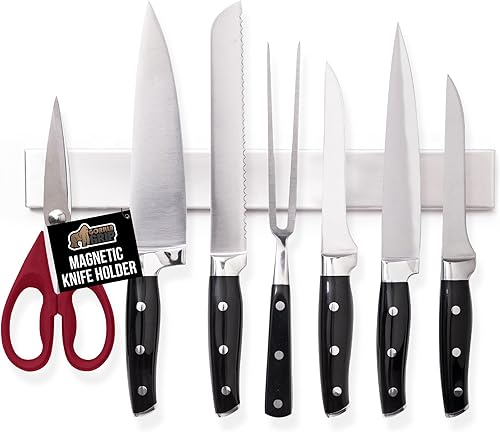
The magnet on this strip is rated to hold full-size chef’s knives securely without sagging, and the 304 stainless face wipes clean in a second. Mounting it near the prep zone turns knife storage from a drawer free-for-all into something that actually protects the edges. The genuine con: it’s wall-mounted, so you’ll need to drill a couple of holes, which makes it a tough pick if you rent and can’t put anything on the walls. In that case, in-drawer knife guards do the same protective job.
When Honing Isn’t Enough: Actually Sharpening
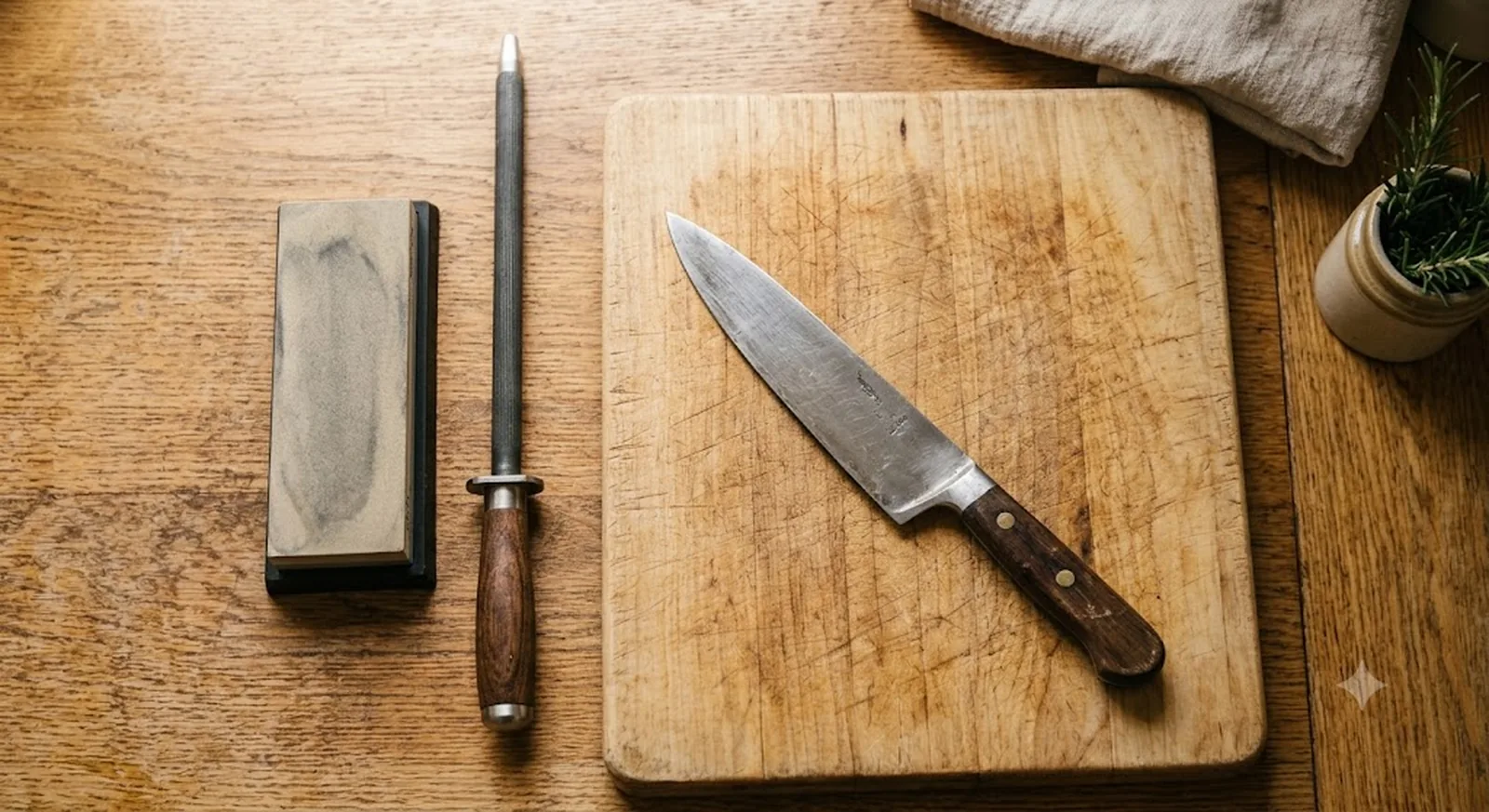
Even with perfect habits, steel eventually wears down and honing stops bringing the edge back. That’s when you sharpen — grinding a fresh edge on a whetstone. For home cooks, a combination stone with a medium grit for repairing the edge and a fine grit for polishing it is all you need. It has a learning curve, but once it clicks, it’s the most satisfying ten minutes in the kitchen. If you want the full walkthrough, I break it down in my guide on how to sharpen a kitchen knife at home, and I compare the easier gadget options in my best knife sharpeners roundup.
Sharp Pebble Whetstone (1000/6000 Grit)

This is the stone I hand to anyone sharpening for the first time. The 1000 side rebuilds a worn edge, the 6000 side polishes it to a clean finish, and the included angle guide takes the guesswork out of holding a consistent bevel. The non-slip bamboo base means it doesn’t skate around the counter. The genuine con: there’s a real learning curve — you have to soak it and keep your angle steady, so your first knife won’t come out perfect. Stick with it and by the third knife you’ll wonder why you ever paid to have blades sharpened.
How Often Should You Hone and Sharpen?
You don’t need a schedule app — just a rough rhythm. For a typical home cook, this is what keeps an edge honest:
| Task | How often | What it does |
|---|---|---|
| Hone on a rod | Every few uses | Realigns the rolled edge |
| Hand-wash + dry | Every use | Prevents corrosion and edge damage |
| Sharpen on a stone | Every 3–6 months | Grinds a brand-new edge |
If you cook daily or cut a lot of dense produce like squash and root vegetables, lean toward the shorter end of that sharpening window. If your knife mostly handles soft food, you can stretch it.
One More Myth Worth Killing: “A Sharp Knife Is More Dangerous”
I hear this constantly, and it’s backwards. A dull knife needs more force and skids off food instead of biting in — and a blade that slips under pressure is how most kitchen cuts actually happen. A sharp knife does what you tell it to, with a light touch and full control. Keeping your knives sharp isn’t just about better slicing; it’s the safer way to cook. If you want to put that edge to work, my knife skills guide covers the cuts worth learning, and the full kitchen tool care guide ties all of this together.
Frequently Asked Questions
Why does my knife go dull so fast even though it’s expensive?
Price doesn’t protect an edge from bad habits. A pricier knife often has harder steel that holds an edge longer, but if you cut on glass, run it through the dishwasher, and store it loose in a drawer, it will dull just as quickly as a budget blade. Fix the habits first.
Is honing the same as sharpening?
No. Honing realigns an edge that has rolled over during normal use and removes virtually no metal, which is why you can do it often. Sharpening grinds away steel to create a new edge and is only needed every few months.
Can I use a bamboo board without dulling my knife?
Yes. Bamboo is slightly harder than end-grain wood but still much softer than your blade steel — nothing like glass, granite, or ceramic. It’s a solid, affordable choice for protecting your edge as long as you keep it lightly oiled.
How do I know if my knife needs sharpening or just honing?
Try a honing rod first. If a few passes bring back a clean, easy slice, the edge was just misaligned. If the knife still struggles to bite into a tomato skin or paper after honing, the edge is worn down and it’s time for the stone.
The Bottom Line
Your knives probably aren’t cheap junk and the steel probably isn’t defective — they’re just being quietly beaten up by four fixable habits. Hone regularly instead of assuming that rod sharpens, cut on wood or plastic instead of glass, hand-wash and dry instead of trusting the dishwasher, and store blades where they can’t knock into anything. Add an occasional pass on a stone and a decent knife will stay sharp for months at a time. Sharp knives are safer, faster, and honestly more fun to cook with — and now you know exactly why yours weren’t staying that way.