Best Grill Pans for Indoor Use (Tested for Sear Marks and Cleanup)
Some links below are affiliate links. If you buy through them, I may earn a small commission at no extra cost to you. I only recommend gear that holds up well in verified buyer reviews and spec comparisons. #ad
Not everyone has a backyard to grill in. Plenty of apartments come with a balcony too small (or too restricted by the landlord) for a grill, and in many climates there are whole seasons when it’s too wet out to use one anyway. So when you want char on a steak or those dark diagonal lines on a zucchini plank, a grill pan on the stovetop is the answer. Across the pans in this guide — steaks, chicken thighs, halloumi, smashed burgers, every vegetable in the crisper drawer — the gap between a great grill pan and a frustrating one is bigger than most roundups admit.
Here’s the honest version: a grill pan will never taste exactly like an open flame, because the flavor of outdoor grilling comes partly from fat dripping onto coals and smoking back up. But a good grill pan gets you 80% of the way there, gives you the sear marks, and works in January. This guide covers the pans worth owning, the cast-iron-versus-aluminum decision that trips most people up, and the smoke-management routine that keeps your fire alarm quiet.
How I chose these grill pans
Every pan here earned its spot the same way: by weighing what verified-purchase buyers actually report, alongside spec sheets and price, on the things that matter most at the stove:
- Sear quality and grill marks. How dark, how distinct, and how evenly the ridges brand the food. Tall, widely spaced ridges make better marks than shallow, crowded ones.
- Heat retention. When a cold steak hits the pan, does it hold its temperature or sulk and steam? This is where heavy materials win — and it’s one of the most consistent themes across buyer reviews.
- Maneuverability. Can you get a spatula under a burger without fighting a tall wall? Roomy surfaces with lower sides are far easier to work in.
- Cleanup. Grease and char collect in the grooves, and buyer reviews are consistent about which pans turn cleanup into a quick wipe versus a scrubbing project.
- Warping and durability. Do long-term buyer reviews mention warping or cracking after repeated high-heat use, or does the pan stay flat and intact?
Induction compatibility is noted for each pan, since not every cooktop supports it. No brand paid for placement, and every recommendation here is based on verified buyer feedback, spec comparisons, and price — not sponsored placement.
The quick verdict
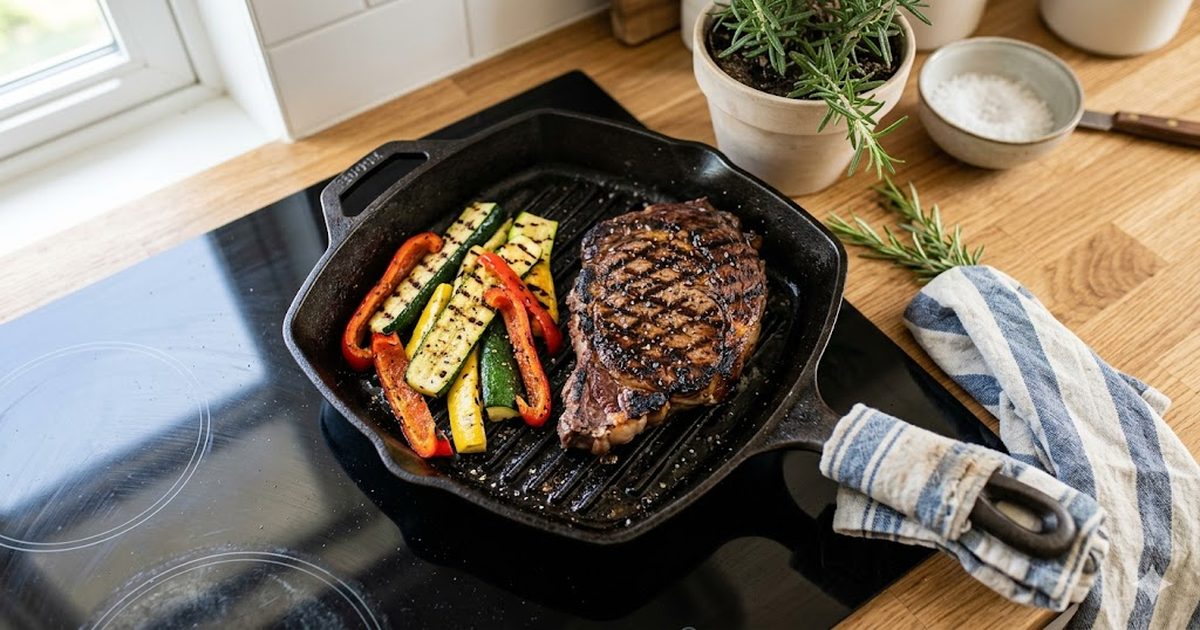
If you want one answer: the Lodge 10.5-inch Square Cast Iron Grill Pan is the best grill pan for most kitchens. It makes the deepest, most restaurant-looking sear marks of any pan in this guide, it costs a fraction of the premium options, and it will outlive most of the other cookware you own. The only reasons to look elsewhere are if you can’t lift heavy cast iron comfortably, if you hate the seasoning routine, or if you want to grill for a crowd on two burners at once. I’ll cover the pans that solve each of those problems below. And if your budget is tight, I’ve rounded up the best cast iron grill pans under $40 in a separate guide.
Cast iron vs. hard-anodized aluminum: which is right for you
Almost every grill pan worth buying is either cast iron (sometimes enameled) or hard-anodized aluminum with a nonstick coating. People treat this like a contest with a winner, but it’s really a question about your hands, your patience, and your cooktop.
Cast iron wins on the things that make grilling good. It’s dense, so it holds heat brutally well — when you drop a cold steak onto a screaming-hot cast iron pan, the temperature barely dips and you get an instant sear. Its ridges are usually taller and sharper, so the marks are darker and more defined. It lasts essentially forever and gets better with age. The tradeoffs are real, though: it’s heavy, it needs seasoning to stay naturally nonstick and rust-free, and the deep grooves take more effort to clean. If you’ve read my comparison of cast iron and carbon steel skillets, the same heat-retention logic applies here.
Hard-anodized aluminum wins on convenience. It’s lighter, it heats up faster, and the nonstick coating means cleanup is usually a wipe rather than a project — some are even dishwasher safe. The cost is performance and lifespan: the sear is good but not quite as fierce, the ridges tend to be shallower, and the nonstick coating will eventually wear out no matter how careful you are. Nonstick grill pans also shouldn’t be cranked to the blistering temperatures that make cast iron shine, which limits how aggressive a crust you can build.
My rule of thumb: choose cast iron if you care most about the sear and don’t mind maintenance. Choose hard-anodized aluminum if you want easy cleanup, a lighter pan, or you’re nervous about caring for cast iron. One important warning for both: heavy grill pans and glass or ceramic cooktops are an uneasy match — the weight and the dragging can scratch or crack the glass, so check your range’s manual before committing.
The best grill pans for indoor use
Lodge 10.5″ Square Cast Iron Grill Pan — Best Overall

This is the pick most readers gravitate toward, and it’s the one I’d recommend to a friend setting up their first real kitchen. The square shape gives you more usable cooking surface than a round pan of the same nominal size, so you can fit four chicken thighs or two good-sized steaks without crowding. The ridges are tall and well spaced, which is the whole reason the sear marks come out looking like they belong on a restaurant plate.
It arrives pre-seasoned and ready to use, it works on every cooktop including induction, and it’s made in the USA. Heat retention is the standout: reviewers consistently report searing one batch of food, then laying down the next right after, without the pan losing heat. The two short helper handles make it easier to move than a single long handle when the pan is loaded and heavy. It is heavy, and the grooves take a brush and a little patience to clean — but for the sear quality and the price, nothing else in this guide comes close to the value. If you’re stocking a starter kitchen, it pairs naturally with the gear in my first-apartment kitchen essentials guide.
Le Creuset Signature Square Skillet Grill — Best Premium

If the maintenance side of cast iron is what’s stopping you, enameled cast iron is the answer, and Le Creuset’s square skillet grill is the one I’d buy. It gives you the heat retention and serious heft of bare cast iron, but the enamel coating means there’s no seasoning to maintain and no rust to worry about — you wash it like normal cookware and put it away. It also comes in colors that look good enough to bring to the table, which matters if you like to serve straight from the pan.
The sear is excellent, very close to bare cast iron, and the enamel handles acidic marinades that would strip the seasoning off a raw pan. The honest downsides are the price, which is steep, and the weight, which is just as substantial as any cast iron. You also can’t take enamel to the same reckless high heat as a bare pan without risking the finish over time. But if you want a do-it-for-decades pan with none of the seasoning fuss, this is the upgrade. It belongs in the same conversation as the sets in my best cookware sets guide.
Lodge Pro-Grid Reversible Cast Iron Grill/Griddle — Best for Batch Cooking

When cooking for more than two people, a single 10-inch pan becomes a bottleneck fast. This reversible Lodge plate solves it. It spans two burners, with raised grill ridges on one side and a smooth flat griddle on the other, so you can sear six burgers or a full rack of vegetables in one go, then flip it over the next morning for pancakes and bacon. For anyone hosting a Father’s Day cookout indoors or feeding a family, the extra real estate is the difference between one relaxed session and three frustrating rounds.
Because it’s cast iron, the heat retention and sear quality are everything you’d expect from Lodge. The catches are practical: it’s big and heavy, it needs a cooktop that can run two burners hot, and the flat-edge design means there’s no deep wall to contain grease, so a splatter screen helps. Storage takes real cabinet space too. But if you regularly grill for a group, nothing in this guide stretches a single cooking session as far.
Cuisinart Hard-Anodized 11″ Square Grill Pan — Best Lightweight Nonstick

This is the pan I recommend to anyone who finds cast iron genuinely too heavy, or who just wants to grill on a weeknight without a cleanup commitment afterward. The hard-anodized aluminum body heats quickly and weighs a fraction of a comparable cast iron pan, so it’s easy to lift one-handed even when it’s full. The nonstick interior means delicate things — fish, marinated chicken, vegetables that want to stick — release cleanly, and cleanup is mostly a wipe with a soft sponge.
The 11-inch square surface is generous, and the sear marks come out clean if you preheat properly and resist the urge to move the food early. Where it gives ground to cast iron is at the extremes: you shouldn’t run nonstick at the blistering temperatures that build the most aggressive crust, the ridges are a touch shallower, and the coating will wear over years of use rather than lasting a lifetime. Treat it gently — no metal utensils, no high-heat abuse — and it’s a genuinely pleasant pan to live with. For more on getting the most life out of nonstick surfaces, see my complete kitchen tool care guide.
Cuisinart Dishwasher-Safe Hard-Anodized Round Grill Pan — Best for Easy Cleanup

Cleanup is the single biggest reason people abandon grill pans, so this one earns its place purely on convenience. It’s the only pan in this guide that’s genuinely dishwasher safe, which means the grooves full of charred-on grease — the part everyone dreads — get handled by the machine instead of by hand at the sink. For a busy household, that’s not a small thing.
The round 11-inch shape fits a standard burner well and stores more easily than the square pans, though the round footprint gives you slightly less straight-line room for long items like asparagus or sausages. Performance is solid for nonstick: good marks, even heating, light enough to handle easily. The usual nonstick caveats apply — keep the heat moderate and skip metal tools to protect the coating. If your honest reason for not owning a grill pan is that you don’t want to scrub one, this is the pan that removes the excuse.
How to get restaurant sear marks indoors (without the smoke alarm)
The most common complaint about grill pans isn’t the pan — it’s the smoke. Indoor grilling does produce more smoke than ordinary frying, because you’re running the pan hot and rendering fat. The good news is that a few habits keep it manageable.
Preheat patiently, then commit. A grill pan needs to be properly hot before the food touches it — a couple of minutes over medium to medium-high heat for cast iron. Flick a drop of water on; it should dance and evaporate fast. A cold or lukewarm pan steams food instead of searing it, and steamed food is where pale, sad grill marks come from.
Use a high-smoke-point oil, sparingly. Brush a thin film of oil on the food, not a puddle in the pan. Pooled oil is what smokes. Choose an oil that tolerates heat — avocado, refined canola, or grapeseed — rather than extra-virgin olive oil, which smokes early and acrid.
Pat food dry. Surface moisture is the enemy of a sear. Blot steaks, chicken, and watery vegetables with a paper towel before they hit the ridges.
Leave it alone. Lay the food down and don’t touch it. The marks form during uninterrupted contact; moving a steak after thirty seconds just smears the crust. Wait until it releases cleanly, then rotate 45 degrees if you want crosshatch marks, then flip once.
Ventilate before you start. Turn the range hood on high and crack a window before the first sear, not after the alarm goes off. If you don’t have a hood, a fan pointed toward an open window helps more than you’d think.
How to clean and care for a grill pan
The ridges that make the marks are also what makes cleaning a grill pan its own small chore. For cast iron, clean it while it’s still warm: rinse under hot water and use a stiff brush or a pan scraper to lift char out of the grooves. For stubborn bits, a paste of coarse salt and a little water scrubs them free without stripping the seasoning. Dry it thoroughly — completely dry, or it rusts — and wipe a whisper of oil over the surface before storing. A chainmail scrubber, which I cover in my tool care guide, makes the groove-cleaning much faster.
For enameled cast iron, you skip the seasoning entirely — wash it with soap and a non-abrasive sponge like normal cookware, and use a nylon scraper for anything stuck. Avoid harsh scouring powders that can dull the enamel. For hard-anodized nonstick, let the pan cool before washing (thermal shock warps aluminum), then wipe with a soft sponge; only put it in the dishwasher if the manufacturer specifically says it’s safe, since aggressive detergents shorten the life of most nonstick coatings.
Who should skip a grill pan
A grill pan isn’t right for everyone, and I’d rather you spend the money elsewhere than be disappointed. Skip it if you have a glass or ceramic cooktop and aren’t comfortable risking scratches from heavy cast iron — a lighter nonstick pan or a countertop electric grill is safer. Skip it if your kitchen has no ventilation at all and no window, because indoor searing will fill the room. And skip it if what you’re really after is the smoky flavor of live-fire cooking — no pan reproduces that, and you’d be happier saving for an outdoor setup. For most people in apartments and rentals, though, a grill pan is the most realistic way to get a real sear indoors.
Frequently asked questions
Do grill pans actually taste grilled? They give you the sear, the caramelized crust, and the marks — the parts that come from direct high heat. What they can’t fully replicate is the smoky flavor from fat dripping onto flames, which is unique to live-fire grilling. For indoor cooking, that’s a fair trade for most dishes.
Are grill pans safe on a glass or ceramic cooktop? Cautiously. Heavy cast iron can scratch or crack glass if you drag it, so lift rather than slide, and check your range’s manual — some manufacturers advise against cast iron entirely. A lighter hard-anodized pan is the safer choice on glass.
How do I keep a grill pan from smoking so much? Oil the food rather than the pan, use a high-smoke-point oil, pat the food dry, and run your range hood or a fan from the moment you start. Most “too much smoke” problems come from pooled oil and a pan that’s actually too hot rather than just hot.
Cast iron or nonstick for a beginner? If you want the best results and don’t mind a little maintenance, cast iron. If you want the easiest experience and a lighter pan, hard-anodized nonstick. Enameled cast iron splits the difference — cast-iron performance with no seasoning — at a higher price.
Is a grill pan worth it if I already have an outdoor grill? Yes, surprisingly often. A grill pan handles weeknights, bad weather, and the off-season when firing up the outdoor grill isn’t worth it for two pieces of chicken. Many buyers report using both for exactly those reasons.
The bottom line
After weighing sear quality, heat retention, cleanup, and price across every pan in this guide, my advice is simple. Most people should buy the Lodge square cast iron grill pan — it makes the best marks, holds heat like nothing else at the price, and lasts a lifetime. If the maintenance puts you off, the Le Creuset enameled grill gives you the same sear with no seasoning. If cast iron is too heavy or you simply hate cleanup, the Cuisinart hard-anodized pans are genuinely pleasant to live with. Match the pan to your hands and your patience, learn the smoke-management routine, and you can put a proper sear on dinner in the middle of a cold January night — no backyard required.