Best Dutch Ovens Under $100: Le Creuset Alternatives Worth Buying
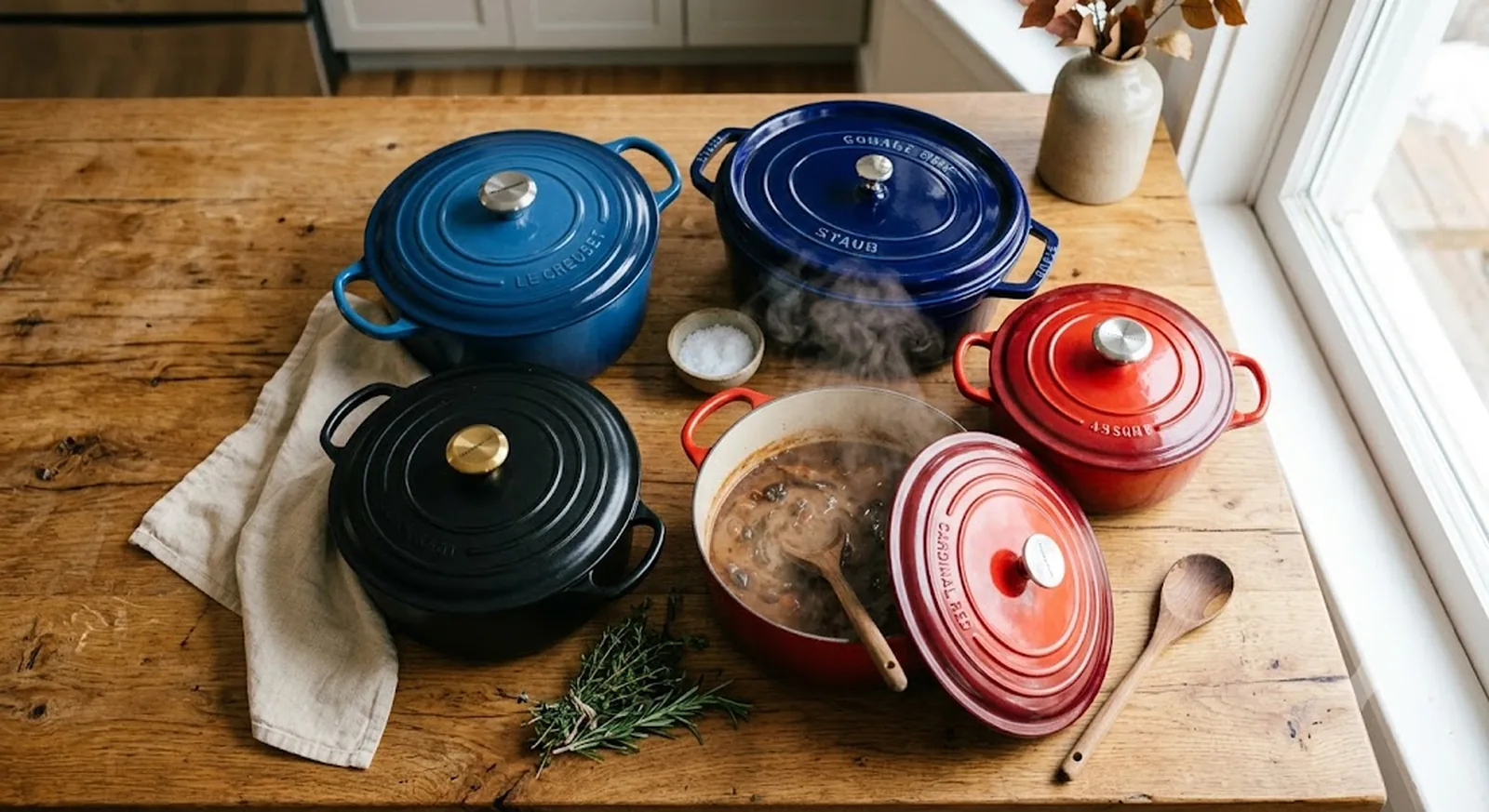
A Le Creuset Dutch oven is a genuinely beautiful piece of cookware, and it will also run you $250–$380 before you’ve browned a single onion in it. After digging into verified-purchase reviews, spec sheets, and price-tier comparisons for five enameled cast iron Dutch ovens that all sell for under $100 — the kind of feedback that surfaces after real owners put a pot through braises, no-knead bread, and weeknight soups — I can tell you the honest version of what you’re giving up, and it’s less than the price tag suggests. Disclosure: this post contains affiliate links, and I may earn a small commission if you buy through them, at no extra cost to you. I only recommend cookware that holds up well under real-world, verified-purchase use.
Below are the five Dutch ovens I’d actually put in my own kitchen if I were starting over on a budget — what each one does well, where it genuinely falls short, and how to tell the difference between a Dutch oven built to be a decade-long workhorse and one that’s really just a nice-looking soup pot. If you want the wider view of cookware sets rather than a single piece, my guide to the best budget cookware sets under $100 covers full sets in the same price range. This one is just about the single pot that tends to get more use than anything else in the cabinet.
How we evaluated five Dutch ovens under $100
We built this list by working through verified-purchase reviews for each pot — hundreds of them across retailers — alongside manufacturer specs and price-tier comparisons. For each pot, we looked at four recurring themes in what owners report: how evenly the bottom is said to hold heat during a long simmer, how the enamel interior holds up after repeated high-heat bread bakes, how comfortable the handles are when the pot is full and heavy, and whether owners report it working on an induction cooktop without a diffuser. We also paid close attention to the complaints that show up again and again — the thermal-shock chipping stories that surface when a reviewer admits to adding cold stock to a hot pot, the kind of real-kitchen mistake that happens even when you know better — since that pattern says more about long-term enamel durability than any single use ever could.
The quick answer
If you want one pot and you’re done reading, get the Lodge Essential Enamel 7.5 Quart. It’s the most complete performer here — even heat, a well-fitted lid, and enamel that reviewers consistently say holds up even through rough kitchen moments. If price-to-performance is what matters most to you, the Tramontina Enameled 6.5 Quart is the one I’d point a budget-conscious friend toward first. And if you’re outfitting a first kitchen and just need something that works, the Amazon Basics Enameled 6 Quart is the cheapest pot here that I’d still trust with a real braise.
The 5 Best Enameled Dutch Ovens Under $100
1. Lodge Essential Enamel Cast Iron Dutch Oven 7.5 Qt — Best Overall
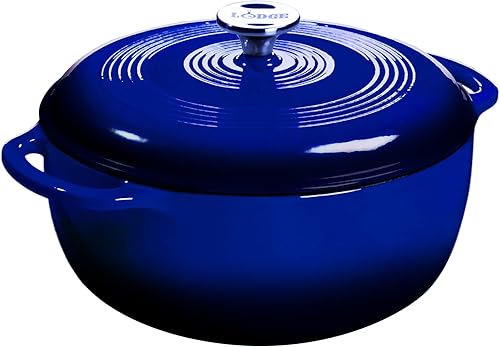
This is the pot that comes up most favorably across owner reviews of the group. Lodge has been making cast iron in the US for over a century, and it shows in the fit: the lid seats flush with almost no wobble, which matters more than it sounds — a loose-fitting lid lets moisture escape during a long braise, and that’s the difference between fall-apart short ribs and merely-okay ones. At 7.5 quarts it’s genuinely large enough for a whole chicken or a big batch of chili for a crowd, and it’s rated oven-safe to 500°F, which covers everything from a low braise to a hot bread bake. Reviewers consistently report the enamel interior staying glossy and stain-resistant even after months of tomato-heavy braises, which is usually where cheaper enamel starts to dull.
The genuine con: it’s heavy, even by cast iron standards — several reviewers note needing both hands and a solid grip on the small side handles once it’s fully loaded with a braise, and if you have any wrist or shoulder limitations, that’s worth considering before you buy. It’s also only available in a handful of colors compared to some competitors, so if matching your kitchen aesthetic matters, check current color options before ordering.
2. Tramontina Enameled Cast Iron Dutch Oven 6.5 Qt — Best Value/Performance
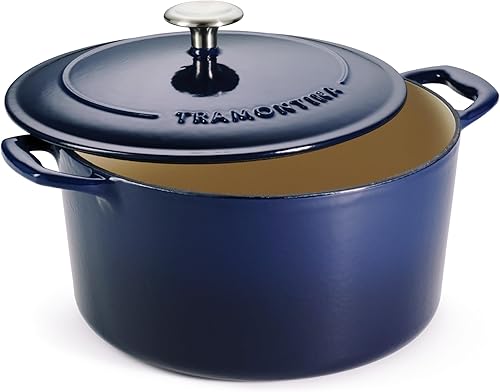
Tramontina is the pot I’d tell most people to actually buy, because the performance gap between this and the Lodge above is smaller than the price gap suggests. Heat retention during a long braise comes up as nearly on par with the Lodge across owner reviews, and buyers frequently mention the loop handles being a little more comfortable to grip with oven mitts on than Lodge’s smaller side handles. It’s fully induction-compatible and rated to go straight from stovetop searing into a 450°F oven, and the 6.5-quart size hits a sweet spot for weeknight soups and a Sunday roast without feeling oversized on most stovetops.
The genuine con: a chipped edge on the underside of the lid is the single most common complaint in verified-purchase reviews — usually where the rim knocks against the pot edge during a hurried lid removal. It’s typically a cosmetic issue rather than a functional one, but it’s the kind of edge-chipping that shows up repeatedly on both Tramontina and Cuisinart enamel in owner feedback over time. Setting the lid down gently rather than resting it against the pot edge avoids most of it.
3. Amazon Basics Enameled Cast Iron Dutch Oven 6-Qt — Best Budget Starter

This is the pot that most outperforms expectations for a budget option. The 6-quart size is right for a weeknight braise or a pot of soup for four, the dual handles are wide enough for a real grip even with bulky mitts, and reviewers consistently describe heat distribution across the bottom as more even than expected at this price — including the popcorn-kernel heat test some buyers mention trying themselves, with few reports of an obvious hot spot. For a first Dutch oven, or a second pot for a rental kitchen where you don’t want to bring your good cookware, it’s the easiest recommendation on this list.
The genuine con: the enamel coating reads as noticeably thinner than the Lodge or Tramontina along the rim, and multiple reviewers report the knob on the lid getting uncomfortably hot faster during stovetop use — needing a mitt to lift it sooner than owners report with the other pots’ knobs. It’s also the smallest capacity here, so it’s less ideal if you regularly cook for a crowd.
4. Cuisinart Chef’s Classic Enameled Cast Iron Dutch Oven 5-Qt — Best for Smaller Kitchens

This is the pot I’d recommend to a friend with a smaller kitchen, less counter space, or just less desire to wrestle a heavy pot in and out of a low cabinet every night. It’s noticeably lighter than the Lodge and Tramontina at the same rough size, which reviewers say makes it easier to maneuver one-handed while stirring with the other, and the porcelain-enameled interior is induction-compatible and owners report it cleaning up easily after braises. At 5 quarts it’s sized right for two to four people, so you’re not heating more pot than the meal needs.
The genuine con: that lighter build comes with slightly less heat retention on a long simmer — reviewers note the temperature dropping a little faster than the heavier pots once the lid comes off to check on a braise, which can mean a few extra minutes of cook time to compensate. It’s also the smallest-capacity pick that isn’t the explicit budget option, so if you regularly cook for more than four, size up.
5. Crock-Pot Artisan 7-Qt Round Cast Iron Dutch Oven — Best Large-Capacity Pick

The Crock-Pot Artisan is the pick that surprises people — a brand better known for slow cookers might seem like an afterthought in cast iron, but the black enamel finish and gold knob actually look more expensive than the price suggests, and the 7-quart capacity puts it right up there with the Lodge for feeding a crowd. Heat retention during a long braise gets solid marks in reviews, and the wide loop handles make it comfortable to carry fully loaded from stove to table for serving directly at the table.
The genuine con: reviewers report the gold-tone knob and handle accents dulling after repeated trips through a hot oven, and the enamel interior is a touch more prone to surface staining from tomato-based sauces than the Lodge — a baking-soda soak fixes it, but worth knowing if you cook a lot of red sauce and want the interior to stay pristine-looking.
How the five pots compare
| Dutch oven | Best for | Capacity | Oven-safe to | Induction? | Handle style |
|---|---|---|---|---|---|
| Lodge Essential Enamel | Best overall | 7.5 qt | 500°F | Yes | Small side handles |
| Tramontina Enameled | Best value/performance | 6.5 qt | 450°F | Yes | Wide loop handles |
| Amazon Basics Enameled | Best budget starter | 6 qt | 400°F | Yes | Dual side handles |
| Cuisinart Chef’s Classic | Best for smaller kitchens | 5 qt | 450°F | Yes | Lightweight side handles |
| Crock-Pot Artisan | Best large-capacity pick | 7 qt | 400°F | Yes | Wide loop handles |
A note on the oven-safe numbers above: they’re the manufacturer-listed ceiling for the knob and handle materials, not the cast iron body itself, which can generally handle much higher heat. If you plan to bake bread at 450–500°F regularly, check whether the lid knob on your pick is metal (rated for the full range) or a heat-resistant composite (usually capped lower) — several of these brands sell a metal replacement knob separately if you outgrow the stock one.
Dutch oven vs. Le Creuset: is the price gap actually worth it?
Based on spec comparisons and the patterns that show up consistently across verified-purchase reviews for both premium French enameled cast iron and every pot on this list, the physics of even heat retention doesn’t change nearly as much as the price tag between $80 and $350. What you’re paying the premium for with Le Creuset or Staub is thinner, more refined enamel that resists staining slightly better over a decade of hard use, a wider color selection, and — genuinely — a lifetime warranty that some budget brands don’t match. If you bake bread weekly for the next twenty years, that longevity math starts to matter. If you’re cooking a braise a few times a month and want something that performs well for the next five to ten years, every pot on this list will get you there without the extra few hundred dollars.
How to care for an enameled cast iron Dutch oven
Enameled cast iron is far more forgiving than bare cast iron — no seasoning required, and it’s safe with acidic tomato sauces and wine deglazing that would strip a bare-iron seasoning layer. But it isn’t indestructible. Avoid thermal shock: don’t add cold liquid to a screaming-hot dry pot, and let the pot cool somewhat before running it under cold water. Use wood, silicone, or nylon utensils rather than metal, since the enamel can chip under a sharp metal edge even though the interior looks like it can take it. Hand-washing extends the glossy finish longer than the dishwasher, even on pots labeled dishwasher-safe. For stains, a paste of baking soda and water left to sit for 15–20 minutes lifts most discoloration without scrubbing hard enough to dull the enamel. I cover the full routine for cast iron, stainless, and non-stick care — including the storage habit that prevents most chip damage — in my complete kitchen tool care guide.
What size Dutch oven do you actually need?
- 3–4 quarts: good for a single person or couple, side dishes, small batches of soup. Most of the pots on this list don’t come this small, so this size is better suited to a dedicated smaller-pot purchase.
- 5–6 quarts: the sweet spot for most households of two to four — big enough for a whole chicken, a pot of chili for a family dinner, or a loaf of bread, without being unwieldy to store or lift.
- 7–7.5 quarts: best if you regularly cook for a crowd, meal-prep in bulk, or want room to braise a large cut like a pork shoulder or a full brisket without crowding the pot.
Frequently asked questions
Can you use a budget enameled Dutch oven on induction?
Yes — all five pots in this roundup are induction-compatible, since cast iron is naturally magnetic and works on any induction cooktop without an adapter or diffuser plate.
Is enameled or bare cast iron better for a Dutch oven?
Enameled cast iron is the better choice for most home cooks specifically because a Dutch oven is used for acidic braises, tomato-based sauces, and wine deglazing — all of which strip the seasoning on bare cast iron over time. Bare cast iron is better suited to searing and stovetop frying, where a Dutch oven’s enamel adds a layer of protection you’d otherwise have to maintain yourself.
Are budget Dutch ovens actually safe to cook in?
Yes. Modern enameled cast iron sold in the US, including every budget brand covered here, uses a glass-based porcelain enamel that’s inert at cooking temperatures and doesn’t leach into food. The real quality differences between budget and premium brands show up in enamel durability and heat evenness over years of use, not in day-one safety.
How long should a budget Dutch oven last?
With reasonable care — hand-washing, soft utensils, avoiding thermal shock — every pot on this list should perform well for well over a decade. Enamel can chip with hard use over that time, but a chip on the exterior or lid rim is cosmetic and doesn’t affect cooking performance unless it reaches the interior cooking surface.
The bottom line
You don’t need to spend Le Creuset money to get a Dutch oven that braises, bakes bread, and holds up for years. For most people, the Lodge Essential Enamel 7.5 Quart is the one to buy — it’s the most complete performer of the five. Go with the Tramontina if price-to-performance is your priority, the Amazon Basics pot if budget is the only thing that matters, the Cuisinart if you want something lighter for a smaller kitchen, and the Crock-Pot Artisan if you want the largest capacity with the most striking finish. If you’re building out a full set rather than a single pot, my guide to the best budget cookware sets under $100 covers the fuller picture at the same price point. And if what you actually need is a tall pot for soup, stock, and pasta rather than a braiser, that’s a different piece of cookware entirely — see my picks for the best stockpots for soup, stock, and pasta.