Best Pasta Makers for Home Cooks in 2026: Manual vs. Attachment — Which Should You Actually Buy?
(This post contains affiliate links — as an Amazon Associate, Kitchaneers earns from qualifying purchases at no extra cost to you.)
Fresh pasta sounds like a weekend project until you price out the equipment. Type “pasta maker” into Amazon and you’ll get manual crank machines, stand-mixer attachments, and full electric extruders, all mixed together with no clear starting point. Most buying guides just list ten products and let you sort it out. We’re doing this differently: the decision that actually matters is manual versus attachment, and it depends almost entirely on one thing — whether a compatible stand mixer is already sitting on your counter. Get that call right first, then pick a specific machine.
What to Know Before You Buy a Pasta Maker: Clamp Width, Roller Settings, and Cutter Attachments
Before comparing specific models, three specs decide whether a pasta maker is actually usable in your kitchen.
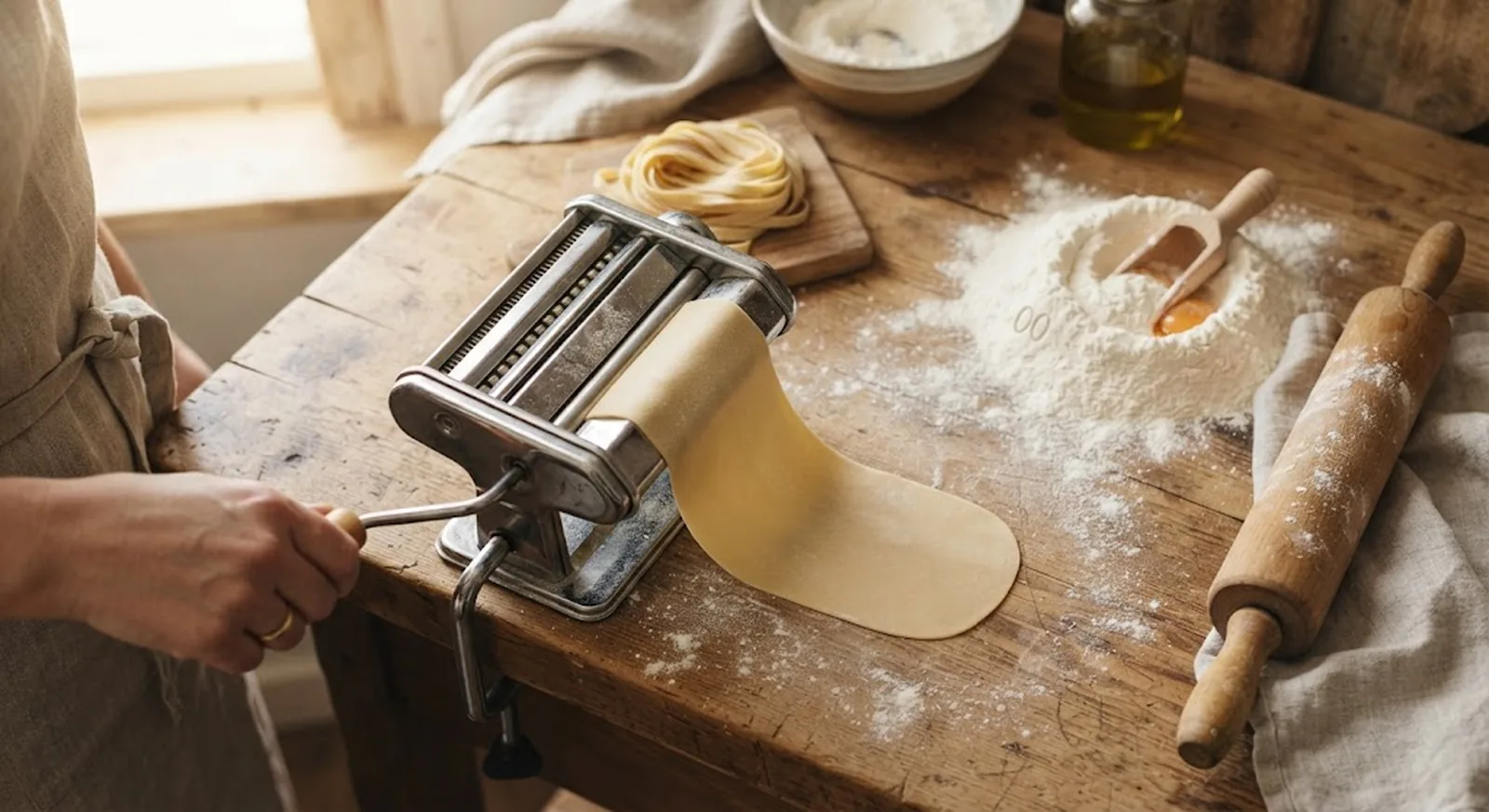
Clamp width. Manual machines clamp to a countertop or table edge with a screw-down bracket. Most clamps open 1–2.5 inches — fine for a standard counter, but a problem if your counter has a thick overhanging edge, a tile lip, or an island with no accessible edge at all. Check your counter depth before you buy, not after.
Roller settings. Look for at minimum 6–9 thickness settings, numbered and click-stop (not a smooth dial that can drift mid-roll). More settings mean finer control between lasagna-sheet thickness and delicate tagliolini — the difference between pasta that cooks evenly and pasta with a raw center.
Cutter attachments. A roller alone only flattens dough; you still need a cutter for shaped noodles. Fettuccine and spaghetti cutters are near-universal add-ons (either included or a $15–$25 add-on). Specialty cutters — angel hair, ravioli stamps, ridged lasagnette — vary a lot by brand and are worth checking before you buy if you have a specific pasta shape in mind.
Manual vs. Attachment: Which Are the Best Pasta Makers for Home Cooks?
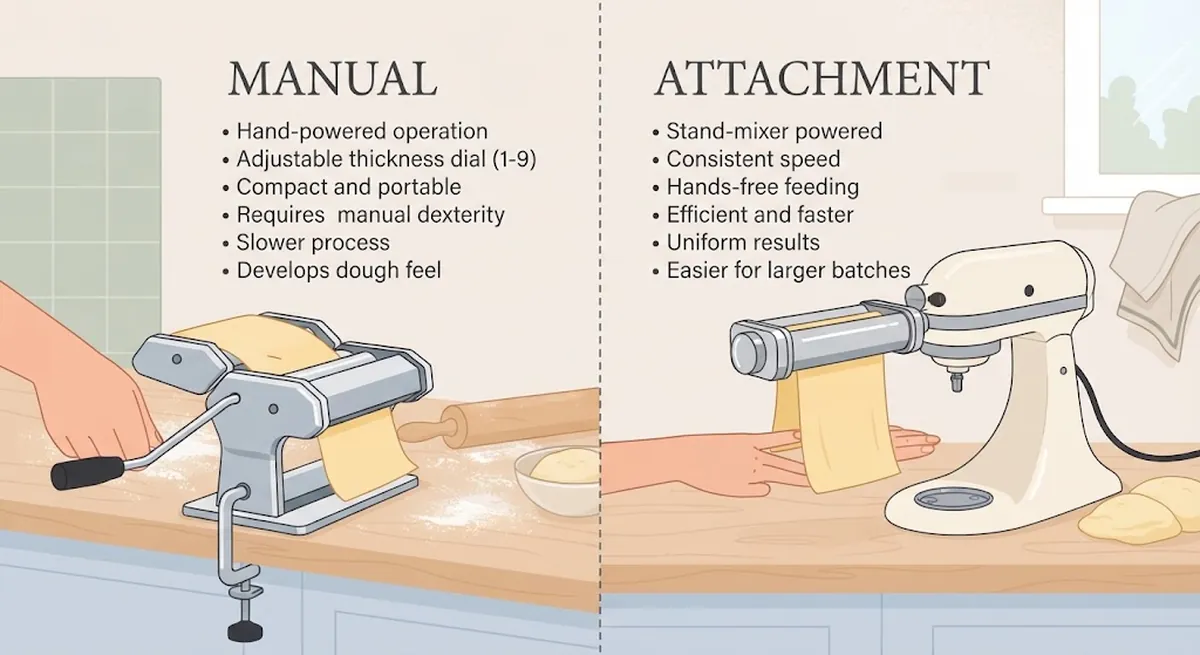
This is the real decision, and it comes down to one variable almost every other guide skips: do you already own a stand mixer the attachment will fit?
If you already own a compatible stand mixer (most full-size KitchenAid models with a power hub), a pasta attachment is close to free-rolling — the mixer’s motor does the cranking, both hands stay free to feed and catch the dough, and rolling a full batch of sheets takes a few minutes instead of ten. The catch is compatibility: not every KitchenAid model accepts every attachment, and mini/bowl-lift models can have hub clearance issues worth confirming against your specific mixer model before buying.
If you don’t own a compatible mixer, buying one just for pasta rarely pencils out. A stand mixer that fits the attachment runs $280–$450+; a standalone manual machine runs $65–$120. Unless you’re already mixer-shopping for other reasons (bread dough, cookie batches), the manual machine gets you rolling pasta for a third of the cost, with a hand crank that takes about fifteen minutes to learn.
The cost-of-ownership math nobody runs: an attachment only “pays off” against the manual machine’s price if you’re valuing the mixer at $0 because you already own one. Buy the mixer new specifically for pasta, and the attachment path costs 3–5x more than a manual machine for the same result: flattened, cut dough. Speed and hands-free convenience are real advantages once you own the mixer — they just don’t justify buying one from scratch.
Effort and storage split the same way. Manual machines take two hands and light forearm effort per crank — not hard, but not hands-free either — and store easily in a drawer or cabinet (most fold flat, roughly shoebox-sized). Attachments store in the mixer’s own accessory box but only work when the mixer is out and plugged in, which matters if your mixer normally lives in a cabinet rather than on the counter.
Best Manual Pasta Makers
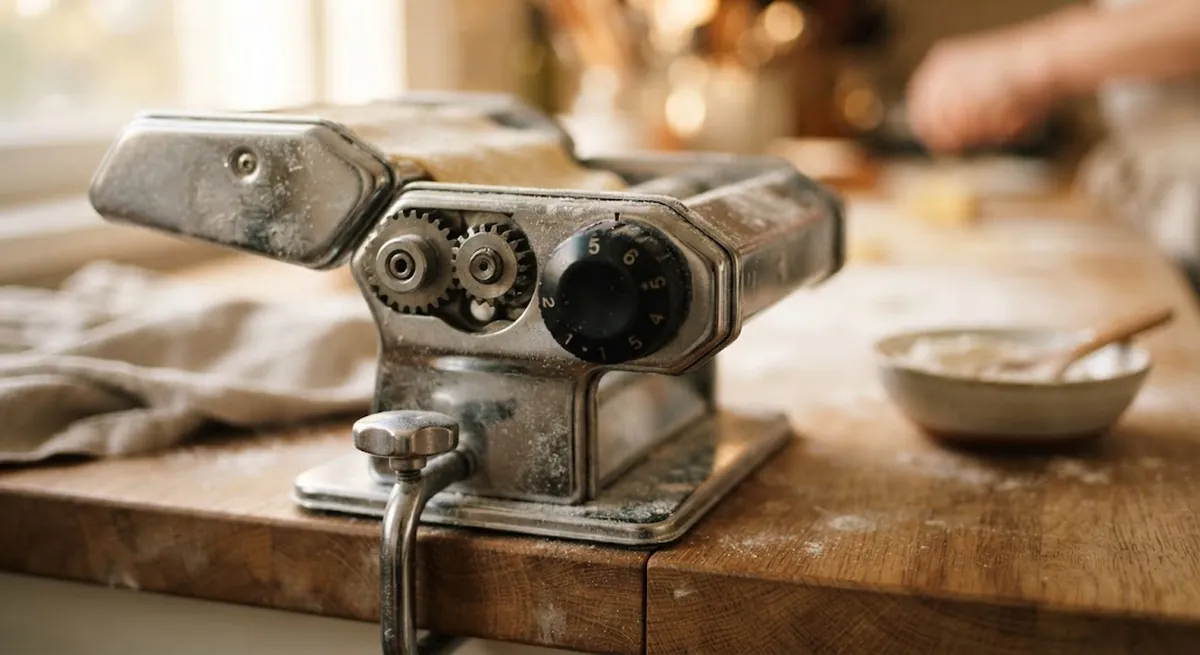
Manual machines are the lower-cost, no-mixer-required path to the best pasta makers for home cooks who don’t already own a compatible mixer. All three below use the same core mechanism — a hand-cranked roller you pass dough through repeatedly, thinning it one click at a time — and the differences between them come down to build material, crank mechanism, and price, not fundamentally different results.
Marcato Atlas 150 (Best Overall Manual Pasta Maker)
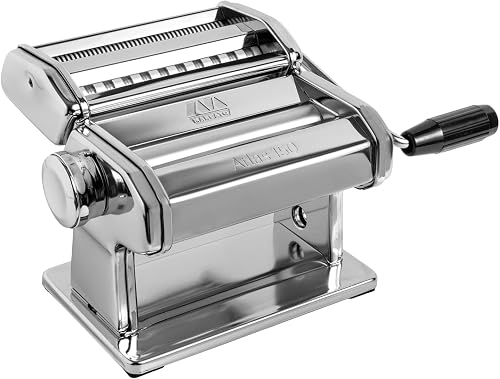
The Atlas 150 is the machine most cookbook recipes assume you own, and it’s the one recurring buyer reviews point to for longevity — chrome-plated steel rollers, a suction-cup-free screw clamp, and a reputation for lasting decades with basic care. It ships with 9 roller thickness settings and a built-in fettuccine/tagliolini cutter, so you’re not buying a separate cutter attachment on top. Reviewers note the crank handle is metal (not the plastic found on cheaper clones) and that the clamp holds firm on standard counters. The most common complaint in verified-purchase reviews isn’t the machine itself — it’s buyers underestimating how much flour-dusting the dough needs between passes to avoid sticking, which is a technique issue, not a product flaw.
- Best for: anyone who wants the machine most recipes are written for
- Genuine con: no motor attachment sold for it, so it stays fully manual even if you later want to speed things up
Imperia Pasta Machine, Classic Line (Best Splurge Manual Pick)
Imperia is Marcato’s closest competitor and the other name that shows up constantly in professional kitchens. The Classic Line uses a two-hand crank-and-lock design rather than Marcato’s single dial, which some buyers prefer for a more secure hold during long rolling sessions and others find fiddlier to operate one-handed while feeding dough. Construction is heavy-gauge steel with a wood-grip handle. Recurring verified-buyer feedback flags the two-hand operation as a genuine learning curve in the first few uses — it’s not a defect, but it is a real adjustment if you’re used to a single-knob design.
- Best for: cooks who want a second well-regarded Italian brand or prefer Imperia’s roller-lock mechanism
- Genuine con: the two-hand crank takes longer to get comfortable with than Marcato’s single-dial system

Sailnovo 3-in-1 Pasta Maker (Best Budget Manual Pasta Maker)
The Sailnovo is the best-selling budget alternative to the Italian brands, running well under half the price of a Marcato while covering the same core job: 9 thickness settings plus built-in spaghetti and fettuccine cutters in one unit. Construction is stainless steel rather than the chrome-plated steel on the Marcato, which is a real but minor durability step down — fine for occasional pasta nights, less proven for weekly heavy use over many years. It’s the pick for testing whether fresh pasta is a habit worth keeping before spending three times as much on an Italian-made machine.
- Best for: budget-conscious beginners deciding if fresh pasta is worth the counter space long-term
- Genuine con: lighter-gauge construction than Marcato/Imperia — buyer reviews suggest it holds up fine for occasional use but isn’t rated for daily restaurant-style output

Best Stand Mixer Pasta Attachments
If a compatible mixer is already on your counter, these attach to the power hub and let the motor do the cranking.
KitchenAid 3-Piece Pasta Roller & Cutter Set (Best Stand Mixer Attachment)
This is the attachment most KitchenAid owners land on: a roller piece plus separate spaghetti and fettuccine cutters, all driven by the mixer’s power hub instead of a hand crank. Compatibility is the detail to check before buying — it fits KitchenAid’s full-size household mixers with a power hub, but verify your exact model (some compact and bowl-lift variants have hub clearance quirks worth confirming against KitchenAid’s own compatibility chart first).
Once mounted, rolling and cutting a full batch of dough takes a few minutes with both hands free to feed and catch — the single biggest advantage over any manual machine. Recurring buyer-review friction: the three separate pieces mean three separate parts to hand-wash and dry (none are dishwasher-safe), which adds meaningfully more cleanup time than a one-piece manual machine.
- Best for: anyone who already owns a compatible KitchenAid mixer and wants hands-free rolling
- Genuine con: three separate attachments to store and hand-wash, and it’s the most expensive option on this list if you don’t already own the mixer

For the full breakdown of every attachment KitchenAid mixers can run — not just pasta — see our full guide to stand mixer attachments.
GVODE 3-Piece Pasta Attachment (Best Budget Stand Mixer Attachment)
The GVODE set covers the same three functions as the official KitchenAid attachment — roller, spaghetti cutter, fettuccine cutter — built from 304 stainless steel, at a noticeably lower price. It’s a solid pasta maker attachment for stand mixer owners who want to test the attachment workflow before committing to the official KitchenAid price tag. Verified-purchase reviews are broadly positive on roller performance but flag it as running slightly narrower on sheet width than the OEM part, which mostly matters if you’re regularly making wide lasagna sheets rather than standard-width noodles.
- Best for: mixer owners who want to try the attachment workflow at a lower buy-in
- Genuine con: narrower sheet width than the official KitchenAid roller — a real limitation for lasagna, a non-issue for spaghetti or fettuccine

Cleaning and Maintenance: Manual vs. Attachment
Neither style goes in the dishwasher — dried dough plus water plus steel rollers is a rust and residue problem either way. Both are cleaned the same way: a dry pastry brush to remove flour and dough bits immediately after use, never a wet rinse on the rollers themselves. If dough does dry onto a roller, a soft-bristle brush and a few dry crank passes usually clears it; soaking or submerging any of these machines is the single fastest way to introduce rust on the chrome or stainless rollers.
The real difference is piece count. A one-piece manual machine (Marcato, Imperia, Sailnovo) is one thing to brush off and put away. A three-piece attachment set (KitchenAid, GVODE) is three separate parts to detach, brush, dry, and store — a recurring complaint in verified attachment reviews, even among buyers who are otherwise happy with how the mixer performs. Budget a few extra minutes of cleanup time for the attachment route, and store all three pieces together in one labeled container so nothing goes missing between pasta nights.
Is It Worth Buying a Stand Mixer Just for the Pasta Attachment?
Almost never, on pasta alone. A mixer bought purely to run a pasta attachment costs 3–5x what a standalone manual machine costs, for the same end result: flattened, cut dough. The math only changes if the mixer earns its keep elsewhere — bread dough, cookie batches, whipped egg whites for meringue — and pasta becomes one more thing it does well rather than the reason you bought it. If you’re already asking whether a KitchenAid is worth it for your kitchen generally, our full breakdown is the place to start before you shop attachments.
How to Make Fresh Pasta Dough (Quick Technique)
A basic egg pasta dough is flour, egg, and time — no machine required for the mixing step, only for the rolling.
Ratio: 100g all-purpose or “00” flour per large egg is the standard starting point for 1–2 servings; scale up by egg, not by guesswork.
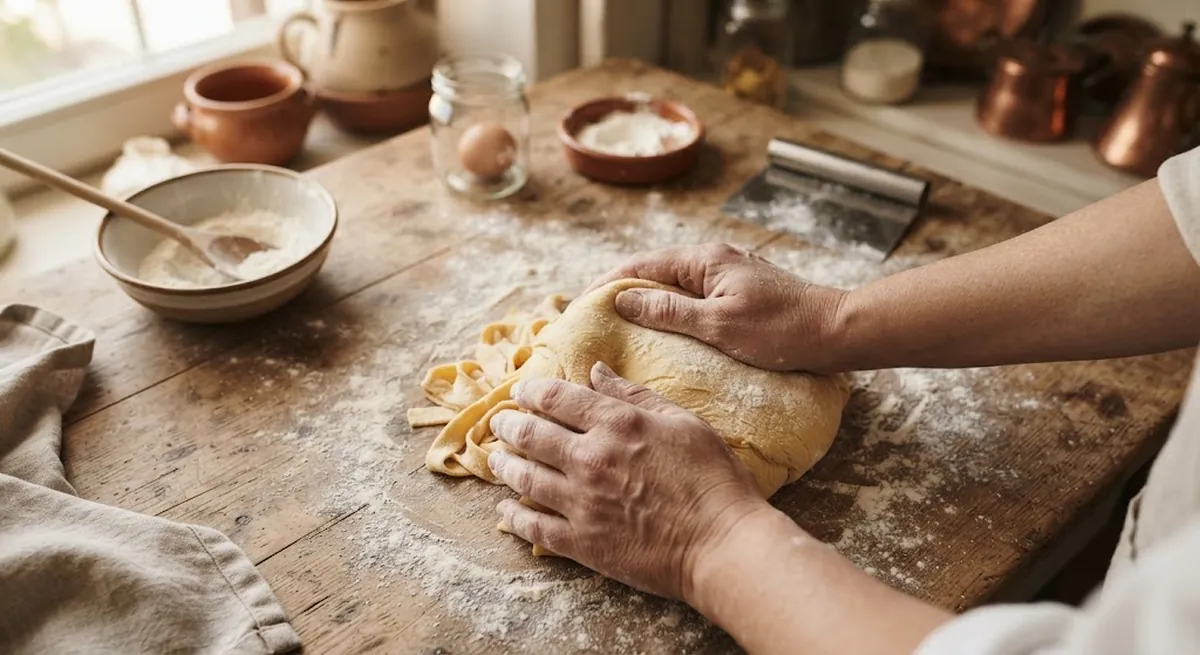
Method: mound the flour, well in the center, crack in the eggs, and gradually incorporate flour from the inner wall with a fork until a shaggy dough forms. Knead by hand 8–10 minutes until smooth and elastic — this step matters more than the machine for final texture, since under-kneaded dough tears in the roller regardless of which pasta maker you use.
Rest before rolling. Wrap the dough and rest it at room temperature for at least 30 minutes; this relaxes the gluten so it rolls thin without springing back or tearing. Skipping the rest is the single most common reason first-time pasta makers fight their machine.
Roll in stages, starting at the widest setting and stepping down one click at a time rather than jumping straight to thin — this is true whether you’re hand-cranking a Marcato or feeding a KitchenAid attachment.
Because fresh pasta dough uses raw eggs, follow standard USDA guidance on safe egg handling — refrigerate dough you’re not rolling immediately, and cook fresh pasta fully before eating (this applies to fresh egg pasta broadly, not to any one machine or brand).
For more on keeping your kitchen tools in good shape between projects, see our guide to small kitchen appliances.
FAQ
Do I need a stand mixer already to buy a pasta attachment?
Yes, functionally. Pasta attachments mount to a compatible stand mixer’s power hub and won’t run without one — you can’t buy an attachment as a standalone motorized unit. If you don’t already own a compatible mixer, a manual machine is the faster and far cheaper path to fresh pasta.
Is a manual pasta maker good enough for beginners?
Yes — a manual machine is arguably the easier starting point, since there’s no compatibility question to research first and the crank mechanism is simple to learn in one or two sessions. Most home cooks who eventually add an attachment start on a manual machine first.
Can any stand mixer use a KitchenAid pasta attachment?
No. KitchenAid attachments are built for KitchenAid’s power hub and fit most full-size household models, but not every KitchenAid variant, and not other mixer brands at all. Always check your specific mixer model against the attachment’s compatibility chart before buying.
How much does a good pasta maker cost?
A reliable manual machine runs roughly $65–$120 depending on brand; a stand mixer pasta attachment runs $90–$180 on top of a mixer that (new) typically costs $280–$450+. Budget-tier options in both categories exist for under $50, with the usual trade-offs in build material and long-term durability.
Key Takeaways
- Among the best pasta makers for home cooks, the real decision is manual vs. attachment, and it hinges on whether you already own a compatible stand mixer — not on which specific model looks nicest.
- If you own a compatible mixer already, an attachment is close to free-rolling and worth the upgrade for hands-free speed.
- If you don’t, a manual machine gets you the same rolled-and-cut result for roughly a third of the cost of buying a mixer from scratch.
- The Marcato Atlas 150 is the safest single manual pick; the Sailnovo is the right call if you’re still testing whether fresh pasta is a habit.
- Attachment sets mean three separate parts to hand-wash — factor that cleanup time in before assuming the attachment is strictly more convenient.
- Rest your dough at least 30 minutes before rolling — it matters more to your results than which machine you buy.
This post contains affiliate links. As an Amazon Associate, Kitchaneers earns from qualifying purchases at no extra cost to you.