Fall Kitchen Refresh: What to Upgrade Before Holiday Season
September is when I start getting the same question every year: “What should I actually replace before the holidays hit?” Between Thanksgiving prep, holiday baking, and a house full of guests, late fall is the worst possible time to discover your blender can’t keep up or your favorite pan has gone patchy. Heads up: some links below are affiliate links, and I may earn a small commission if you buy through them, at no extra cost to you. I only recommend gear that holds up consistently across verified buyer reviews and spec comparisons.
I’m not going to tell you to replace your whole kitchen. Most of what’s in your cabinets right now is fine. This is a short, honest audit of the handful of tools that actually take a beating during the holiday stretch — and the ones worth upgrading now, before you’re relying on them for a dinner with twelve people at the table.
Why a fall kitchen refresh actually makes sense
There’s a practical reason to do this in September or early October rather than the week before Thanksgiving: lead time. If a stand mixer motor is already straining on a single batch of cookies, you don’t want to find that out the morning you’re making four batches for a cookie exchange. Buying now means gear arrives, gets a real test run on an ordinary weeknight, and earns your trust before it’s asked to perform under pressure.
Fall is also when holiday cooking volume changes the math on tools you use daily anyway. A blender that’s fine for a smoothie twice a week gets a very different workout when it’s also puréeing squash soup for a crowd and crushing ice for a pitcher of cider. The gear that’s “good enough” for your normal routine is exactly what gets exposed once the season adds volume.
How to tell what actually needs replacing
Before you buy anything, it’s worth being honest about what’s actually failing versus what just looks a little tired. Across the verified buyer reviews I read for every roundup on this site, the same wear patterns come up again and again, and they’re a useful checklist for your own gear:
- Non-stick coating that’s scratched, flaking, or needs oil for an egg to release. Once the surface is visibly damaged, it’s done — not dangerous in the short term, but it won’t perform, and bits can shed into food. My full breakdown of non-stick lifespan covers the exact signs to look for.
- A blender or mixer motor that bogs down or strains under a normal load. If it’s struggling now, it will struggle more under holiday volume, not less.
- Storage containers with lids that no longer latch, or bases that stay stained and smell like last week’s curry. A leaking container is a matter of when, not if, and holiday leftovers are exactly when you’ll notice.
- Anything you’ve been quietly working around. If you’ve developed a workaround — propping a lid, avoiding a certain recipe, always hand-washing something “just in case” — that’s usually a tool telling you it’s on its way out.
If none of that describes what’s in your kitchen right now, you can skip straight to the checklist at the end and confirm you’re actually in good shape. If one or two items do sound familiar, here’s where I’d spend money before the season gets busy — pulled from the same buyer-review analysis behind my best small kitchen appliances guide.
The 4 upgrades worth making before the holidays
These are the categories that see the biggest jump in use between a normal week and a holiday one, based on the wear patterns and complaint clusters I track across buyer reviews for this site’s appliance and cookware guides.
Your blender, if it can’t handle a full pot of soup

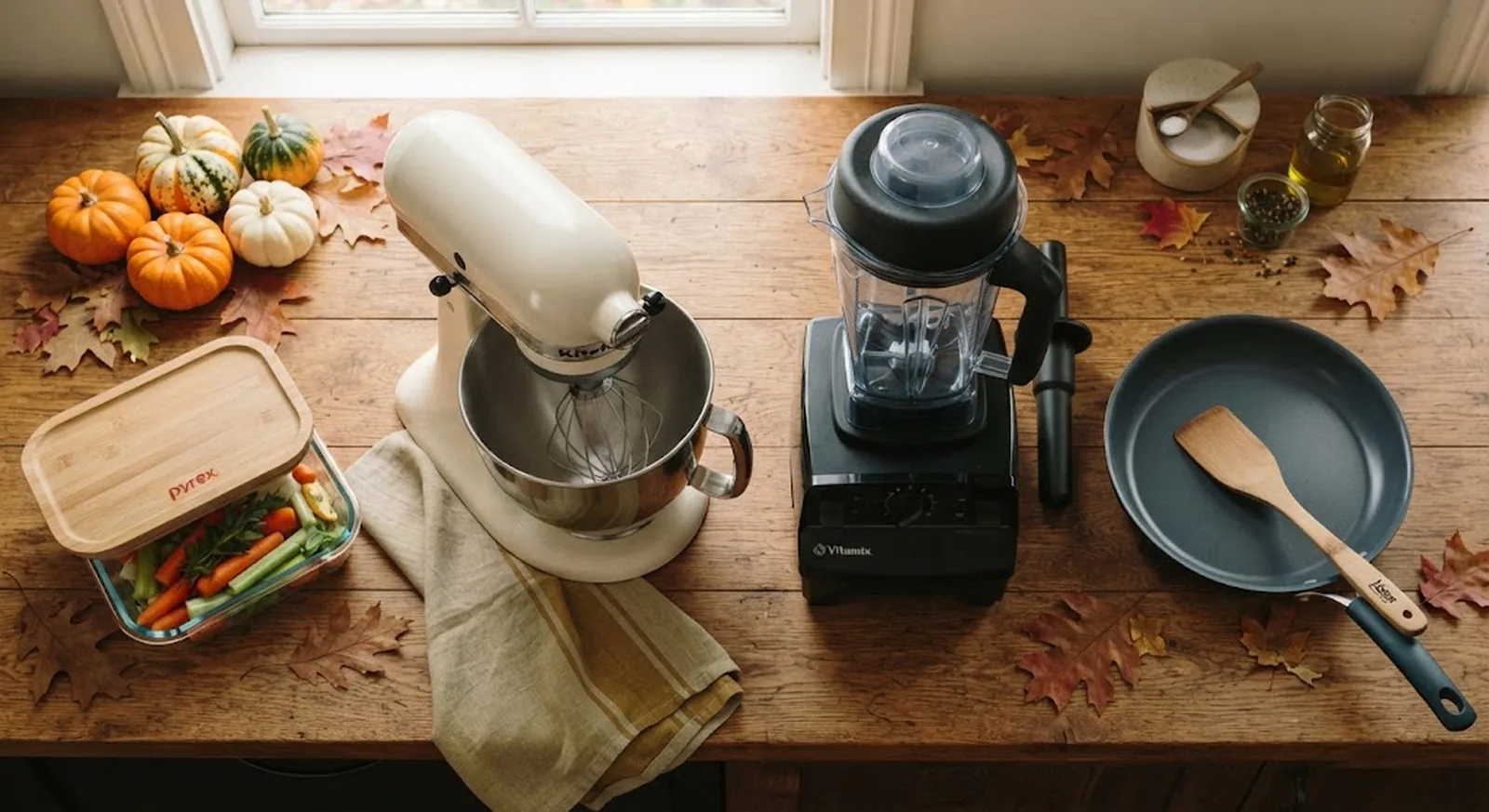
Holiday cooking leans on a blender harder than almost any other appliance — squash and sweet potato soups, cranberry sauce, gravy fixes, cocktail batches for a crowd. If your current blender already stalls on a smoothie, it’s not going to manage a full pot of purée. The Vitamix E310 Explorian is the one I point people toward for this exact upgrade: a variable-speed dial and tamper handle thick, hot mixtures that stall cheaper machines, and the 48-ounce jar is sized for real batches without being too tall for standard cabinets. I walk through the full lineup, including budget options, in my best blenders for home cooks guide.
The honest con: it’s a real investment, and it’s loud under load — not the machine to run early on a morning when guests are still asleep down the hall. If your blending needs are genuinely light, this is more machine than you need.
Your non-stick pan, if it’s flaking or needs extra oil
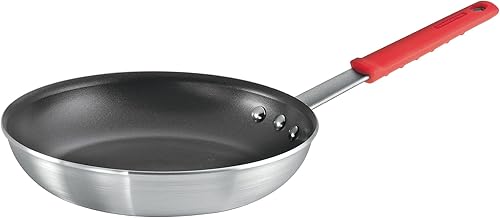
Holiday mornings mean more eggs, more pancakes, more people needing breakfast at once — exactly the job a tired non-stick pan handles worst. If yours already needs a slick of oil for an egg to release cleanly, that’s the coating telling you it’s done, not a sign to cook with more butter. The Tramontina Professional 10-Inch is the pan I recommend most often for this replacement: heavy-gauge aluminum that heats evenly, a reinforced PTFE coating that verified-purchase reviews consistently describe holding up well past a year of daily use, and a price that doesn’t sting if you need to replace two pans instead of one. My full best non-stick pans comparison covers PTFE-versus-ceramic tradeoffs if you want to go a different direction.
The honest con: the handle’s silicone sleeve is only rated for moderate oven heat, so this isn’t the pan to finish a frittata under the broiler. For stovetop egg and pancake duty, though, it’s hard to beat at the price.
Your stand mixer, if holiday baking overwhelms it
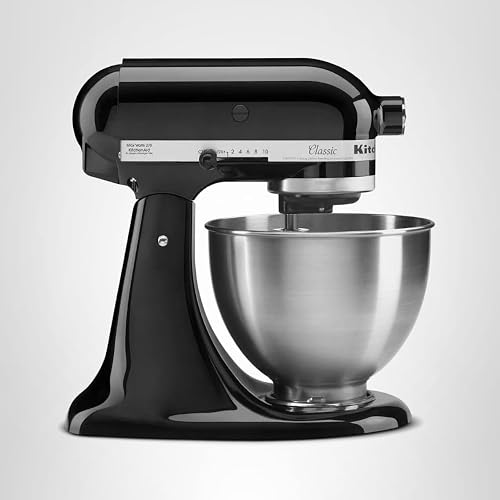
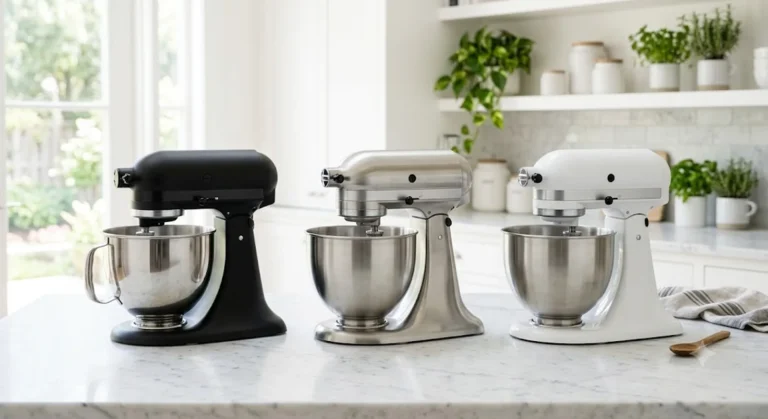
Cookie season is the real stress test for a stand mixer. If yours already labors through a single batch of dough, four batches for a cookie exchange or a double pie crust will not go well. The KitchenAid Classic 4.5-Quart is the upgrade I recommend to most people making this switch — an all-metal gearbox that owners report lasting well over a decade, and it accepts the entire KitchenAid attachment ecosystem if you ever want to add a pasta roller down the line. I compare it against four other price points, including budget options, in my best stand mixers under $300 guide.
The honest con: 4.5 quarts is the smallest bowl in the KitchenAid lineup, so if you regularly double batches or knead stiff bread dough, you’ll be working in rounds. For standard holiday cookie and cake baking, it’s plenty.
Your food storage, before the leftover surge
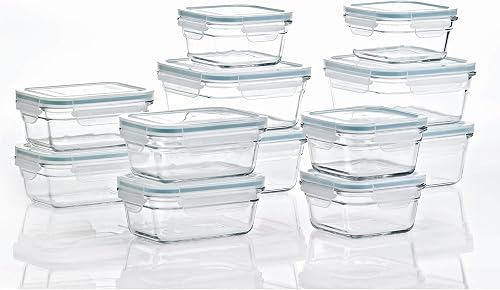
No single day produces more leftovers than a holiday dinner, and a mismatched drawer of lidless containers is the worst possible way to find that out. If your current set is down to three lids that fit nothing, the Glasslock Ring Taper 24-piece set solves it in one purchase: tempered glass bases that go from oven to fridge to microwave, and hinged lids with a silicone gasket that reviewers rate as being on par with far pricier sets. Twenty-four pieces is enough to portion out turkey, stuffing, and pie separately without raiding every cabinet. My full food storage container comparison covers glass-versus-plastic tradeoffs if you want a mixed set instead.
The honest con: the hinged lids are bulky and don’t nest for storage, so 24 pieces takes real cabinet space. If your kitchen is tight, a smaller glass set will serve you better than the full bundle.
How much to budget for a fall kitchen refresh
You almost never need to replace all four categories in the same season — most kitchens have one or two genuine problem spots, not four. Here’s roughly how the categories above stack up by investment level, so you can prioritize if the budget is tight this year.
| Category | Typical spend | Priority if it’s failing |
|---|---|---|
| Food storage set | Lowest of the four | High — cheapest fix, guaranteed to matter within days of hosting |
| Non-stick pan | Low to moderate | High — daily-use item, coating failure only gets worse |
| Stand mixer | Moderate to high | Medium — only urgent if you actually bake through the holidays |
| Blender | Moderate to high | Medium — urgent only if soups, sauces, or batch drinks are part of your holiday cooking |
If you can only fix one thing this year, start at the top of that table and work down. A leaking storage container or a non-stick pan that won’t release an egg causes daily friction; a blender or mixer that’s merely underpowered is an inconvenience you can usually work around for one more season if the budget says wait.
What not to rush into replacing
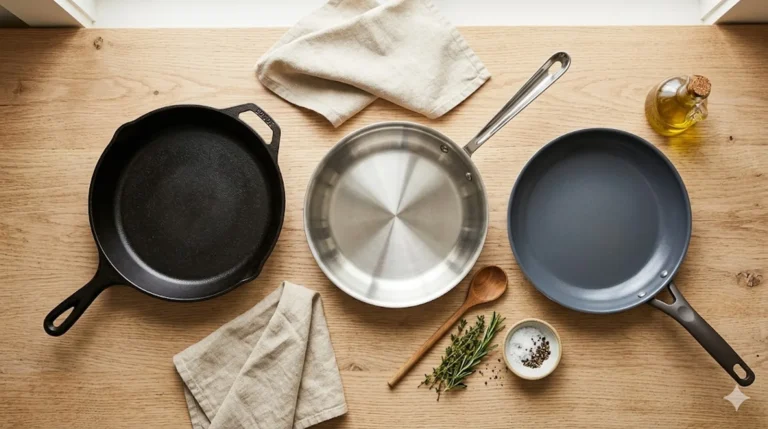
Just as important as the list above is what I’d tell you to leave alone. Cast iron and stainless cookware don’t wear out on a seasonal clock — a cast iron skillet with decades on it is often in better shape than one bought last year, and a quick reseason is cheaper and better than a replacement (my kitchen tool care guide covers the maintenance routine). Knives that feel dull usually just need a sharpening, not a replacement — a $15 pull-through or a trip to a sharpening service solves most “my knives are bad” complaints. And a stockpot, roasting pan, or casserole dish that’s structurally sound but a little scratched up cosmetically is not a priority buy just because it’s not shiny anymore. Save the budget for the tools that are actually failing, not the ones that just look their age.
A simple pre-holiday kitchen audit checklist
Run through this in the next couple of weeks, before holiday cooking starts in earnest:
- Cook one egg in your most-used non-stick pan with no added oil. If it sticks, the coating is done.
- Blend a thick mixture — a smoothie with frozen fruit, or a batch of hummus — and note if the motor bogs down or stalls.
- Run your stand mixer through a full batch of stiff cookie dough and watch whether the head bounces or the motor strains.
- Count how many of your storage containers actually have a matching lid that latches without effort.
- Check your oven mitts and dish towels for thin spots — a burned hand is the one holiday kitchen injury that’s entirely preventable with a $10 fix.
- Sharpen your primary chef’s knife now, rather than fighting a dull blade through a turkey.
If you’re building out a kitchen more broadly rather than patching specific gaps, my kitchen essentials guide lays out a full setup in $100, $200, and $500 tiers.
Frequently asked questions
When should I start a fall kitchen refresh before the holidays?
Late September through mid-October is the sweet spot. It gives new gear time to arrive and get a real test run on an ordinary week, so you’re not learning a new appliance’s quirks while also hosting a dinner for twelve.
What kitchen tools actually need replacing most often?
Based on the wear patterns in verified buyer reviews across this site’s guides, non-stick pans and food storage lids fail most often and most predictably — coatings degrade over two to five years, and gaskets and latches wear out well before the base does.
Is it worth buying a new blender just for holiday cooking?
If your current blender already struggles with everyday jobs, yes — holiday volume (soups, sauces, batch cocktails) will expose that gap further, not less. If it currently handles your normal week without complaint, you likely don’t need to upgrade just for one season.
Do I need to replace cast iron or stainless cookware before the holidays?
Almost never. Cast iron and well-made stainless don’t wear out on a predictable schedule the way non-stick coatings do. A cosmetic issue is rarely a performance issue — a reseason or a good scrub usually solves it.
What’s the single best pre-holiday kitchen upgrade for the money?
For most households, it’s food storage. A set of leak-proof containers is the cheapest item on this list, solves a problem you’re guaranteed to have the day after a big dinner, and has zero learning curve compared to a new appliance.
How do I know if my stand mixer is too small for holiday baking?
If you’re already splitting a single cookie or bread recipe into two batches because the bowl overflows or the motor strains, that’s the sign. A 4.5 to 5-quart bowl comfortably handles most holiday baking without that workaround.
Should I buy new gear online or wait for a holiday sale?
If something is actively failing, don’t wait on a sale — a discount doesn’t help if your pan is unusable at Thanksgiving. Prices on Amazon fluctuate constantly regardless of season, so I’d rather you buy a reliable pick in early October and have it broken in than gamble on timing a deal around a deadline you can’t move.
How many food storage containers do I actually need for the holidays?
Plan for one container per dish you expect to have leftover, plus a few extras for guests taking food home. A 24-piece set like the Glasslock bundle above covers a full holiday spread with room to spare, since most dinners produce five to eight distinct leftover items.
The bottom line
A fall kitchen refresh doesn’t mean replacing everything you own — it means being honest about the two or three tools that are already showing wear and giving them time to prove themselves before the holidays put real pressure on your kitchen. Run the checklist above, replace what’s actually failing, and leave the rest alone. For the wider picture on where each of these fits among your other gear, my best small kitchen appliances guide and kitchen essentials guide cover the full countertop lineup.