Carbon Steel Wok vs. Stainless Steel: Which Should You Buy?
This post contains Amazon affiliate links. If you buy through them, Kitchaneers may earn a commission at no extra cost to you.
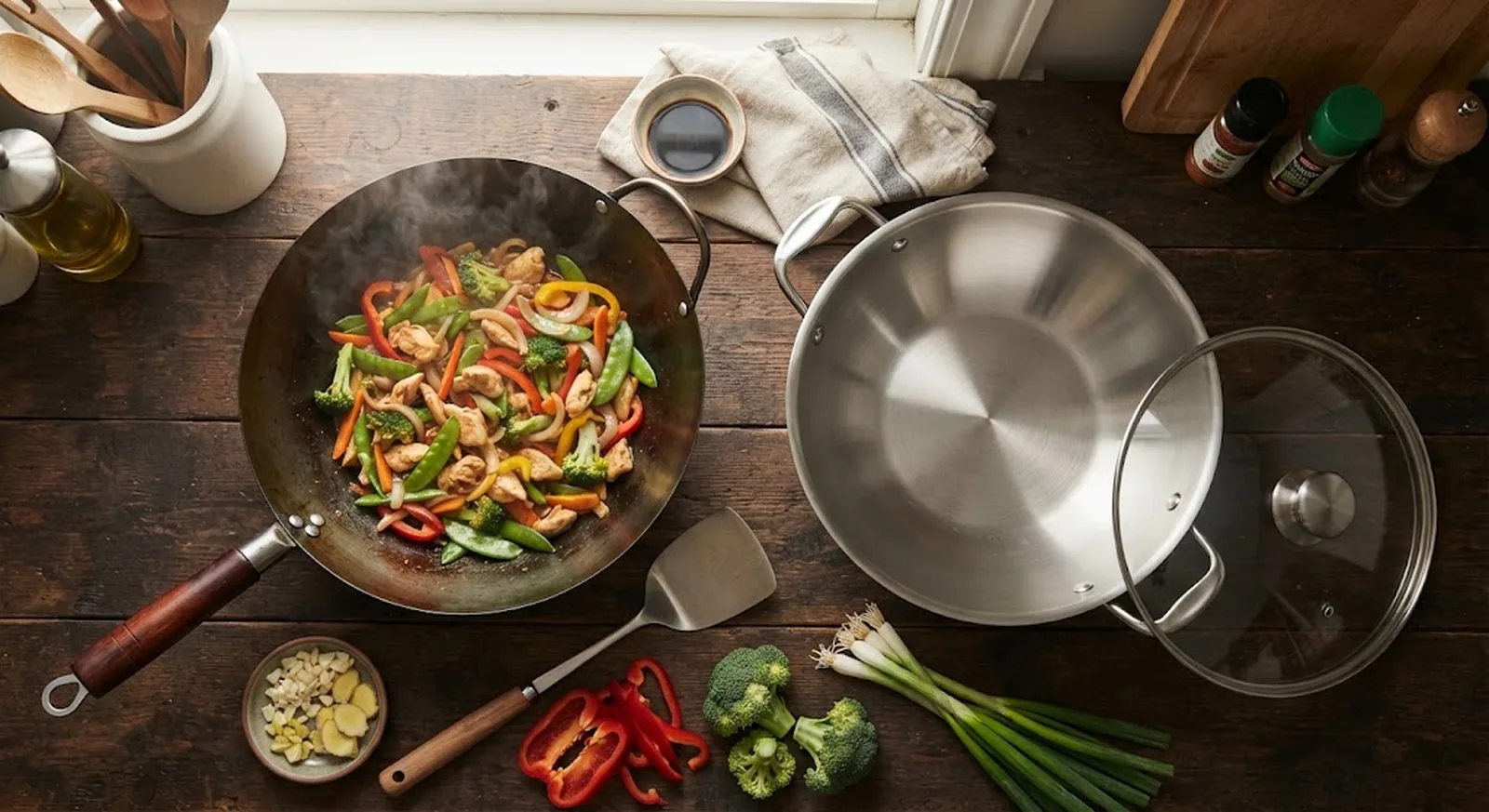
The short version of carbon steel wok vs. stainless steel: carbon steel heats up fast, stays light enough to toss food one-handed, and builds a slick seasoned surface over time — but it needs a few minutes of care after every cook and it hates sitting around with acidic sauce in it. Stainless steel is the opposite trade: heavier, slower to heat, and it needs more oil to keep food from sticking, but you can leave a tomato-based sauce in it overnight and never think about seasoning again. Neither one is “better” — they’re built for different cooking habits, and buying the wrong one is why a lot of woks end up unused in a cabinet.
Carbon steel wok vs. stainless steel wok: quick comparison
| Factor | Carbon steel wok | Stainless steel wok |
|---|---|---|
| Weight | Light — easy to toss | Heavier, more stable on the burner |
| Heat-up speed | Fast, responsive to flame changes | Slower, holds heat once hot |
| Nonstick behavior | Builds a seasoned patina over time | Never nonstick — needs oil every time |
| Acidic food (tomato, vinegar, citrus) | Strips seasoning — avoid long simmers | Handles it with no damage |
| Maintenance | Hand wash, dry, thin oil coat after every use | Dishwasher-safe, essentially zero upkeep |
| Induction compatible | Usually yes (check flat-bottom models) | Yes, standard |
| Typical price range | Budget to mid | Mid to premium |
Why carbon steel heats differently than stainless
Carbon steel is thin — usually 1.2mm to 1.8mm — and nearly pure iron, which means it conducts heat quickly and responds to burner changes almost instantly. That’s the mechanism behind “wok hei,” the slightly charred, smoky flavor you get from high-heat stir-frying: the pan needs to get screaming hot in seconds and cool down just as fast when you pull it off the flame. A single-layer stainless wok is a worse conductor of heat on its own, which is why good stainless cookware is usually layered with an aluminum or copper core — similar to the tri-ply construction we break down in why tri-ply cookware heats more evenly. Without that core, a plain stainless wok develops hot spots and takes longer to recover heat after you add cold ingredients.
Weight and tossing: carbon steel wins for technique
A 14-inch carbon steel wok typically runs 2 to 3 pounds. A comparably sized clad stainless wok can run 4 to 6 pounds once you factor in the aluminum or copper core. That difference matters the moment you try to toss food in the pan instead of stirring it with a spatula — a lighter pan lets you flick ingredients up and over with a flick of the wrist, which keeps them moving through hot oil instead of stewing in one spot. If you’ve read verified-purchase reviews on stainless woks, “too heavy to toss comfortably” is one of the most repeated complaints from home cooks who learned technique on a traditional pan. If a stand mixer or heavy cookware already gives you wrist trouble, that weight difference is worth weighing (reasonably) before you buy.
Seasoning and acidic food: the real dealbreaker
This is where most buyers get burned (sometimes literally). Carbon steel develops its nonstick surface through seasoning — a thin, baked-on layer of polymerized oil, the same process we walk through step by step in how to season a carbon steel pan. That seasoning is durable for everyday stir-fry, but acid breaks it down. A quick splash of rice vinegar at the end of cooking is fine; simmering a tomato-based curry or a sweet-and-sour sauce for 20 minutes will strip the coating and leave you re-seasoning the pan. Stainless steel has no coating to protect, so it shrugs off acidic simmers completely — if your repertoire leans toward Thai curries, tomato-based stir-fries, or sweet-and-sour dishes more than dry high-heat stir-fry, stainless is the lower-maintenance choice by a wide margin.
Cleanup and daily maintenance
Carbon steel asks for a short ritual after every cook: a rinse with hot water (no soap, which strips seasoning early on), a wipe dry over low heat to prevent rust, and a very thin wipe of oil before it’s put away. It’s a two-minute habit once it’s routine, but it is a habit — buyer reviews consistently flag rust spots as the top complaint, and nearly all of them trace back to skipping the dry-and-oil step. Stainless steel needs none of that. It’s dishwasher-safe, doesn’t rust, and tolerates soap and steel wool without any consequence. If the idea of a maintenance routine is a dealbreaker on its own, that alone is reason enough to buy stainless.
Induction and stovetop compatibility
Both materials are magnetic and work on induction, but shape matters more than material here. A traditional round-bottom wok needs a wok ring to sit stably on a flat induction or electric coil surface, while flat-bottom wok models (common in both carbon steel and stainless) sit directly on any stovetop, including induction, without extra hardware. If you’re shopping for an apartment kitchen with an electric or induction range, check for “flat bottom” in the listing title regardless of which material you pick — it matters more than the carbon-vs-stainless decision for whether the pan will actually heat evenly on your stove.
Our picks
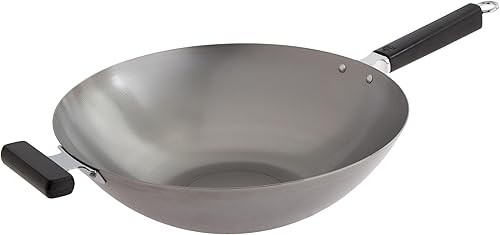
Best carbon steel wok: Joyce Chen Professional Series 14″ Carbon Steel Wok — 1.8mm gauge, phenolic helper handle, consistently praised in buyer reviews for heating up fast without warping. Genuine downside: it ships completely unseasoned, so budget 20–30 minutes for initial seasoning before the first real cook.
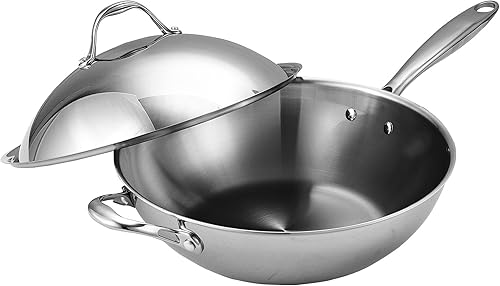
Best stainless steel wok: Cooks Standard 13-Inch Multi-Ply Clad Stainless Steel Wok — aluminum-core construction (the same principle behind tri-ply cookware) for more even heat than single-layer stainless, dishwasher-safe, comes with a glass lid. Genuine downside: noticeably heavier than carbon steel, so one-handed tossing takes more effort.
So which should you actually buy?
Buy a carbon steel wok if you stir-fry often, want restaurant-style high-heat results, and don’t mind a two-minute care routine. Buy a stainless steel wok if you cook a lot of acidic sauces, simmered dishes, or just want a pan you can toss in the dishwasher without thinking about it. If you’re torn, buyer-review patterns suggest most home cooks who actually use their wok weekly end up happier with carbon steel for the cooking results — the maintenance habit becomes automatic within a few uses, the same way it does with a cast iron skillet (see our breakdown of cast iron vs. carbon steel skillet if you’re deciding between those two for a different pan). For general pan and knife upkeep beyond the wok itself, our kitchen tool care guide covers the full routine.
FAQ: Carbon steel wok vs. stainless steel wok
Can I cook tomato sauce in a carbon steel wok?
You can, briefly, but a long simmer will strip the seasoning and require you to re-season the pan. For regular acidic cooking, stainless is the lower-maintenance choice.
Is a stainless steel wok nonstick?
No. Stainless never develops a seasoned coating the way carbon steel or cast iron does, so you’ll need a reasonable amount of oil and enough preheat to avoid sticking.
Which wok is better for induction stoves?
Both carbon steel and stainless are induction-compatible since both are magnetic. The bigger factor is shape: a flat-bottom wok sits directly on an induction surface, while a traditional round-bottom wok needs a wok ring.
Does a carbon steel wok rust?
It can, if it’s left wet or stored without a thin oil coating. Drying it over low heat and wiping on a light film of oil after every wash prevents this almost entirely.
Do I need a wok at all if I already own a stainless skillet?
A wok’s sloped sides make tossing and high-heat stir-frying easier than a flat skillet, but a wide stainless skillet can substitute in a pinch for smaller batches. If you stir-fry more than occasionally, the wok shape earns its cabinet space.