Instant Pot Models Compared: Which Size and Tier Do You Need?
Instant Pot’s lineup has quietly split into two separate decisions that most buying guides mash together: which tier (Duo, Duo Plus, Duo Crisp, or Pro) and which size (3, 6, or 8 quart). Get the tier wrong and you overpay for functions you’ll never touch. Get the size wrong and you’ll either cook for a family of four in a pot built for two, or store a countertop appliance the size of a toddler.
Kitchaneers is reader-supported. As an Amazon Associate, I earn from qualifying purchases made through links on this page, at no extra cost to you.
I get some version of “which Instant Pot should I actually buy” more than almost any other question from readers of my Instant Pot weeknight recipes roundup — usually right after someone’s tried to follow a 6-quart recipe in their 3-quart pot and ended up with soup all over the counter. So this is the guide I wish existed before I owned four different Instant Pots (yes, four — the graveyard drawer isn’t just for smart gadgets). Below: what actually changes between tiers, how to size correctly for your household, and five picks with the one honest downside each carries, grounded in patterns I keep seeing across verified buyer reviews rather than a single afternoon with each box.
Which Instant Pot Tier Actually Fits How You Cook
Every tier above Duo adds functions, but not every added function earns its price bump for every cook. Here’s what actually changes, in the order Instant Pot released them:
- Duo (7-in-1): pressure cook, slow cook, rice, steam, sauté, yogurt, warm. This is the original, and it still covers essentially every recipe you’ll find online — most Instant Pot recipes are written and tested on a Duo.
- Duo Plus (9-in-1): everything the Duo does, plus sous vide and sterilize, with a slightly friendlier control panel and more one-touch programs. The functional gap over the base Duo is genuinely small.
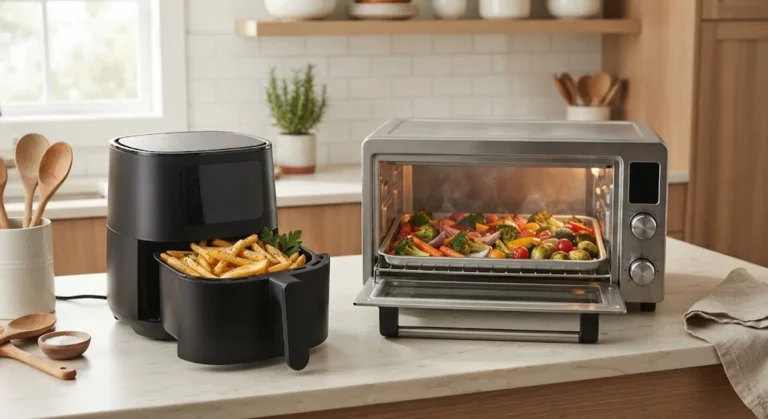
- Duo Crisp (11-in-1): the Duo’s pressure-cooking core plus a swappable air-fryer lid — dehydrate, broil, roast, and bake join the list. This is the only tier that replaces a second appliance (your air fryer) rather than just adding a menu option.
- Pro (10-in-1): a redesigned inner pot that’s easier to lift and clean, a quieter steam-release switch, faster preheating, and an app with guided step-by-step programs. The core cooking functions overlap heavily with Duo Plus — you’re paying for convenience and speed, not new capability.
The pattern that shows up again and again in owner reviews: people who cook from the app and value guided recipes are happy with Pro or Pro Plus. People who just want a reliable pressure cooker and already know how to season a pot roast are just as happy — sometimes happier — with the base Duo, because there’s less interface between them and the “Pressure Cook” button.
How I Compared These
None of this is guesswork or a manufacturer spec sheet reworded. I cross-referenced verified-purchase reviews across all five models below, looking specifically for the complaints and praise that repeat across dozens of owners rather than a single five-star or one-star outlier, then checked those patterns against the official spec differences (wattage, function counts, included accessories) and price-tier positioning. Where a “con” appears in this guide, it’s because it showed up again and again in real ownership — not because I’m required to list one for balance.
Tier Comparison at a Glance
| Tier | Functions | Wattage | Adds over Duo | Price tier |
|---|---|---|---|---|
| Duo | 7-in-1 | 1,000W | — | Budget |
| Duo Plus | 9-in-1 | 1,000W | Sous vide, sterilize | Budget-mid |
| Duo Crisp | 11-in-1 | 1,500W | Air fry, dehydrate, roast, bake | Mid-range |
| Pro | 10-in-1 | 1,200W | Faster preheat, quieter release, guided app | Mid-range |
Which Size Do You Actually Need?
Size matters more than tier for day-to-day satisfaction, and it’s the question buyers get wrong most often — usually by defaulting to “biggest is safest.” It isn’t; an oversized pot needs a minimum liquid volume to build pressure, so a 3-quart recipe cooked in an 8-quart pot can undercook or trigger a false “Burn” warning.
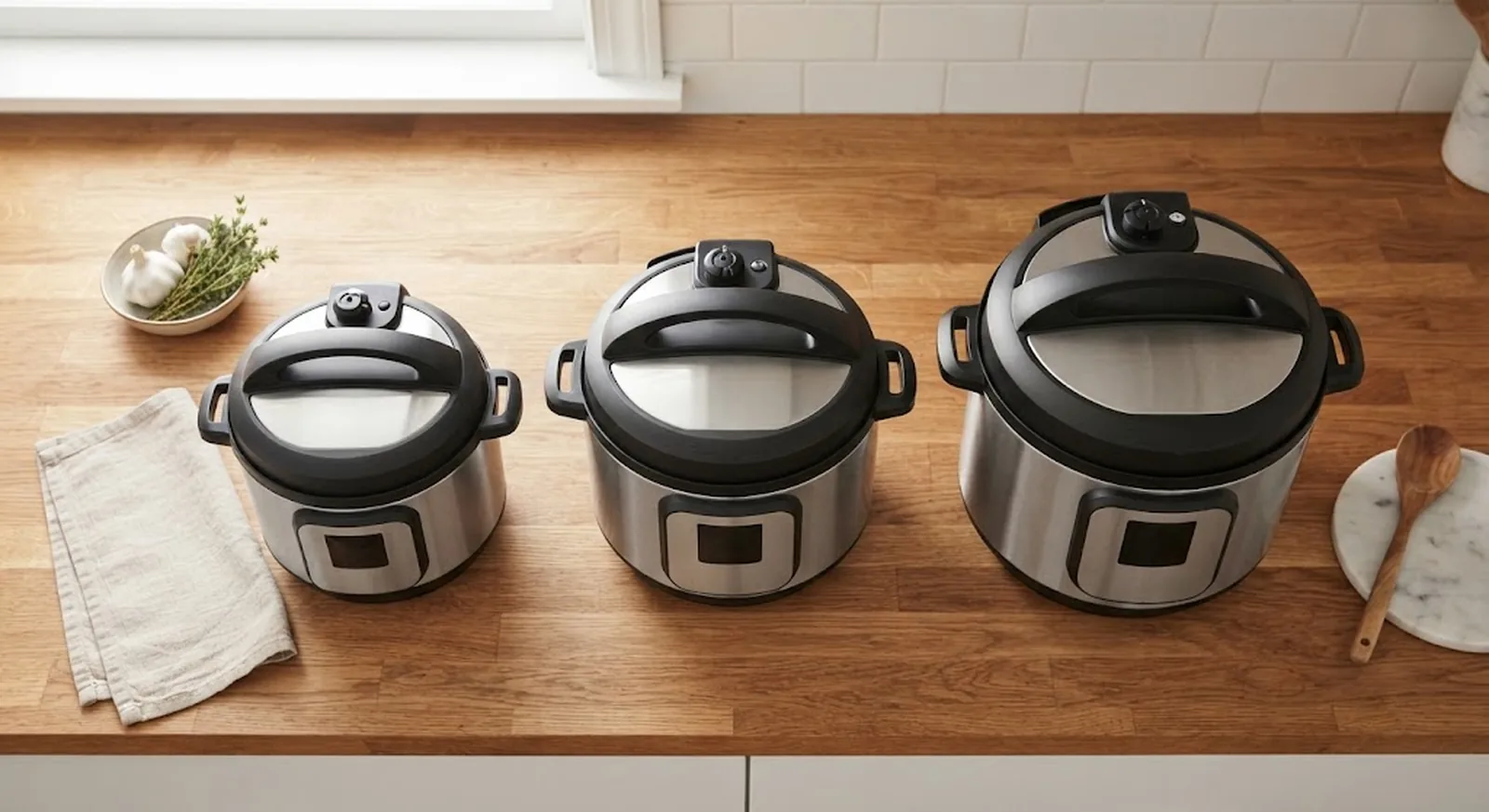
- 3 quart: one to two people, dorm rooms, small kitchens. Enough for a real one-pot dinner with almost no leftovers. Too tight for a whole chicken or a doubled recipe.
- 6 quart: the default size for a reason — fits three to five people, and it’s what nearly every online recipe (including my own weeknight roundup) is written for. If you’re buying your first Instant Pot and you’re not sure, this is the size that removes the most guesswork.
- 8 quart: households of six-plus, regular batch cooking, weekly meal prep, or anyone who wants to double a recipe and freeze half. It also fits a larger bird or roast that a 6-quart simply can’t close around.
One nuance that trips people up: you can usually run a 6-quart recipe in an 8-quart pot (same cook time, since pressure-cook time depends on the food, not the pot), but you can’t safely halve the minimum liquid requirement — check your manual’s minimum-liquid line before scaling down. If you’re still deciding whether a multi-cooker belongs in your kitchen at all rather than a dedicated stovetop pot, my best pressure cookers for beginners guide walks through that fork first.
Who Should Skip the Upgrade
Not every cook needs to climb the tier ladder, and the honest answer is that most don’t. Skip Duo Plus, Duo Crisp, and Pro if any of this sounds like you:
- You already own a decent air fryer — Duo Crisp’s headline feature duplicates an appliance you have.
- You cook mostly from memory or printed recipes rather than an app — the guided-recipe upsell on Pro and Duo Plus won’t get used.
- You make yogurt or sous vide rarely, if ever — those two functions are the entire functional gap between Duo and Duo Plus.
- Counter space or budget is tight — the base Duo does 90% of what a first-time buyer actually needs, and the recipe compatibility is effectively universal since it’s what most recipes are tested on.
If none of that describes you — you want one appliance to replace three, or you genuinely cook from the app every week — the upgraded tiers below earn their price. Reviewers who upgrade and regret it almost always cite the same reason: they bought the feature list, not their actual weekly routine.
Recipe Compatibility: Why It Matters More Than Feature Count
Here’s a detail most spec-sheet comparisons skip entirely: recipe availability isn’t equal across tiers. Because the base Duo has been on the market the longest and sold in the highest volume, the overwhelming majority of Instant Pot recipes online — blog recipes, cookbook recipes, and the recipe cards printed on ingredient packaging — assume a Duo-style pot with standard pressure-cook, sauté, and slow-cook functions. Every tier above it inherits that same compatibility, since Duo Plus, Duo Crisp, and Pro are all supersets of the base functions. The only place compatibility gets tricky is in reverse: a recipe written specifically for Duo Crisp’s air-fryer lid, or Pro’s app-guided sous vide program, won’t translate back down to a plain Duo. Practically, that means buying up in tier never locks you out of a recipe, but buying a specialty recipe for a specialty function will lock you into needing that tier’s hardware.
Sizing works the same way in one direction only: 6-quart recipes scale up into an 8-quart pot without changing the pressure-cook time, but they don’t reliably scale down into a 3-quart pot without hitting the minimum-liquid floor. If sizing is the part you’re still unsure about, that’s worth settling before tier — it changes your day-to-day cooking far more than which extra buttons are on the lid.
5 Picks With the Honest Downside of Each
1. Instant Pot Duo 7-in-1 (6 Quart) — Best Budget Pick

The 6-quart Duo is still the model I point first-time buyers toward, because recipe compatibility is effectively universal — if a recipe says “Instant Pot” with no other qualifier, it was almost certainly tested on this one. Seven functions cover pressure cook, slow cook, rice, steam, sauté, yogurt, and warm, and the control panel is simple enough that most owners stop needing the manual after the first week.
The genuine con: the included recipe booklet is thin and there’s no app-guided cooking, so you’ll lean on outside recipes from day one. For the price and the near-universal recipe compatibility, that’s a trade I’d make again.
2. Instant Pot Duo Plus 9-in-1 (6 Quart) — The Sweet Spot

If you want a small step up from the base Duo without jumping all the way to an air-fryer combo, Duo Plus is where I’d land. Sous vide and sterilize are genuinely useful additions if you ever cook proteins low-and-slow or need to sanitize baby bottles and canning jars, and the control panel adds a handful of one-touch programs (cake, egg) that save a little guesswork.
The genuine con: the functional gap over the plain Duo is small — if you never touch sous vide or sterilize, you’re paying extra for two menu buttons you won’t press. Buy this one specifically for those two functions, not as a default “better” Duo.
3. Instant Pot Duo Crisp 11-in-1 (6 Quart) — Best Two-Appliance Combo
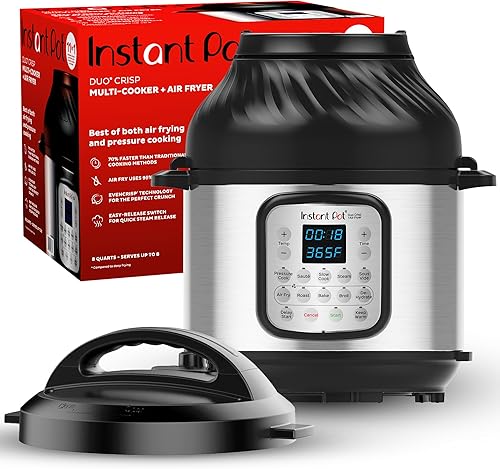
This is the one tier that isn’t really “Duo plus extra menu options” — the swappable air-fryer lid makes it a genuinely different appliance, and it’s the pick for a small kitchen that needs to retire a separate air fryer. Pressure-cook a pot roast, then crisp the potatoes in the same base with the air-fryer lid, no second appliance and no second footprint on the counter.
The genuine con: you’re swapping lids between functions, which means you can’t pressure cook and air fry at the same time the way two separate appliances would let you, and the two-lid design takes more cabinet space to store than a single-lid pot. Reviewers who dislike it almost always cite lid storage, not cooking performance.
4. Instant Pot Pro 10-in-1 (6 Quart) — Best for App-Guided Cooking

The Pro’s redesigned inner pot is genuinely easier to lift and wash than the older Duo pot, the steam-release switch is noticeably quieter (a real complaint about older models, resolved here), and preheating is faster — the kind of small daily-use improvements that add up. Owners who cook from the companion app’s guided programs mention it as the feature that made them stop second-guessing cook times.
The genuine con: the core cooking functions overlap heavily with Duo Plus, so if you don’t plan to use the app’s guided recipes, you’re mostly paying for a nicer pot and a quieter valve rather than new capability. Worth it for daily users who value the ergonomics; skippable if you already have a Duo Plus you’re happy with.
5. Instant Pot Duo 7-in-1 (8 Quart) — Best for Batch Cooking

Same reliable Duo core, sized up for households of six-plus or anyone who wants to double a recipe and freeze the second half without babysitting a smaller pot through two batches. It fits a bigger bird and a full pot of stock that the 6-quart simply can’t hold, which matters if weekly batch cooking is the whole reason you’re buying a multi-cooker.
The genuine con: it’s noticeably bigger on the counter and heavier to move, and a handful of small-batch recipes (a single chicken breast, a cup of rice) work less well because the minimum-liquid requirement is higher. If you cook for one to three people most nights, the 6-quart will serve you better even if 8 quart feels like “more house for the money.”
FAQ: Choosing an Instant Pot
Is the Instant Pot Pro worth the extra cost over Duo Plus?
Only if you actually use the app’s guided recipes or you’ll notice the quieter steam release and easier-to-lift pot in daily use. The two tiers share nearly identical core functions, so the Pro’s premium buys ergonomics and app polish, not new cooking capability.
Can I use 6-quart recipes in an 8-quart Instant Pot?
Yes — cook time depends on the food, not the pot size, so a 6-quart recipe will pressure-cook the same in an 8-quart pot. Just don’t try the reverse: shrinking a recipe written for 8 quart down to 3 quart can fall below the minimum liquid needed to build pressure.
What’s the real difference between Duo and Duo Plus?
Two functions: sous vide and sterilize, plus a slightly friendlier control panel with a few extra one-touch programs. If neither of those two functions appeals to you, the base Duo does everything else identically for less money.
Do I need the air fryer lid (Duo Crisp), or can I buy them separately?
If you already own a good air fryer, skip Duo Crisp and buy a plain Duo or Duo Plus instead — you’ll save money and counter space. Duo Crisp earns its price specifically for small kitchens that need one appliance to do both jobs, not as an upgrade for kitchens that already have both.
Is a 3-quart Instant Pot too small for a couple?
It depends on how you cook. For genuine one-pot dinners with minimal leftovers, 3 quart works fine for two people. But if you like doubling recipes for lunch the next day, want to cook a whole chicken, or plan to host occasionally, the 6-quart gives you that flexibility for a modest price difference and far more recipe headroom.
Does higher wattage mean faster cooking?
Mostly it means faster preheating, not faster pressure-cook times — the cook time on any given recipe is set by the food, not the pot’s wattage. Where wattage matters most is the air-fryer function on Duo Crisp (1,500W), since air frying is closer to a real oven in how directly it depends on heating power.
The Bottom Line
Size first, tier second. Get the 6-quart unless you’re cooking for one or two (go 3-quart) or six-plus and batch cooking weekly (go 8-quart) — that decision affects your daily cooking more than any feature list. Then match the tier to a function you’ll actually use: Duo if you just want a reliable pressure cooker, Duo Plus for sous vide or sterilizing, Duo Crisp if it’s replacing your air fryer too, and Pro if you genuinely cook from a guided app. If you’re building out a full weeknight rotation once your pot arrives, my 20 Instant Pot recipes for weeknight dinners is the natural next stop, and if you’re still weighing whether a multi-cooker or a slow cooker fits your routine better, my slow cookers vs. multi-cookers comparison walks through that fork too.