Best Electric Kettles Under $50 (Tested for Speed)
This post contains affiliate links. As an Amazon Associate, I earn from qualifying purchases at no extra cost to you.
In short: wattage and fill volume decide boil speed more than brand name does. A 1500W glass kettle filled with a couple cups of water boils in under 3 minutes; a 1100W budget model filling a full 1.5L carafe can take closer to 7. If you make tea or coffee for one or two people most mornings, pay for the extra wattage. If you’re mostly boiling a big batch and don’t mind the wait, the cheaper 1100W option still gets the job done. Not sure electric is even the right category for you? See our stovetop vs. electric kettle comparison first.
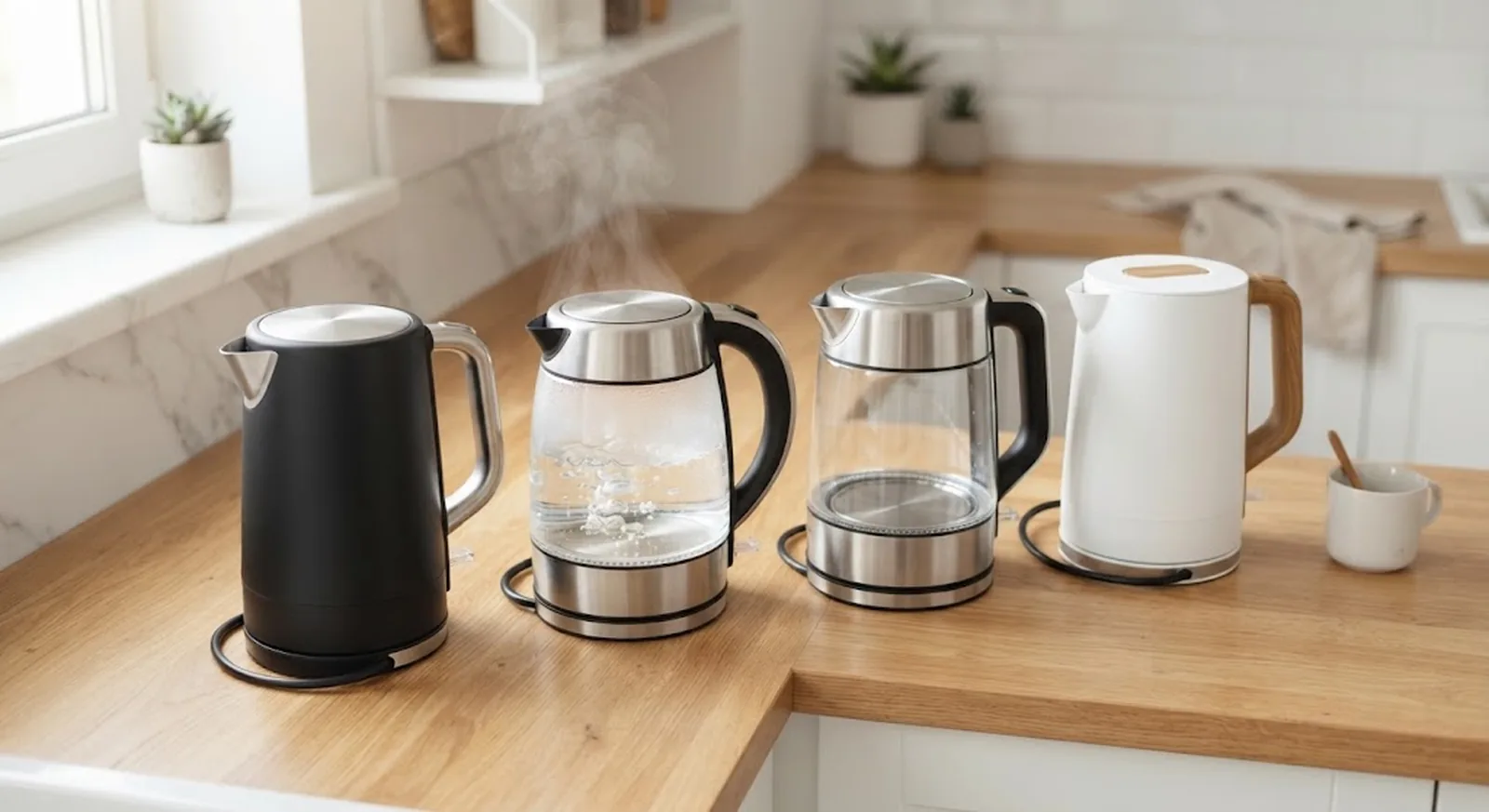
I get asked some version of “which cheap kettle actually boils fast” a lot, usually from someone replacing a kettle that died after a year. Based on manufacturer spec sheets and recurring patterns in verified buyer reviews across four sub-$50 glass kettles, here’s how they actually compare — plus what’s worth a genuine complaint on each one.
What Actually Makes a Budget Kettle Fast
Wattage is the biggest lever. At the same fill level, a 1500W element moves more energy into the water per minute than a 1100W one, so it reaches a boil sooner — that tracks with how electric heating elements work, not marketing copy. Fill volume matters just as much: boiling 2 cups in a 1500W kettle is a different task than boiling a full 1.5L carafe in the same kettle, and roundup claims like “boils in 3 minutes” almost always refer to the smaller fill.
The other spec worth checking is what’s actually touching your water. Borosilicate glass with no plastic in the fill path is the standard on every kettle below, which matters for taste more than speed — budget kettles with a painted metal or plastic interior are the ones that show up in reviews complaining about a “chemical” taste in the first few weeks.
Boil Speed and Price at a Glance
| Kettle | Wattage | Capacity | Price | Boil Speed (per spec) |
|---|---|---|---|---|
| Cosori Electric Kettle | 1500W | 1.7L | $27.99 | ~3 min for 2 cups (0.5L) |
| Chefman Electric Kettle | 1500W | 1.8L | $27.99 | ~3 min for a similar small fill |
| Amazon Basics Electric Kettle | 1500W | 1.7L | $25.99 | Fast boil, Strix thermostat control |
| OVENTE KG83W | 1100W | 1.5L | $24.99 | ~7 min for a full 1.5L fill |
Prices shown reflect listing prices at the time of research and change often — check the listing for today’s price.
My Picks
Fastest for a Quick Cup: Cosori Electric Kettle

Cosori Electric Kettle‘s 1500W element is rated to boil 2 cups in under 3 minutes, and the no-plastic-contact design keeps it off the “chemical taste” complaint list I see on cheaper kettles. The wide mouth makes it easy to clean, and auto shut-off kicks in within 30 seconds of a full boil. The genuine con: at 1.7L, filling it all the way up for a big batch takes meaningfully longer than the 2-cup spec implies — this is a kettle built for speed on small fills, not for boiling a full carafe fast.
Most Reviewed for Reliability: Chefman Electric Kettle
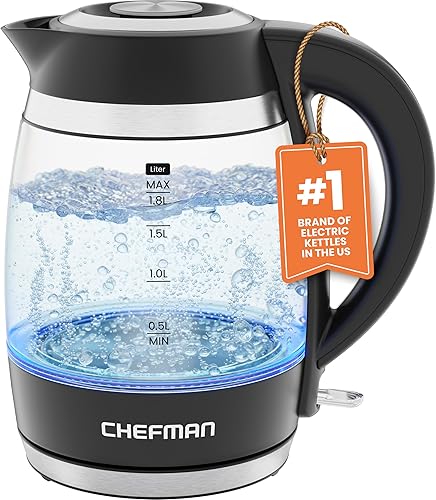
Chefman Electric Kettle matches the Cosori’s 1500W fast-boil spec, with a slightly larger 1.8L capacity and a removable lid that buyers consistently call out as easier to clean than kettles with a fixed spout cap. The 360-degree swivel base and drip-free spout show up often in reviews from people who’d been annoyed by a previous kettle’s mess. The con worth knowing: the blue LED ring is bright enough that a few reviewers mention it’s distracting in a dark kitchen at night — not a dealbreaker, but worth knowing before it’s on your counter.
Best All-Around Value: Amazon Basics Electric Kettle
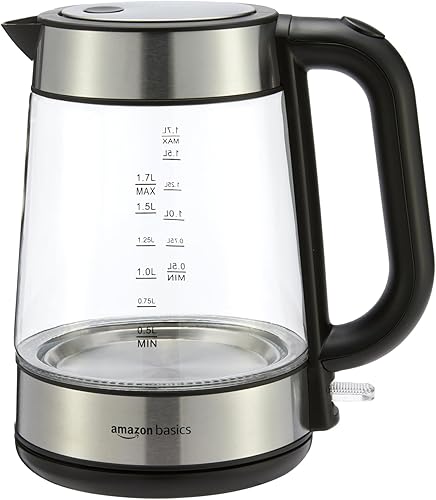
At $25.99, the Amazon Basics Electric Kettle is the cheapest of the 1500W options here, and it’s the only one in this lineup with a Strix thermostat — the same component used in far more expensive kettles for accurate shut-off timing. The water level indicator is a small thing that shows up repeatedly in positive reviews because it’s genuinely missing from some competitors. The con: it’s the most plastic-forward of the four on the exterior housing (the water path itself is BPA-free glass), so it doesn’t feel as premium in hand as the Cosori or Chefman.
Budget Pick If Speed Isn’t the Priority: OVENTE KG83W

The OVENTE KG83W is the cheapest kettle here and the only 1100W model, which is the honest reason it’s slower — about 7 minutes for a full 1.5L fill per the manufacturer’s own numbers, versus the 3-minute claims on the 1500W kettles above (for a smaller fill, to be fair). Buyers who aren’t in a rush point to the 2-year warranty and removable filter as reasons it’s still worth considering. The con is the one already mentioned: if your main complaint about your old kettle was that it’s slow, this isn’t the fix.
Do You Need a Gooseneck Kettle Instead?
If you’re buying a kettle specifically for pour-over coffee, none of the four above are the right tool — a gooseneck’s narrow, curved spout gives you the slow, controlled stream pour-over needs, while a standard wide-mouth kettle like these will splash and over-pour. Gooseneck kettles also tend to run smaller (one or two cups) and often add variable temperature control, which matters more for pour-over and green tea than raw wattage does. I cover dedicated options in my best pour-over coffee setups under $100 roundup. If you’re just boiling water for tea, instant coffee, oatmeal, or a French press, a standard kettle like the four above is the simpler and usually cheaper choice.
FAQ
Is a 1500W kettle worth it over a 1100W one?
If you boil water daily for one or two cups, yes — the time difference adds up over a year of mornings. If you’re an occasional user filling a full carafe for a crowd, the gap matters less.
Do glass kettles affect how water tastes?
Borosilicate glass itself doesn’t add flavor, which is why all four kettles here use it. Taste complaints in reviews almost always trace back to a plastic or painted-metal interior, not glass.
How long does a budget electric kettle usually last?
Owner reviews on this price tier commonly mention 2–4 years of regular use before the heating element or auto shut-off starts to fail — in line with what you’d expect at this price, and worth keeping in mind versus a pricier kettle with a longer track record.
Key Takeaways
- Wattage (1500W vs. 1100W) is the main driver of boil speed at this price point — fill volume changes the real-world number more than any single spec claim.
- The Cosori, Chefman, and Amazon Basics kettles are functionally similar 1500W performers; pick based on capacity and design details.
- The OVENTE is the budget pick if speed isn’t your priority — slower, but still a competent $24.99 kettle.
- Skip all four if you specifically want pour-over coffee — a gooseneck kettle is the better tool for that job.
For the rest of your countertop lineup, my best small kitchen appliances roundup covers the other essentials, and if coffee is the main reason you’re boiling water, best coffee makers for home baristas breaks down brew methods beyond the kettle itself.