Hand Mixer vs. Stand Mixer: Which Should You Actually Buy?
Kitchaneers is reader-supported — if you buy through a link on this page, I may earn a commission at no extra cost to you.
Every time I dig into buyer reviews for mixers, I see the same regret pattern twice a year: someone bought a stand mixer that’s been sitting under a cabinet for a year, or someone bought a hand mixer and is now hand-kneading bread dough on a cutting board because the motor can’t handle it. A hand mixer vs. stand mixer decision isn’t about which one is “better” — it’s about which one matches how often you actually bake and what you make. Here’s how to tell the difference before you spend the money, using patterns pulled from real buyer feedback rather than spec-sheet marketing.
The real difference between a hand mixer and a stand mixer
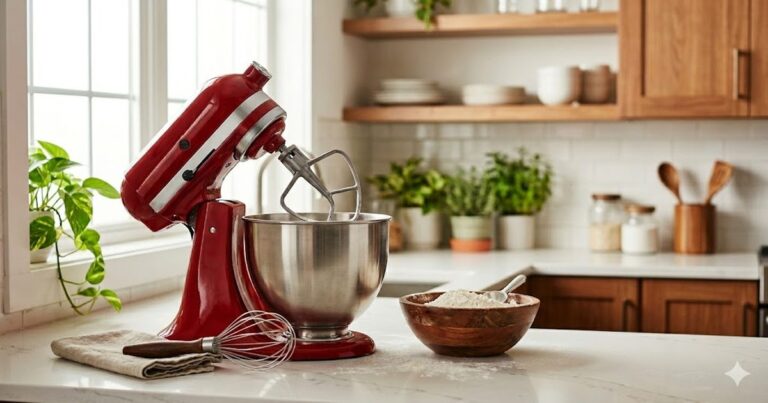
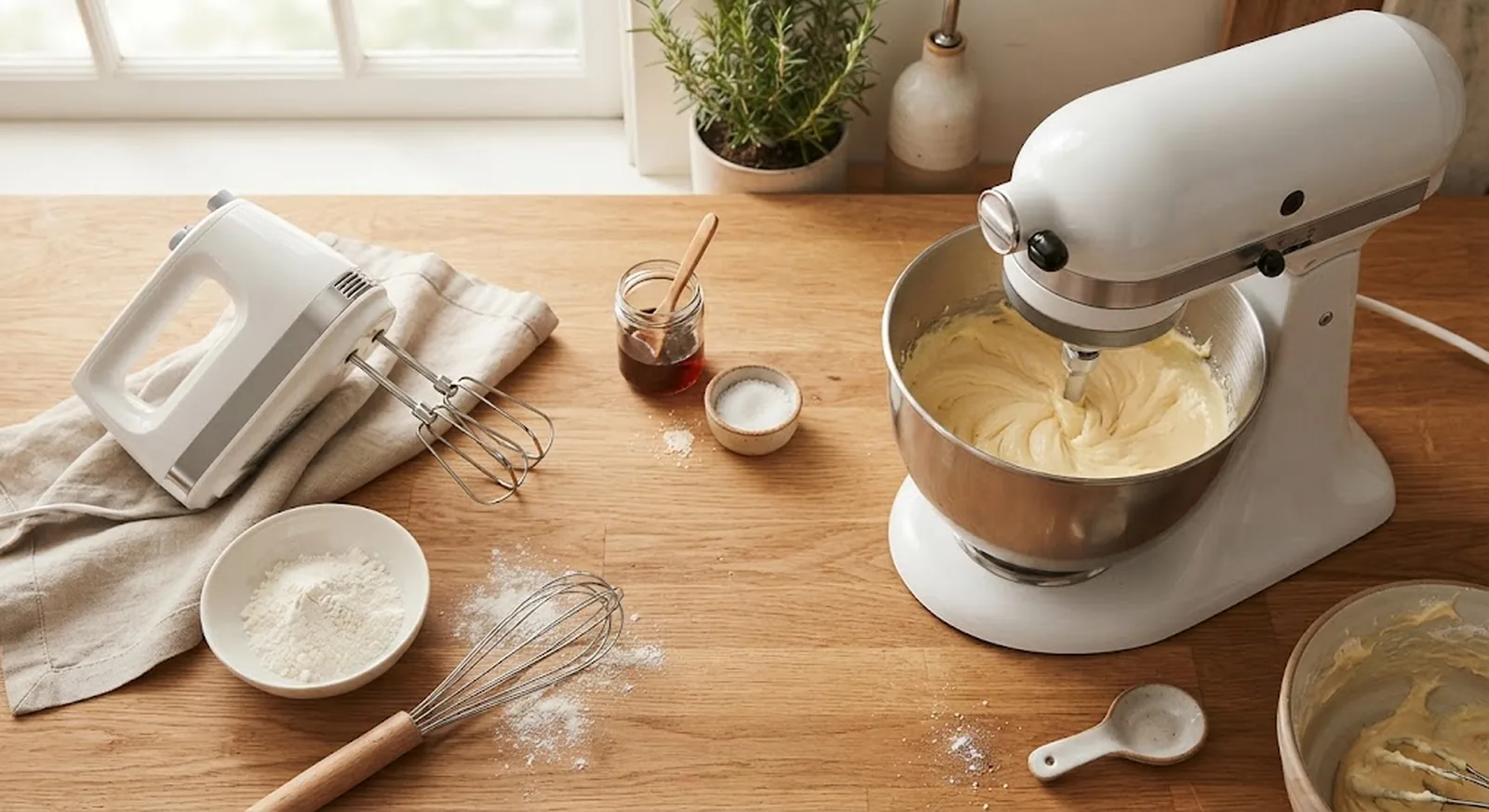
A hand mixer is a lightweight, handheld tool with two beaters that you hold and move through a bowl yourself. It’s built for quick jobs — whipping cream, beating eggs, mixing cake batter, making frosting — and it stores flat in a drawer. A stand mixer is a countertop appliance with a fixed motor head and a bowl that locks in place. You load the bowl, pick a speed, and walk away while it mixes hands-free. That difference — you holding the tool vs. the tool holding itself — is what actually drives every other tradeoff between them: power, price, storage, and what recipes each one can handle.
Recurring patterns across verified-purchase reviews make the split pretty consistent: hand mixer buyers are happiest when they bake occasionally and want something they can rinse and put away in 30 seconds. Stand mixer buyers are happiest when they bake often enough that hands-free mixing and dough-handling power actually get used — otherwise it becomes an expensive counter ornament, which is one of the most common complaints in negative stand mixer reviews.
What long-term owners say after a year of actual use
One-month reviews and one-year reviews tell noticeably different stories, and it’s worth reading both. In the first month, almost every mixer gets praised — it’s new, it works, the box was exciting. The reviews that matter more are the ones left six months to two years in, because that’s where the real use-case mismatches surface. For hand mixers, the recurring long-term complaint is motor strain from being used on jobs it was never built for — cookie dough that’s a little too stiff, bread dough attempted out of frustration with a stand mixer’s price tag. The recurring long-term praise is about how often the thing actually gets pulled out: buyers who bake casually report using a hand mixer weekly, sometimes more, precisely because it’s fast to grab and fast to clean.
For stand mixers, the long-term pattern splits cleanly in two. Frequent bakers — people making bread, pizza dough, or large batches on a regular basis — consistently report the mixer earning its keep, with motor reliability holding up over years of use. Occasional bakers, on the other hand, are the ones who write the “I wish I’d bought a hand mixer instead” reviews eighteen months later, once the novelty wears off and the counter space starts to feel like a cost. That split is the single most useful thing buyer reviews reveal, and it maps directly onto the decision framework below.
Hand mixer: pros and cons
- Costs far less than a stand mixer
- Small enough to store in a drawer — no dedicated counter space
- Lightweight (usually 2–3 lbs), easy to use one-handed
- Easy to clean — beaters pop off and go in the dishwasher
- Fine for whipped cream, eggs, cake batter, frosting, pancake batter
- You have to hold and move it the whole time — tiring for long mixing jobs
- Motors are smaller (typically 200–300 watts), so stiff cookie or bread dough can bog them down or overheat the motor
- No hands-free operation — you can’t walk away mid-mix
- No power hub for attachments like pasta rollers or meat grinders
A recurring complaint in negative hand mixer reviews is motor burnout from being used on dough it wasn’t built for — that’s a use-case mismatch, not necessarily a bad product. If you check buyer feedback on any hand mixer’s stiff-dough performance, the pattern is consistent: fine for cookie dough in small batches, not built for yeasted bread dough.
Stand mixer: pros and cons
- Hands-free — start it and walk away
- Stronger motors handle stiff bread dough, large batches, and long mixing times without strain
- Expandable — most models have a front power hub for pasta rollers, meat grinders, spiralizers, and more
- Bigger bowl capacity for doubled recipes or big holiday-baking batches
- Doubles as a stand for whipping/aerating jobs where consistent speed matters
- Costs several times more than a hand mixer
- Heavy (often 15–25+ lbs) and takes permanent counter space, or storage space if you don’t leave it out
- Overkill for someone who bakes a few times a year
- More parts to clean, and the bowl itself is bulky to wash by hand
The most common regret pattern in stand mixer reviews isn’t about the mixer underperforming — it’s buyer’s remorse over counter space and a machine that gets used a handful of times a year. If you’re weighing whether a stand mixer is worth it for how you actually bake, that’s the question to answer honestly before you buy, not after.
Hand mixer vs. stand mixer: side-by-side comparison
| Hand Mixer | Stand Mixer | |
|---|---|---|
| Price tier | Budget to mid-range | Mid-range to premium |
| Motor power | ~200–300W typical | ~275–500W+ typical |
| Operation | Handheld, you move it | Hands-free, bowl-mounted |
| Storage | Fits in a drawer | Needs counter or cabinet space |
| Best for | Whipped cream, eggs, cake batter, frosting | Bread dough, large batches, long mixing times |
| Attachments | Beaters, whisk, sometimes dough hooks | Full ecosystem — pasta, grinder, spiralizer via power hub |
| Weight | 2–3 lbs | 15–25+ lbs |
| Cleanup | Fast — beaters are dishwasher-safe | Bulkier — bowl and attachments take more effort |
Cost of ownership: what you’re actually paying for
The sticker price is only part of the comparison. A hand mixer is a low-commitment purchase — if it turns out you don’t bake as much as you thought, you haven’t lost much. A stand mixer is a higher-commitment purchase in more than one sense: the machine itself costs more, but so do the attachments if you go that route, and a bowl-lift model or a larger-capacity bowl adds to that further. The upside is that a stand mixer, used regularly, tends to be the cheaper option per use over several years — frequent bread bakers who run the math usually find it pays for itself in saved time and consistent results. The math only works in your favor if the frequency is actually there; a stand mixer used twice a year is the most expensive whipped-cream tool most kitchens will ever own.
Replacement parts are worth factoring in too. Hand mixer beaters are cheap and easy to replace if they wear out or go missing. Stand mixer bowls, whisks, and dough hooks cost more individually, though they also tend to last longer under normal use — metal attachments on a stand mixer typically outlive several generations of a hand mixer’s plastic housing.
Which should you actually buy? A decision framework
You bake a few times a month, mostly simple recipes
A hand mixer covers this completely. Cake batter, whipped cream, buttercream, pancake batter, egg whites — none of that needs a stand mixer’s power or hands-free operation, and you’ll be glad you didn’t give up drawer space for a machine that sits idle most weeks.
You bake bread, pizza dough, or bagels regularly
This is the clearest case for a stand mixer. Kneading stiff yeasted dough is exactly the job hand mixers struggle with — the motor either can’t handle the resistance or the beaters just can’t do what a dough hook does. If bread is a regular thing in your kitchen, a stand mixer earns its counter space fast.
You live somewhere small, or move often
A hand mixer wins on practicality alone. Apartment kitchens and small counters don’t always have room for a stand mixer to live out permanently, and packing a 20-lb appliance for a move is its own kind of chore. If counter space is tight, check our small kitchen appliances guide for more space-conscious picks.
You want to eventually use attachments (pasta, grinding, spiralizing)
That ecosystem only exists on stand mixers with a front power hub. If you can see yourself wanting a pasta roller or meat grinder attachment down the line, buying the stand mixer now — rather than upgrading from a hand mixer later — saves you from paying twice. We cover which attachments are actually worth adding in our stand mixer attachments guide.
You bake for a crowd, or ramp up during the holidays
Large batches are where hand mixers show their limits fastest — a bigger batch means more mixing time, and more mixing time is exactly what strains a small motor and tires your arm. If your baking spikes around the holidays or you regularly cook for a crowd, a stand mixer’s bigger bowl and hands-free operation solve a real problem rather than adding convenience for its own sake.
You’re buying this as a gift
Match the gift to what you actually know about the recipient’s baking habits, not to which one looks more impressive unwrapped. A stand mixer is a memorable gift for someone who already bakes often and has mentioned wanting one; for a casual or new baker, a good hand mixer is more likely to get used and less likely to become a guilt-inducing counter fixture.
Budget is the deciding factor
A hand mixer gets you most of the everyday functionality at a fraction of the cost. If a stand mixer isn’t in the budget right now, a hand mixer isn’t a compromise pick — it’s the right tool for anyone who isn’t kneading bread dough weekly.
Best hand mixers worth buying
These three cover the range from best overall to most powerful to budget pick, based on recurring patterns in verified-purchase feedback.
KitchenAid 5-Speed Ultra Power Hand Mixer — Best overall

Five speeds, a locking swivel cord, and turbo beaters that hold up well according to long-term owner feedback. The most common praise across reviews is how evenly it whips egg whites and cream without splattering at low speed, and how easily the beaters release with a single button press. The genuine con: at this size, it’s still not built for stiff cookie or bread dough — treat it as a whipping-and-light-batter tool, not a dough tool.
Cuisinart Power Advantage Plus 9-Speed Hand Mixer — Most powerful

A stronger 220-watt motor and nine speeds with a SmoothStart feature that ramps up gradually instead of splattering batter on your countertop. Reviewers who bake more frequently tend to prefer this one over five-speed options for the extra headroom on thicker batters, and the extra-long beaters get singled out for reaching the bottom of deeper bowls. The genuine con: it’s bulkier and heavier than a basic five-speed hand mixer, so it’s a slightly worse fit if drawer space is very tight.
BLACK+DECKER Helix Performance 6-Speed Hand Mixer — Best budget

Six speeds, five dishwasher-safe attachments, and a deliberately slower starting speed that cuts down on the flour-cloud problem cheaper mixers are known for. It’s the pick reviewers reach for when they want a mixer that does the basics without a premium price tag, and the included storage case gets specifically called out as keeping beaters from getting lost in a drawer. The genuine con: the motor is noticeably less powerful than the KitchenAid or Cuisinart picks above, so stick to light batters and whipped toppings with this one.
Best stand mixers worth buying
If the decision framework above points you toward a stand mixer, these are three tested-and-verified picks spanning best overall, best value, and largest capacity — pulled from our full best stand mixers under $300 roundup.
KitchenAid Classic Series 4.5 Quart Tilt-Head Stand Mixer — Best overall
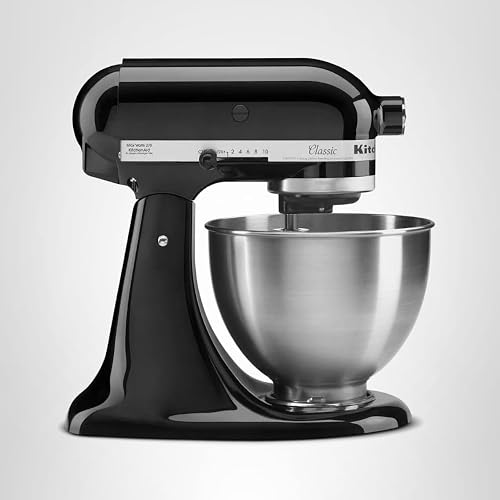
The tilt-head design most home bakers picture when they think “stand mixer,” with a 4.5-quart bowl that comfortably handles a double batch of cookies or a standard bread dough recipe. The recurring praise in owner reviews is longevity — these motors are built to run for years of regular use, and the attachment ecosystem (pasta roller, grinder, spiralizer) is the deepest of any brand in this category. The genuine con: at 4.5 quarts, it can feel cramped for very large batches, and the tilt-head design has less headroom than bowl-lift models for tall attachments.
Hamilton Beach 4-Quart Stand Mixer — Best value

A tilt-head design with a 4-quart bowl and enough power for regular baking without the premium price tag of the bigger names. It’s the pick reviewers describe as “does everything I need without the splurge,” and the planetary mixing action gets specific praise for scraping the bowl evenly. The genuine con: it doesn’t have the same attachment ecosystem as KitchenAid’s power-hub system, so factor that in if attachments are a priority.
KitchenAid Bowl-Lift Stand Mixer (KSM55) — Largest capacity

The bowl-lift mechanism (you crank the bowl up into the beaters rather than tilting the head) is the design serious bread bakers gravitate toward, with a bigger capacity for large or doubled batches and a more stable base under heavy load. Owner feedback consistently flags it as the more stable choice for heavy, stiff doughs and multi-loaf batches. The genuine con: bowl-lift models are heavier and bulkier than tilt-head designs, and the crank mechanism takes some getting used to.
Frequently asked questions
Can a hand mixer replace a stand mixer?
For most everyday baking — cakes, frosting, whipped cream, pancake batter — yes, a hand mixer covers it. It can’t replace a stand mixer for kneading yeasted bread dough or handling very large batches, where the stronger motor and hands-free operation matter.
Is a stand mixer worth it if I only bake occasionally?
Usually not. The most common regret in stand mixer reviews comes from buyers who use it a handful of times a year — that’s a case where a hand mixer delivers the same result for a fraction of the price and none of the counter space commitment.
Do I need a stand mixer to make bread?
Not strictly — you can hand-knead bread dough — but if you bake bread regularly, a stand mixer with a dough hook saves real time and effort, and most hand mixers simply aren’t built to handle stiff dough without strain.
What’s the biggest difference in day-to-day use?
Hands-free operation. A stand mixer lets you walk away and do something else while it mixes; a hand mixer requires you to hold and move it the entire time, which matters more than people expect on longer mixing jobs.
Are more expensive hand mixers worth it over cheaper ones?
Mostly for motor headroom and beater quality, not for a dramatically different experience on light jobs. If you’re only whipping cream and mixing cake batter, a budget hand mixer does the job fine. The difference shows up on thicker batters and longer mixing sessions, where a stronger motor and better-designed beaters hold up longer without the effort-per-second creeping up.
How long do stand mixers typically last?
Well-reviewed models routinely show owners reporting a decade or more of regular use, based on the volume of long-tenure reviews on established brands. Longevity tracks closely with how the mixer is used — machines run within their rated capacity tend to outlast ones regularly pushed past it with oversized or overly stiff batches.
Should I buy both eventually?
It’s common — a lot of home bakers keep a hand mixer for small, quick jobs (a bowl of whipped cream, two egg whites) even after buying a stand mixer, since pulling out a full stand mixer for a five-second job isn’t always worth it.
Neither one is the “better” mixer in the abstract — they’re built for different frequencies and different doughs. Match the tool to how often you actually bake, not to what looks impressive on the counter, and you’ll end up using it instead of storing it.